Dusky Piha

Dusky Piha

Lipaugus fuscocinereus

Silhouette: Edwin Price · PhyloPic

LCLeast ConcernNTVUENCR
Daily sighting probability <5% · Rare
at Los Nevados National Natural Park

In 3 days ~10% in a week ~30%

250 Verified sightings at Los Nevados National Natural Park From 2019 to 2026
275 In all 2 parks
November Best month
☀️ Diurnal When it's spotted

About the Dusky Piha

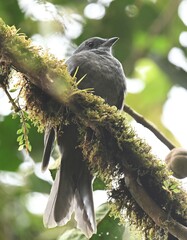
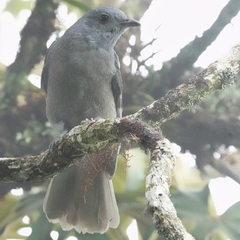
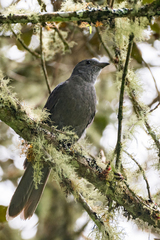
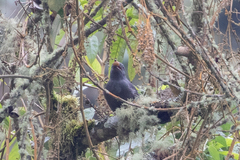
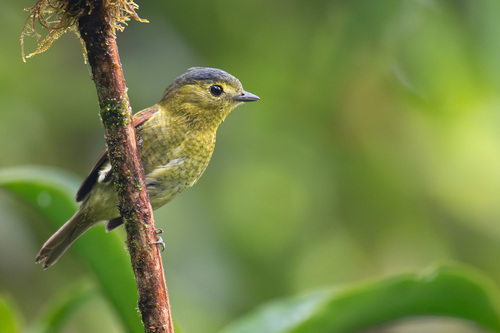
The dusky piha (Lipaugus fuscocinereus) is a species of bird in the family Cotingidae, the cotingas. It is found in Colombia, Ecuador, and Peru. The dusky piha was originally described as Querula fusco-cinerea, mistakenly placing it as a member of the Old World flycatcher family. It was later transferred to its current genus Lipaugus that had been erected in 1828.

The dusky piha is monotypic. It and the scimitar-winged piha (L. uropygialis) are sister species; the chestnut-capped piha (L. weberi) may also belong to that clade. The dusky piha is the largest member and has the longest tail of genus Lipaugus. They are 31 to 33 cm (12 to 13 in) long and weigh 120 to 138 g (4.2 to 4.9 oz). The sexes have the same plumage. Adults have medium gray upperparts and duskier gray wings and tail. Their underparts are paler gray with a brownish wash on the breast and belly. They have a dark brown iris, a dark brown or blackish bill with a paler base to the mandible, and gray legs and feet. Immatures have rufous tips on the wing coverts.

The dusky piha is a bird of the Andes. It is found along all three ranges of the Colombian... Wikipedia →

Sounds

Uncertain0:11

Colombia · 2021

© Andrés Mauricio López · XC633058 · CC BY-NC-SA 4.0

Call0:04

Colombia · 2019

© David Monroy Rengifo · XC494786 · CC BY-NC-SA 4.0

Song0:09

Colombia · 2013

© Oscar H. Marín-Gómez · XC128332 · CC BY-NC-SA 3.0

Global Distribution

Parks Where Found

# Park Country Daily sighting probability
1 Los Nevados National Natural Park 🇨🇴 Colombia
<5%
2 Podocarpus National Park 🇪🇨 Ecuador
<5%

Before you go

What are the chances of seeing a Dusky Piha in Los Nevados National Natural Park?

Rare

Under 5% of wildlife watchers report a Dusky Piha sighting in Los Nevados National Natural Park on a given day, based on 250 verified sightings from GBIF citizen-science data from 2019 to 2026. It is the 163rd most-seen of the 424 birds we can rate there. Over three days the chance rises to about 10%, and over a week to about 30%, if each day is a fresh chance.

When is the best time to see a Dusky Piha in Los Nevados National Natural Park?

May, August and November–December

In those months about 10% of wildlife watchers report a Dusky Piha in Los Nevados National Natural Park on a given day, against under 5% in January–April, June–July and September–October, the lowest months.

What time of day is best to see a Dusky Piha?

Between 9 am and noon

Across all the parks we cover, that three-hour window holds the most Dusky Piha sightings with a recorded time, and about 8 in 10 of them come between 6 am and 6 pm: it is a daytime animal.

Is Los Nevados National Natural Park the best place to see a Dusky Piha?

Yes

Of the 2 parks where we can rate Dusky Piha sightings, Los Nevados National Natural Park has the highest daily chance: under 5%. Next come Podocarpus National Park (Ecuador, under 5%).

Which relatives of the Dusky Piha live in Los Nevados National Natural Park?

Same family: Cotingidae

The closest relatives of the Dusky Piha that you can see in Los Nevados National Natural Park (family Cotingidae, Cotingas) are Red-ruffed Fruitcrow (about 10%), Red-crested Cotinga (about 10%) and Green-and-black Fruiteater (about 10%), with each one's daily chance of a sighting.

Where does the Dusky Piha sighting chance come from?

GBIF citizen-science records

It is estimated from how often the Dusky Piha is recorded against all the birds logged in Los Nevados National Natural Park (250 verified sightings from 2019 to 2026), calibrated against known sighting rates. Figures are rounded to the nearest 10% because citizen-science data supports honest approximations, not decimals, and months with records from fewer than five people show "—". How it works.

← Back to Los Nevados National Natural Park