Sharpe's Wren

Sharpe's Wren

Cinnycerthia olivascens

Silhouette: Matt Wilkins · PhyloPic

LCLeast ConcernNTVUENCR
Daily sighting probability <5% · Rare
at Los Nevados National Natural Park

In 3 days ~10% in a week ~30%

212 Verified sightings at Los Nevados National Natural Park From 2019 to 2026
237 In all 3 parks
May Best month
☀️ Diurnal When it's spotted

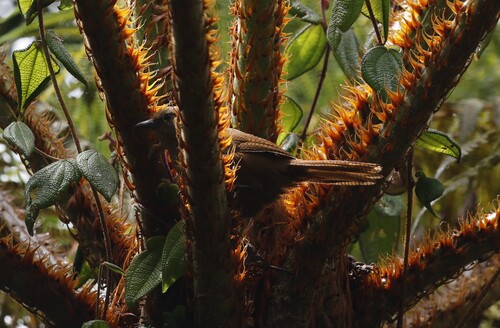
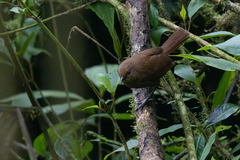
About the Sharpe's Wren

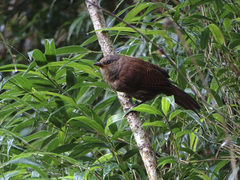
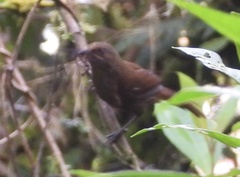
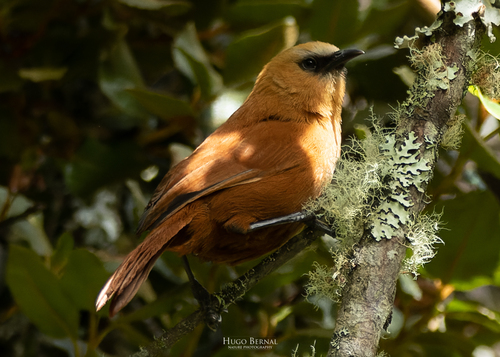
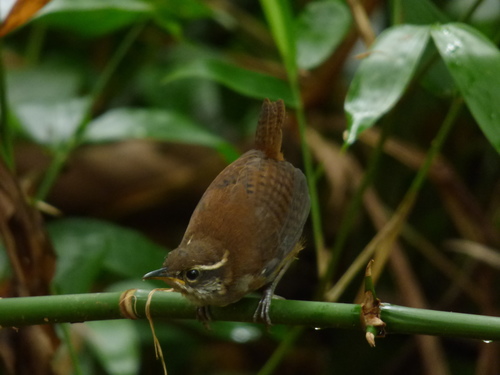
The sepia-brown wren or Sharpe's wren (Cinnycerthia olivascens) is a species of bird in the family Troglodytidae. It is found in Colombia, Ecuador, and Peru. The sepia-brown wren was formerly considered a subspecies of Cinnycerthia peruana, which at that time was called the sepia-brown wren and is now called the Peruvian wren. Sepia-brown wren, Peruvian wren, and fulvous wren (C. fulva) form a superspecies.

Usually "daughter" species resulting from splits do not retain the "parent's" English name. That is why the South American Classification Committee of the American Ornithological Society (SACC/AOS) and the Clements taxonomy call C. olivascens Sharpe's wren. That common name commemorates the British zoologist Richard Bowdler Sharpe.

The sepia-brown wren has two subspecies, the nominate Cinnicerthia olivascens olivascens and C. o. bogotensis. The sepia-brown wren is 16 cm (6.3 in) long; males weigh an average of 25.9 g (0.91 oz) and females weigh an average of 23 g (0.81 oz). Both subspecies are shades of brown. The nominate adult has a grayish brown crown, reddish brown back and rump, and a chesnut tail with blackish bars. It has a... Wikipedia →
Sounds

Call0:42

Colombia · 2022

© Frank Lambert · XC1044387 · CC BY-NC-ND 4.0

Dawn song0:48

Ecuador · 2019

© Juan Carlos Crespo · XC598144 · CC BY-NC-SA 4.0

Song0:34

Ecuador · 2020

© Nunes-de-Almeida · XC544524 · CC BY-NC-SA 4.0

Global Distribution

Parks Where Found

# Park Country Daily sighting probability
1 Los Nevados National Natural Park 🇨🇴 Colombia
<5%
2 Podocarpus National Park 🇪🇨 Ecuador
<5%
3 Farallones de Cali National Natural Park 🇨🇴 Colombia
<5%

Before you go

What are the chances of seeing a Sharpe's Wren in Los Nevados National Natural Park?

Rare

Under 5% of wildlife watchers report a Sharpe's Wren sighting in Los Nevados National Natural Park on a given day, based on 212 verified sightings from GBIF citizen-science data from 2019 to 2026. It is the 177th most-seen of the 424 birds we can rate there. Over three days the chance rises to about 10%, and over a week to about 30%, if each day is a fresh chance.

When is the best time to see a Sharpe's Wren in Los Nevados National Natural Park?

February, April–May and July

In those months about 10% of wildlife watchers report a Sharpe's Wren in Los Nevados National Natural Park on a given day, against under 5% in March, June and August–January, the lowest months.

What time of day is best to see a Sharpe's Wren?

Between 8 and 11 am

Across all the parks we cover, that three-hour window holds the most Sharpe's Wren sightings with a recorded time, and about 8 in 10 of them come between 6 am and 6 pm: it is a daytime animal.

Is Los Nevados National Natural Park the best place to see a Sharpe's Wren?

Yes

Of the 3 parks where we can rate Sharpe's Wren sightings, Los Nevados National Natural Park has the highest daily chance: under 5%. Next come Podocarpus National Park (Ecuador, under 5%) and Farallones de Cali National Natural Park (Colombia, under 5%).

Where does the Sharpe's Wren sighting chance come from?

GBIF citizen-science records

It is estimated from how often the Sharpe's Wren is recorded against all the birds logged in Los Nevados National Natural Park (212 verified sightings from 2019 to 2026), calibrated against known sighting rates. Figures are rounded to the nearest 10% because citizen-science data supports honest approximations, not decimals, and months with records from fewer than five people show "—". How it works.

← Back to Los Nevados National Natural Park