
Superciliated Wren

Superciliated Wren

Cantorchilus superciliaris

Silhouette: Matt Wilkins · PhyloPic

LCLeast ConcernNTVUENCR
Daily sighting probability ~20% · Possible
at Machalilla National Park

In 3 days ~50% in a week ~80%

181 Verified sightings at Machalilla National Park From 2019 to 2026
181 In 1 park
December Best month
☀️ Diurnal When it's spotted

About the Superciliated Wren

The superciliated wren (Cantorchilus superciliaris) is a species of bird in the family Troglodytidae. It is found in Ecuador and Peru. The superciliated wren has sometimes been treated as conspecific with the buff-breasted wren (C. leucotis) but they differ in vocalizations and ecology.

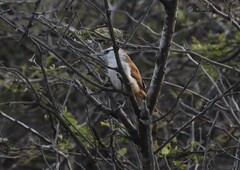
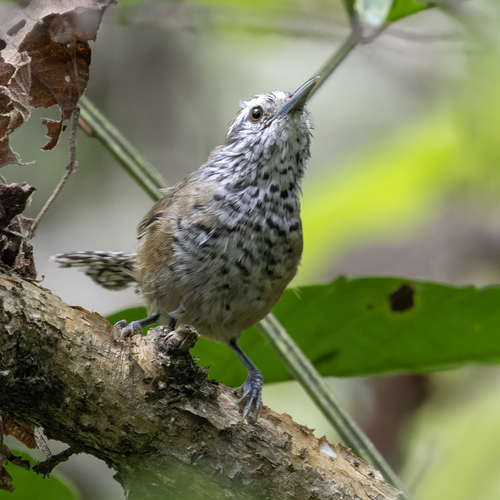
The superciliated wren is 14.5 cm (5.7 in) long. Adults of the nominate subspecies have a dark grayish brown crown, rufous-brown shoulders and back becoming redder on the rump. The tail is reddish brown with black bars. They have a prominent white supercilium, a dark brown stripe through the eye, and buffy-white cheeks. Their chin and throat are pale buffy white that darkens to the lower chest and the flanks are buffy gray. Juveniles are similar but a cooler brown in the uppersides. C. s. baroni has a more tawny lower back and rump.

The nominate superciliated wren is found in western Ecuador from Manabí Province south to Guayas Province. C. s. baroni is found from southern Ecuador's El Oro and Loja Provinces south to the departments of Ancash and Lima... Wikipedia →

Sounds

Call0:23

Ecuador · 2024

© Manuel Sánchez-Nivicela · XC1169965 · CC BY-NC-ND 4.0

Song0:12

Ecuador · 2021

© Morten Bongers · XC699100 · CC BY-NC-ND 4.0

Alarm call0:18

Ecuador · 1989

© Robert S. Ridgely · XC275124 · CC BY-NC-SA 4.0

Global Distribution

Parks Where Found

# Park Country Daily sighting probability
1 Machalilla National Park 🇪🇨 Ecuador
~20%

More parks will be added in future updates.

Cities Where Found

# City Country Daily sighting probability
1 Guayaquil 🇪🇨 Ecuador
<5%

Before you go

What are the chances of seeing a Superciliated Wren in Machalilla National Park?

Possible

About 20% of wildlife watchers report a Superciliated Wren sighting in Machalilla National Park on a given day, based on 181 verified sightings from GBIF citizen-science data from 2019 to 2026. It is the 42nd most-seen of the 248 birds we can rate there. Over three days the chance rises to about 50%, and over a week to about 80%, if each day is a fresh chance.

When is the best time to see a Superciliated Wren in Machalilla National Park?

December

In that month about 40% of wildlife watchers report a Superciliated Wren in Machalilla National Park on a given day, against about 10% in April, June–July and November, the lowest months. That is one of Machalilla National Park's driest months, with about 25 mm of rain against 140 mm in February.

What time of day is best to see a Superciliated Wren?

Between 8 and 11 am

Across all the parks we cover, that three-hour window holds the most Superciliated Wren sightings with a recorded time, and about 9 in 10 of them come between 6 am and 6 pm: it is a daytime animal.

Where else can you see a Superciliated Wren?

Only Machalilla National Park, in our data

Machalilla National Park is the only park on Wallace's Line with enough records to rate Superciliated Wren sightings: about 20% of wildlife watchers there report one on a given day.

Which relatives of the Superciliated Wren live in Machalilla National Park?

Same family: Troglodytidae

The closest relatives of the Superciliated Wren that you can see in Machalilla National Park (family Troglodytidae, Wrens) are Southern House Wren (about 60%), Fasciated Wren (about 20%) and Speckle-breasted Wren (about 20%), with each one's daily chance of a sighting.

Where does the Superciliated Wren sighting chance come from?

GBIF citizen-science records

It is estimated from how often the Superciliated Wren is recorded against all the birds logged in Machalilla National Park (181 verified sightings from 2019 to 2026), calibrated against known sighting rates. Figures are rounded to the nearest 10% because citizen-science data supports honest approximations, not decimals, and months with records from fewer than five people show "—". How it works.

← Back to Machalilla National Park