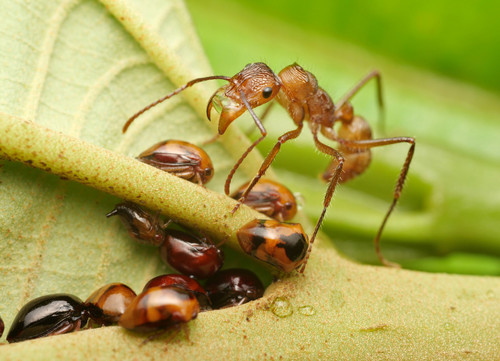
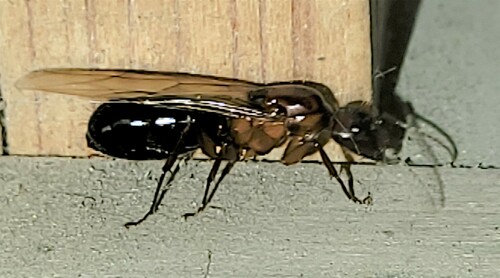
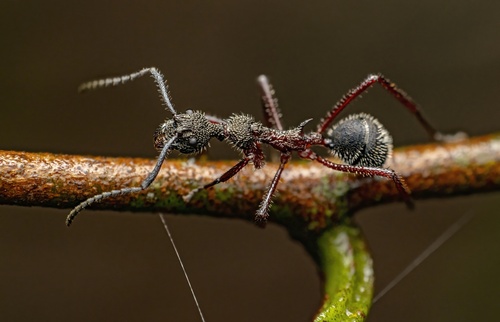
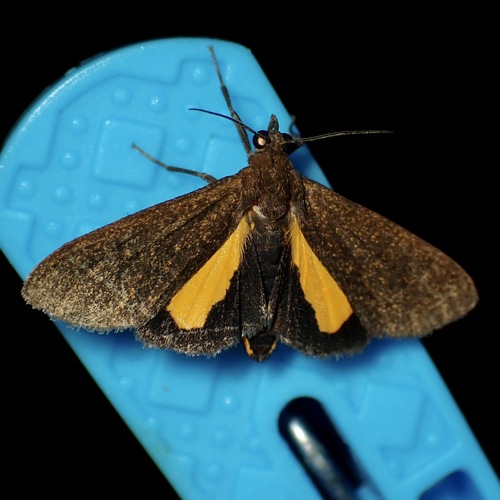
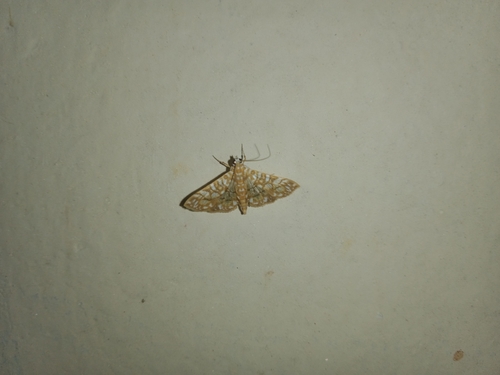
Acromyrmex octospinosus

Acromyrmex octospinosus

Acromyrmex octospinosus

Daily sighting probability ~20% · Possible
at Main Ridge Forest Reserve

In 3 days ~50% in a week ~80%

13 Verified sightings at Main Ridge Forest Reserve From 2019 to 2026
64 In all 5 parks
July Best month
☀️ Diurnal When it's spotted

About the Acromyrmex octospinosus

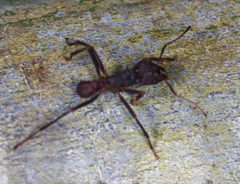
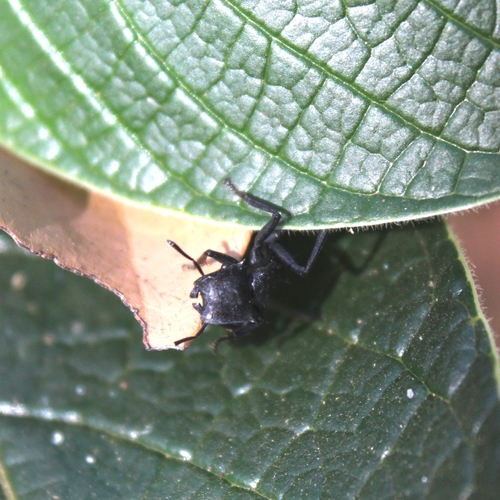
Acromyrmex octospinosus is a species of New World ants of the subfamily Myrmicinae of the genus Acromyrmex. It is found in the wild naturally in Central America ranging from southern Mexico down to Panama; and across northern South America in Venezuela.

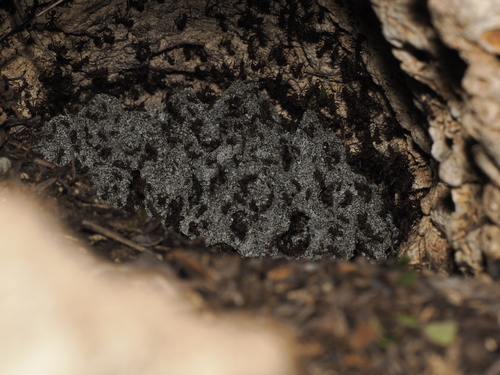
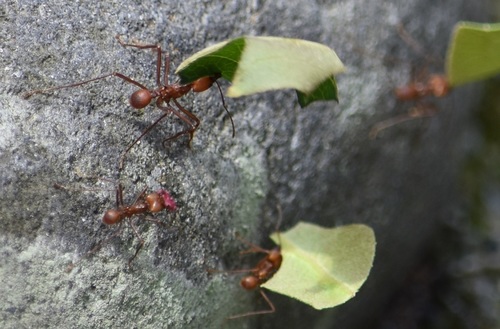
Foundresses of the leaf-cutting ant Acromyrmex octospinosus forage for leaves as garden substrate (semi-claustral foundation). The fungal pellet and substrate usually are attached to rootlets, which are used as a platform for the garden. This arrangement keeps the garden suspended away from the earthen chamber of the underground nest during early colony growth, and it serves to minimize contact between the garden and contaminants. A. octospinosus foundresses produce from 3 to 7 workers in 2.7 months after founding the nest, but workers do not forage for substrate at this time. Incipient nests died or were abandoned at a monthly rate of about 50%. The ants routinely clean their legs before manipulating the garden substrate. The foundresses use their fore-legs to rub the surface of the metapleural gland, and they then use typical grooming behaviors to pass the forelegs through the mouthparts, after which the ant then licks the garden substrate. Similarly, ants apparently use their mouths to transfer fecal droplets to their legs. These grooming behaviors are prophylactic behaviors that may help the foundress maintain a hygienic garden. Wikipedia →

Global Distribution

Parks Where Found

# Park Country Daily sighting probability
1 Main Ridge Forest Reserve 🇹🇹 Trinidad and Tobago
~20%
2 Arrecifes de Cozumel National Park 🇲🇽 Mexico
~10%
3 Braulio Carrillo National Park 🇨🇷 Costa Rica
~10%
4 Arenal Volcano National Park 🇨🇷 Costa Rica
~10%
5 Tortuguero National Park 🇨🇷 Costa Rica
~10%

Cities Where Found

# City Country Daily sighting probability
1 San José 🇨🇷 Costa Rica
~10%
2 Panama City 🇵🇦 Panama
~10%

Before you go

What are the chances of seeing an Acromyrmex octospinosus in Main Ridge Forest Reserve?

Possible

About 20% of wildlife watchers report an Acromyrmex octospinosus sighting in Main Ridge Forest Reserve on a given day, based on 13 verified sightings from GBIF citizen-science data from 2019 to 2026. It is the 106th most-seen of the 346 insects we can rate there. Over three days the chance rises to about 50%, and over a week to about 80%, if each day is a fresh chance.

When is the best time to see an Acromyrmex octospinosus in Main Ridge Forest Reserve?

June–July and November

In those months about 30% of wildlife watchers report an Acromyrmex octospinosus in Main Ridge Forest Reserve on a given day, against under 5% in January–May and September–October, the lowest months. Those are among Main Ridge Forest Reserve's wettest months, with about 200 mm of rain a month against 60 mm in February.

What time of day is best to see an Acromyrmex octospinosus?

Between 9 am and noon

Across all the parks we cover, that three-hour window holds the most Acromyrmex octospinosus sightings with a recorded time, and about 8 in 10 of them come between 6 am and 6 pm: it is a daytime animal.

Is Main Ridge Forest Reserve the best place to see an Acromyrmex octospinosus?

Yes

Of the 5 parks where we can rate Acromyrmex octospinosus sightings, Main Ridge Forest Reserve has the highest daily chance: about 20%. Next come Arrecifes de Cozumel National Park (Mexico, about 10%) and Braulio Carrillo National Park (Costa Rica, about 10%).

Where does the Acromyrmex octospinosus sighting chance come from?

GBIF citizen-science records

It is estimated from how often the Acromyrmex octospinosus is recorded against all the insects logged in Main Ridge Forest Reserve (13 verified sightings from 2019 to 2026), calibrated against known sighting rates. Figures are rounded to the nearest 10% because citizen-science data supports honest approximations, not decimals, and months with records from fewer than five people show "—". How it works.

← Back to Main Ridge Forest Reserve