Gee's Golden Langur

Gee's Golden Langur

Trachypithecus geei

Silhouette: Andy Wilson · PhyloPic

LCNTVUENEndangeredCR
Daily sighting probability ~30% · Possible
at Manas National Park

In 3 days ~70% in a week ~90%

18 Verified sightings at Manas National Park From 2019 to 2026
66 In all 2 parks
December Best month
🌅 Crepuscular When it's spotted

About the Gee's Golden Langur

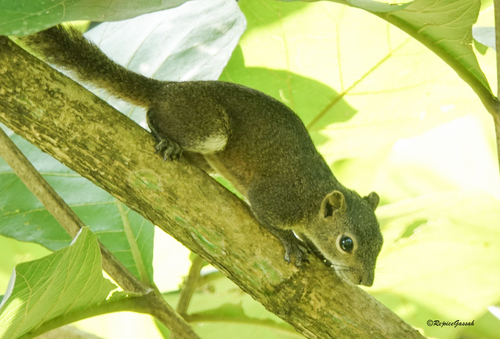
Gee's golden langur (Trachypithecus geei), also known as simply the golden langur, is an Old World monkey found in a small region of Western Assam, India and the neighboring foothills of the Black Mountains of Bhutan. Long considered sacred by many Himalayan people, the golden langur was first brought to the attention of the Western world by the naturalist Edward Pritchard Gee in the 1950s. Adult males have a cream to golden coat with darker flanks while the females and juveniles are lighter. The golden langur has a black face and a long tail up to 100 cm (39 in) in length. It lives in high trees and has a herbivorous diet of fruits, leaves, seeds, buds, and flowers. The average group size is eight individuals, with a ratio of several females to each adult male. It is one of the most endangered primate species of India and Bhutan.

In 2008–09, there were 6,000 golden langurs in India, which has grown to 7,396 by 2020–21. The earliest record of the golden langur is in an 1838 paper by Robert Boileau Pemberton which states that "Griffith observed these monkeys near Tongso in Central Bhutan." However, since Pemberton's work was lost and not rediscovered until... Wikipedia →

Global Distribution

Parks Where Found

# Park Country Daily sighting probability
1 Royal Manas National Park 🇧🇹 Bhutan
~70%
2 Manas National Park 🇮🇳 India
~30%

Before you go

What are the chances of seeing a Gee's Golden Langur in Manas National Park?

Possible

About 30% of wildlife watchers report a Gee's Golden Langur sighting in Manas National Park on a given day, based on 18 verified sightings from GBIF citizen-science data from 2019 to 2026. It is the 10th most-seen of the 14 mammals we can rate there. Over three days the chance rises to about 70%, and over a week to about 90%, if each day is a fresh chance.

When is the best time to see a Gee's Golden Langur in Manas National Park?

December

In that month about 50% of wildlife watchers report a Gee's Golden Langur in Manas National Park on a given day, against under 5% in April, the lowest month. That is one of Manas National Park's driest months, with about 10 mm of rain against 1070 mm in June. July to September have too few records to rate.

What time of day is best to see a Gee's Golden Langur?

Between 5 and 8 am

Across all the parks we cover, that three-hour window holds the most Gee's Golden Langur sightings with a recorded time, and about 7 in 10 of them come between 6 am and 6 pm: it is most active around dawn and dusk.

Is Manas National Park the best place to see a Gee's Golden Langur?

2nd of 2

Of the 2 parks where we can rate Gee's Golden Langur sightings, Manas National Park ranks 2nd at about 30%. The best odds are in Royal Manas National Park (Bhutan, about 70%).

Where does the Gee's Golden Langur sighting chance come from?

GBIF citizen-science records

It is estimated from how often the Gee's Golden Langur is recorded against all the mammals logged in Manas National Park (18 verified sightings from 2019 to 2026), calibrated against known sighting rates. Figures are rounded to the nearest 10% because citizen-science data supports honest approximations, not decimals, and months with records from fewer than five people show "—". How it works.

← Back to Manas National Park