Daily sighting probability ~10% · With luck
at Manu National Park

In 3 days ~20% in a week ~40%

8 Verified sightings at Manu National Park From 2019 to 2026
8 In 1 park
December Best month
🌙 Nocturnal When it's spotted

About the Apoica flavissima

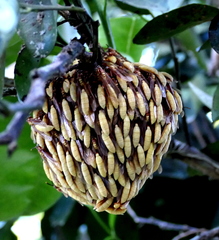
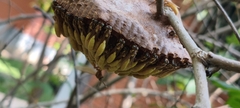
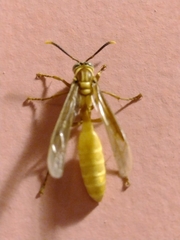
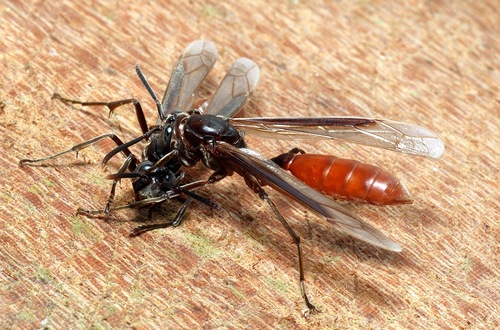
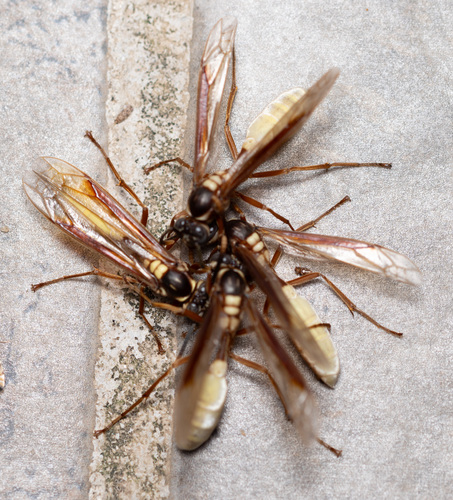
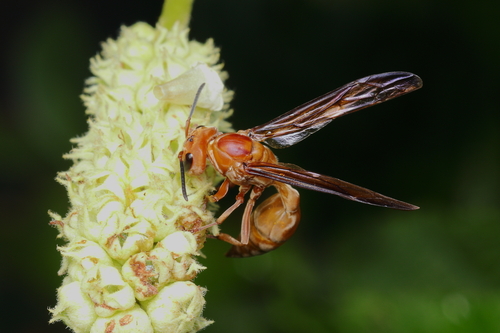
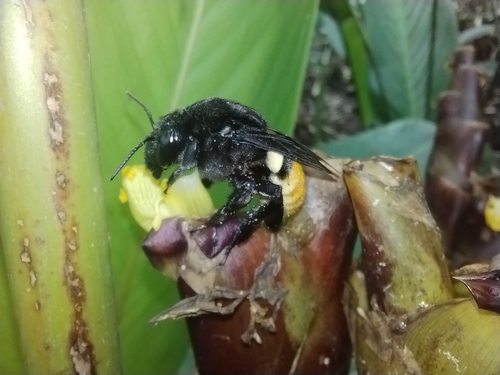
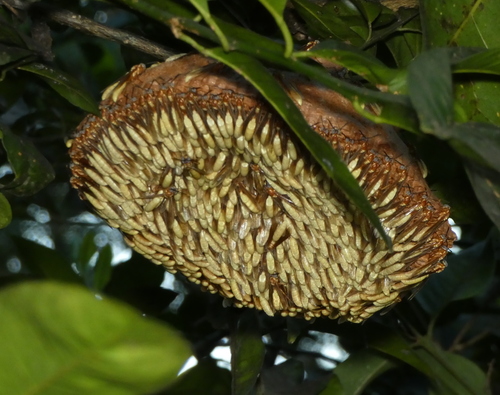
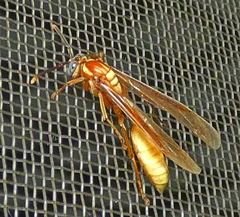
Apoica flavissima is a paper wasp found primarily in South America. The species is distinguishable by its light coloring, unique single comb nests, and nocturnal nature. A notable feature of this species is the size dimorphism between queens and workers. Unlike most Vespidae wasps, Apocia flavissima queens are smaller than their worker counterparts which results in unique intraspecies relationships.

Originally, Apoica flavissima was thought to be a variety of Apoica pallens because of similar color and physical characteristics. It was not until 1972 that J. Van Der Vecht identified that three distinct species were mistakenly being categorized as one. Today, A. pallens, A. flavissima, and A. gelida are identified by differences in male genitalia. In addition, distinction can be made through slight color differences. While A. flavissima are entirely pale yellow, A. pallens are mostly yellow but have brown legs. Phylogenetic analysis indicates that Apoica flavissima is most closely related to Apoica pallens.

A. flavissima typically have a mesoscutum (the middle thoracic segment of the insect) that is dark yellow with outstanding bristles.... Wikipedia →
Global Distribution

Parks Where Found

# Park Country Daily sighting probability
1 Manu National Park 🇵🇪 Peru
~10%

More parks will be added in future updates.

Before you go

What are the chances of seeing an Apoica flavissima in Manu National Park?

With luck

About 10% of wildlife watchers report an Apoica flavissima sighting in Manu National Park on a given day, based on 8 verified sightings from GBIF citizen-science data from 2019 to 2026. It is the 170th most-seen of the 366 insects we can rate there. Over three days the chance rises to about 20%, and over a week to about 40%, if each day is a fresh chance.

When is the best time to see an Apoica flavissima in Manu National Park?

December

In that month about 20% of wildlife watchers report an Apoica flavissima in Manu National Park on a given day, against under 5% in April–May and July–October, the lowest months. That is one of Manu National Park's wettest months, with about 250 mm of rain against 60 mm in August.

What time of day is best to see an Apoica flavissima?

Between 7 and 10 pm

Across all the parks we cover, that three-hour window holds the most Apoica flavissima sightings with a recorded time, and nearly all of them come between 6 pm and 6 am: it is mostly seen at night.

Where else can you see an Apoica flavissima?

Only Manu National Park, in our data

Manu National Park is the only park on Wallace's Line with enough records to rate Apoica flavissima sightings: about 10% of wildlife watchers there report one on a given day.

Which relatives of the Apoica flavissima live in Manu National Park?

Same genus: Apoica

The closest relatives of the Apoica flavissima that you can see in Manu National Park (genus Apoica, Nocturnal Paper Wasps) are Apoica thoracica (about 10%) and Central American Paper Wasp (about 10%), with each one's daily chance of a sighting.

Where does the Apoica flavissima sighting chance come from?

GBIF citizen-science records

It is estimated from how often the Apoica flavissima is recorded against all the insects logged in Manu National Park (8 verified sightings from 2019 to 2026), calibrated against known sighting rates. Figures are rounded to the nearest 10% because citizen-science data supports honest approximations, not decimals, and months with records from fewer than five people show "—". How it works.

← Back to Manu National Park