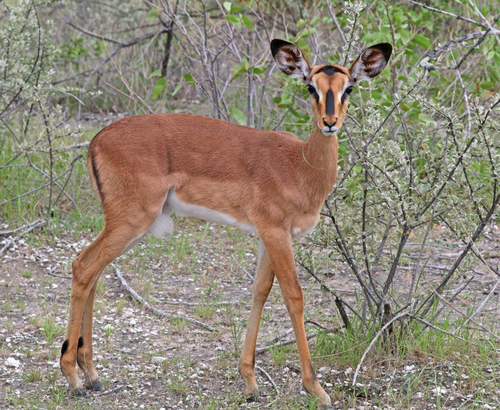
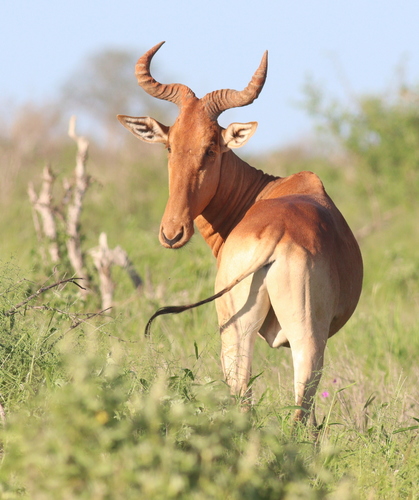
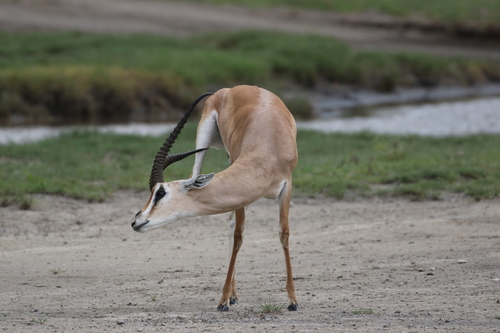
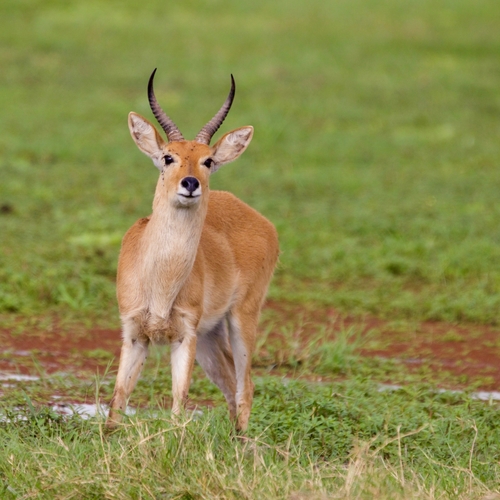
Topi

Topi

Damaliscus korrigum

Silhouette: [unknown] · PhyloPic

Daily sighting probability ~70% · Very likely
at Masai Mara National Reserve

In 3 days >90%

516 Verified sightings at Masai Mara National Reserve From 2019 to 2026
1,118 In all 7 parks
June Best month
☀️ Diurnal When it's spotted

About the Topi

Damaliscus lunatus jimela is a subspecies of topi, and is usually just called a topi. It is a highly social and fast type of antelope found in the savannas, semi-deserts, and floodplains of sub-Saharan Africa. The word tope or topi is Swahili, and was first recorded in the 1880s by the German explorer Gustav Fischer to refer to the local topi population in the Lamu County region of Kenya; this population is now designated as Damaliscus lunatus topi. Contemporaneously, in English, sportsmen referred to the animal as a Senegal hartebeest, as it was considered the same species as what is now recognised as D. lunatus korrigum.

Other names recorded in East Africa by various German explorers were mhili in Kisukuma and jimäla in Kinyamwezi. The Luganda name was simäla according to Neumann, or nemira according to Lugard. By the turn of the 19th century this antelope was called a topi by most in English. Writing in 1908, Richard Lydekker complains that it would have so much simpler if all these new forms of korrigum had simply been called East African korrigum, Bahr-el-Ghazal korrigum, etc., than constantly adopting different native names for different geographic forms of essentially... Wikipedia →

Global Distribution

Parks Where Found

# Park Country Daily sighting probability
1 Akagera National Park 🇷🇼 Rwanda
~80%
2 Lake Mburo National Park 🇺🇬 Uganda
~70%
3 Masai Mara National Reserve 🇰🇪 Kenya
~70%
4 Serengeti National Park 🇹🇿 Tanzania
~60%
5 Queen Elizabeth National Park 🇺🇬 Uganda
~40%
6 Virunga National Park 🇨🇩 Democratic Republic of the Congo
~40%
7 Ngorongoro Conservation Area 🇹🇿 Tanzania
~10%

Before you go

What are the chances of seeing a Topi in Masai Mara National Reserve?

Very likely

About 70% of wildlife watchers report a Topi sighting in Masai Mara National Reserve on a given day, based on 516 verified sightings from GBIF citizen-science data from 2019 to 2026. It is the 3rd most-seen of the 40 mammals we can rate there. Over three days the chance rises to over 90%, if each day is a fresh chance.

When is the best time to see a Topi in Masai Mara National Reserve?

June

In that month about 80% of wildlife watchers report a Topi in Masai Mara National Reserve on a given day, against about 50% in May, the lowest month. That is one of Masai Mara National Reserve's driest months, with about 35 mm of rain against 140 mm in April.

What time of day is best to see a Topi?

Between 10 am and 1 pm

Across all the parks we cover, that three-hour window holds the most Topi sightings with a recorded time, and about 9 in 10 of them come between 6 am and 6 pm: it is a daytime animal.

Which relatives of the Topi live in Masai Mara National Reserve?

Same family: Bovidae

The closest relatives of the Topi that you can see in Masai Mara National Reserve (family Bovidae, Bovids) are Blue Wildebeest (about 60%), Thomson's Gazelle (about 60%) and African Buffalo (about 50%), with each one's daily chance of a sighting.

Where does the Topi sighting chance come from?

GBIF citizen-science records

It is estimated from how often the Topi is recorded against all the mammals logged in Masai Mara National Reserve (516 verified sightings from 2019 to 2026), calibrated against known sighting rates. Figures are rounded to the nearest 10% because citizen-science data supports honest approximations, not decimals, and months with records from fewer than five people show "—". How it works.

← Back to Masai Mara National Reserve