About the Narrow-Bordered Five-Spot Burnet
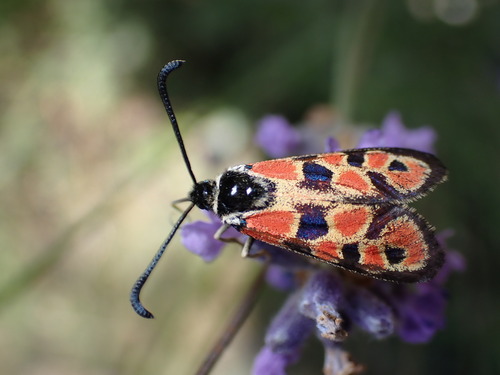
Zygaena lonicerae, the narrow-bordered five-spot burnet, is a moth of the family Zygaenidae. The species was first described by Theodor Gottlieb von Scheven in 1777. This species can be found in most of Europe, from Ireland to Fennoscandia, up to west of China. In the southern Europe the species is widespread from northern and central Spain to Turkey and the Caucasus.
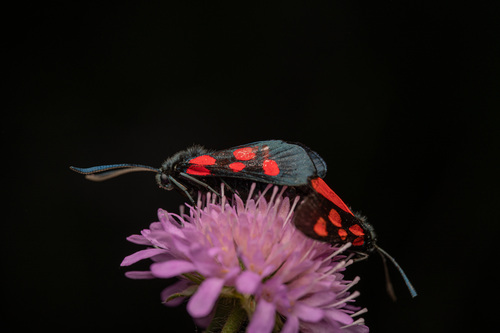
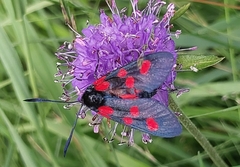
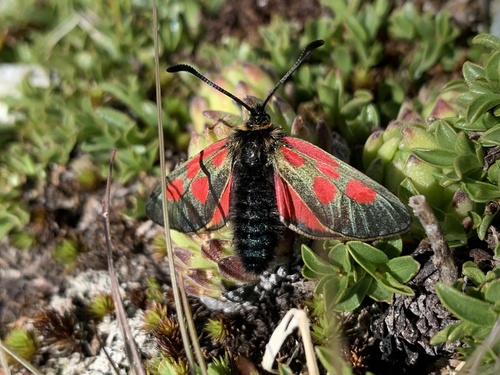
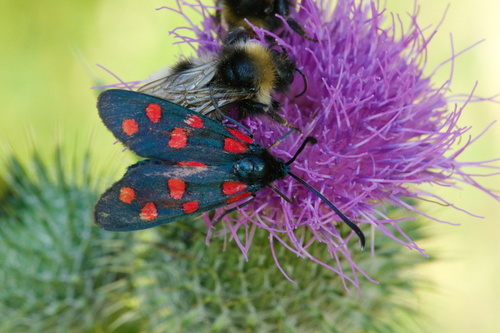
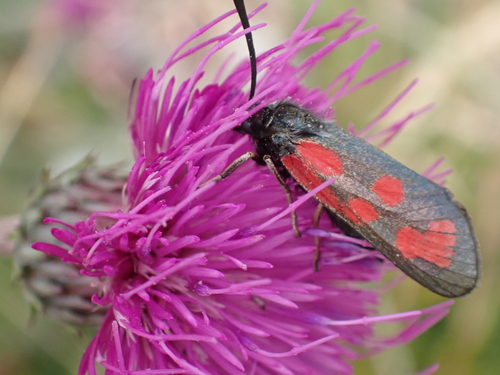
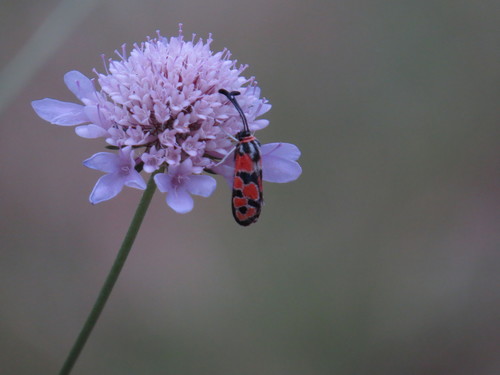
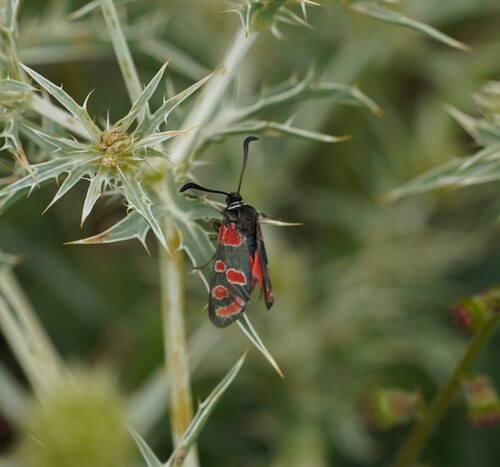
In western Europe it prefers dry to mesophilic habitats in coastal areas, sea-cliffs, open forests, grassland, chalk downland and subalpine valleys, at an elevation up to 2,000 metres (6,600 ft) above sea level. Zygaena lonicerae have a wingspan of 30–46 millimetres (1.2–1.8 in). The forewings reach a length of 16–19 millimetres (0.63–0.75 in) in the females, while they are slightly smaller in males. The forewings usually show five crimson to vermilion spots and a black basic colour, with a strong bluish or blue-green reflection. The third spot is smaller than the fourth one. Head, thorax and abdomen are black and moderately to strongly hairy. The antennae are long and slender and slightly clavate (club shaped) and tapered. The females are similar to... Wikipedia →