Spangle Swallowtail

Spangle Swallowtail

Papilio protenor

Daily sighting probability ~40% · Likely
at Namdapha National Park

In 3 days ~80% in a week >90%

15 Verified sightings at Namdapha National Park From 2019 to 2026
142 In all 4 parks
April Best month
☀️ Diurnal When it's spotted

About the Spangle Swallowtail

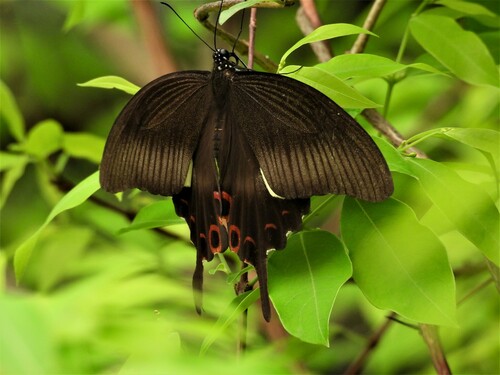
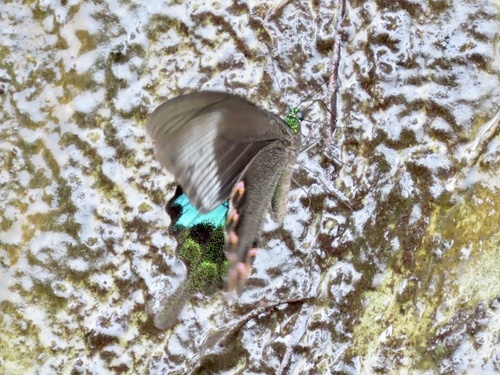
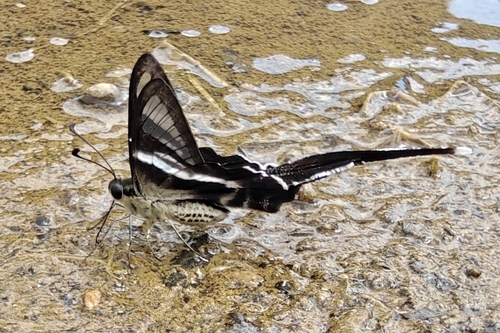
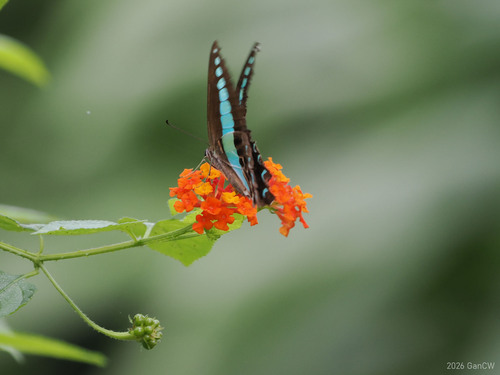
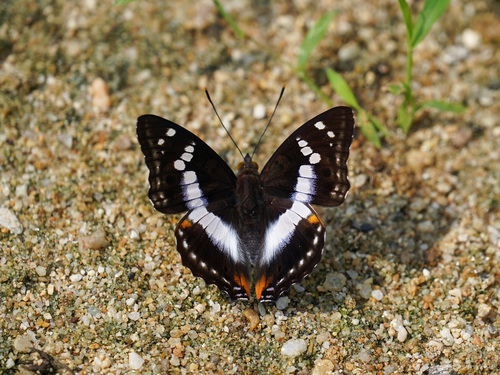
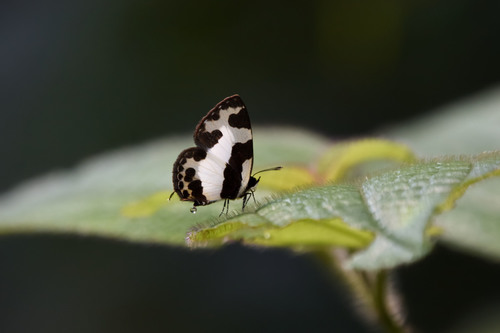
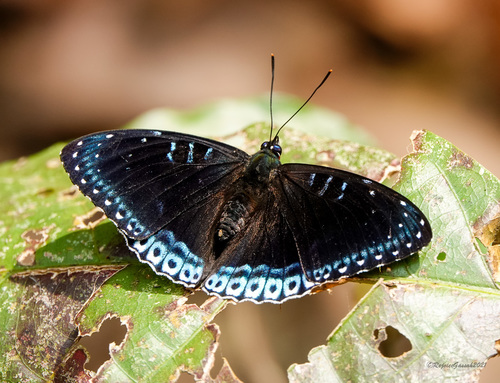
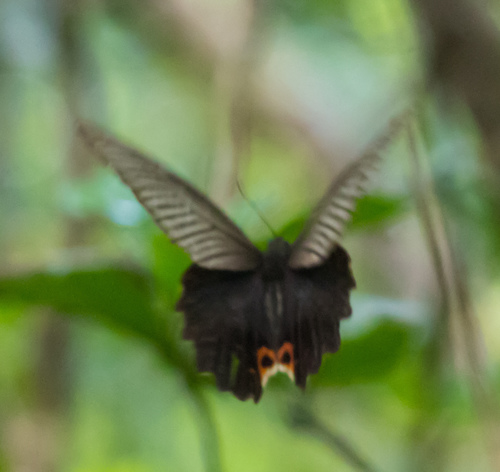
Papilio protenor, the spangle, is a large butterfly found in South East Asia belonging to the swallowtail family. Upperside: velvety indigo-blue black, duller on the forewing than on the hindwing. Forewing with pale adnervular streaks broadened along the terminal margin and extended well into the cell. Hindwing: a broad pale yellowish-white subcostal streak; interspaces 4 to 6 irrorated (sprinkled) with bluish scales; tornal angle marked with red.

Underside: forewing dull black; adnervular streaks distinctly grey and much broader than on the upperside. Hindwing: ground colour as on the upperside, a large irregularly-shaped patch at the tornal angle that extends into interspace 2, and subterminal lunules in interspaces 2, 6, and 7 dull pinkish-red, cell irrorated more-or-less with a sprinkling of blue scales; the tornal patch with a black, outwardly blue-edged, round medial spot, and interspaces 4 and 5 with subterminal irrorations of blue scales. Antennae black; head, thorax and abdomen dark brownish-black.

Similar to male. Upperside: ground colour deep brownish-black; adnervular streaks on forewing yellowish; irroration of blue scales on outer... Wikipedia →
Global Distribution

Parks Where Found

# Park Country Daily sighting probability
1 Cuc Phuong National Park 🇻🇳 Vietnam
~50%
2 Namdapha National Park 🇮🇳 India
~40%
3 Taroko National Park 🇹🇼 Taiwan
~20%
4 Kaeng Krachan National Park 🇹🇭 Thailand
~20%

Cities Where Found

# City Country Daily sighting probability
1 Guiyang 🇨🇳 China
~30%
2 Xiamen City 🇨🇳 China
~20%
3 Hong Kong 🇨🇳 China
~20%
4 Taipei 🇹🇼 Taiwan
~20%
5 Chengdu 🇨🇳 China
~10%
6 Nanjing 🇨🇳 China
~10%
7 Taichung 🇹🇼 Taiwan
~10%
8 Kathmandu 🇳🇵 Nepal
~10%
9 Fuzhou 🇨🇳 China
~10%
10 Guangzhou 🇨🇳 China
~10%

Before you go

What are the chances of seeing a Spangle Swallowtail in Namdapha National Park?

Likely

About 40% of wildlife watchers report a Spangle Swallowtail sighting in Namdapha National Park on a given day, based on 15 verified sightings from GBIF citizen-science data from 2019 to 2026. It is the 34th most-seen of the 71 insects we can rate there. Over three days the chance rises to about 80%, and over a week to over 90%, if each day is a fresh chance.

When is the best time to see a Spangle Swallowtail in Namdapha National Park?

April and October

In those months about 60% of wildlife watchers report a Spangle Swallowtail in Namdapha National Park on a given day, against under 5% in December, the lowest month. June to August have too few records to rate.

What time of day is best to see a Spangle Swallowtail?

Between 9 am and noon

Across all the parks we cover, that three-hour window holds the most Spangle Swallowtail sightings with a recorded time, and about 9 in 10 of them come between 6 am and 6 pm: it is a daytime animal.

Is Namdapha National Park the best place to see a Spangle Swallowtail?

2nd of 4

Of the 4 parks where we can rate Spangle Swallowtail sightings, Namdapha National Park ranks 2nd at about 40%. The best odds are in Cuc Phuong National Park (Vietnam, about 50%). All parks ranked.

Which relatives of the Spangle Swallowtail live in Namdapha National Park?

Same genus: Papilio

The closest relatives of the Spangle Swallowtail that you can see in Namdapha National Park (genus Papilio, Common Swallowtails) are Red Helen Swallowtail (about 40%) and Paris Peacock Swallowtail (about 40%), with each one's daily chance of a sighting.

Where does the Spangle Swallowtail sighting chance come from?

GBIF citizen-science records

It is estimated from how often the Spangle Swallowtail is recorded against all the insects logged in Namdapha National Park (15 verified sightings from 2019 to 2026), calibrated against known sighting rates. Figures are rounded to the nearest 10% because citizen-science data supports honest approximations, not decimals, and months with records from fewer than five people show "—". How it works.

← Back to Namdapha National Park