
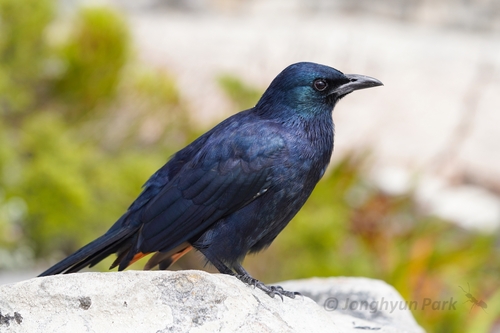
Fischer's Starling

Fischer's Starling

Lamprotornis fischeri

Silhouette: Rafael Maia · PhyloPic

LCLeast ConcernNTVUENCR
Daily sighting probability <5% · Rare
at Ngorongoro Conservation Area

In 3 days <5%

6 Verified sightings at Ngorongoro Conservation Area From 2019 to 2026
1,338 In all 9 parks
September Best month
☀️ Diurnal When it's spotted

About the Fischer's Starling

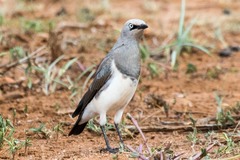
Fischer's starling (Lamprotornis fischeri) is a bird which is an uncommon resident breeder from southern Ethiopia and Somalia to eastern Kenya and Tanzania. It is found in dry open acacia thornbush. The English and scientific names commemorate the 19th century German explorer of East Africa Gustav Fischer.

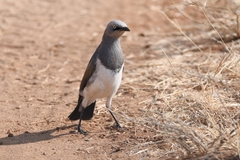
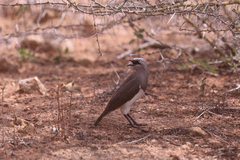
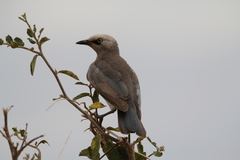
The adult of this 18 cm (7.1 in) long, 51 g (1.8 oz) starling has mainly dully ash-grey plumage except for a white lower chest, belly and undertail. It has a white iris and dark bill. The sexes are alike, but the juvenile has browner plumage, a brown iris and a dull yellow lower mandible. There are no subspecies.

This species has a number of calls, but the most familiar is a wheezing cree-wee-creewoo. There is also a loud whistle and a metallic song. Fischer's starling usually nests in thorn trees, typically 2.5 m (8 ft 2 in) above the ground. The roofed nest is made from grasses and lined with feathers. It has a ramp and opening in its side. Up to six red-spotted blue eggs make up the clutch, and are laid in April to May and September to November.

Both parents feed the chicks, assisted by helpers, which are typically subadult or unmated... Wikipedia →

Sounds

Call0:18

Tanzania · 2022

© isaac kilusu · XC755915 · CC BY-NC-SA 4.0

Song1:05

Kenya · 2021

© James Bradley · XC688734 · CC BY-NC-SA 4.0

Song0:44

Kenya · 2018

© Frank Lambert · XC469085 · CC BY-NC-ND 4.0

Global Distribution

Parks Where Found

# Park Country Daily sighting probability
1 Tsavo East National Park 🇰🇪 Kenya
~60%
2 Tsavo West National Park 🇰🇪 Kenya
~40%
3 Mkomazi National Park 🇹🇿 Tanzania
~40%
4 Samburu National Reserve 🇰🇪 Kenya
~20%
5 Amboseli National Park 🇰🇪 Kenya
~10%
6 Meru National Park 🇰🇪 Kenya
~10%
7 Tarangire National Park 🇹🇿 Tanzania
<5%
8 Ngorongoro Conservation Area 🇹🇿 Tanzania
<5%
9 Serengeti National Park 🇹🇿 Tanzania
<5%

Before you go

What are the chances of seeing a Fischer's Starling in Ngorongoro Conservation Area?

Rare

Under 5% of wildlife watchers report a Fischer's Starling sighting in Ngorongoro Conservation Area on a given day, based on 6 verified sightings from GBIF citizen-science data from 2019 to 2026. It is the 490th most-seen of the 519 birds we can rate there. Over three days the chance rises to under 5%, if each day is a fresh chance.

When is the best time to see a Fischer's Starling in Ngorongoro Conservation Area?

Any time of year

In every month with enough records, under 5% of wildlife watchers report a Fischer's Starling in Ngorongoro Conservation Area on a given day, so our monthly data shows no clear season.

What time of day is best to see a Fischer's Starling?

Between 2 and 5 pm

Across all the parks we cover, that three-hour window holds the most Fischer's Starling sightings with a recorded time, and about 9 in 10 of them come between 6 am and 6 pm: it is a daytime animal.

Which relatives of the Fischer's Starling live in Ngorongoro Conservation Area?

Same genus: Lamprotornis

The closest relatives of the Fischer's Starling that you can see in Ngorongoro Conservation Area (genus Lamprotornis, Glossy Starlings and Allies) are Superb Starling (about 60%) and Hildebrandt's Starling (about 30%), with each one's daily chance of a sighting.

Where does the Fischer's Starling sighting chance come from?

GBIF citizen-science records

It is estimated from how often the Fischer's Starling is recorded against all the birds logged in Ngorongoro Conservation Area (6 verified sightings from 2019 to 2026), calibrated against known sighting rates. Figures are rounded to the nearest 10% because citizen-science data supports honest approximations, not decimals, and months with records from fewer than five people show "—". How it works.

← Back to Ngorongoro Conservation Area