Japanese Bush Warbler

Japanese Bush Warbler

Horornis diphone

Silhouette: Sheatherius · PhyloPic

LCLeast ConcernNTVUENCR
Daily sighting probability ~70% · Very likely
at Nikko National Park

In 3 days >90%

379 Verified sightings at Nikko National Park From 2019 to 2026
396 In all 2 parks
May Best month
☀️ Diurnal When it's spotted

About the Japanese Bush Warbler

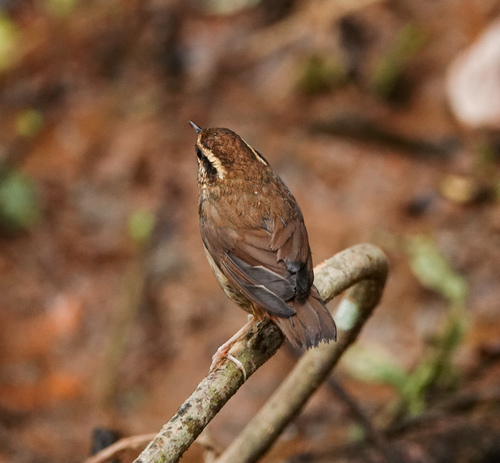
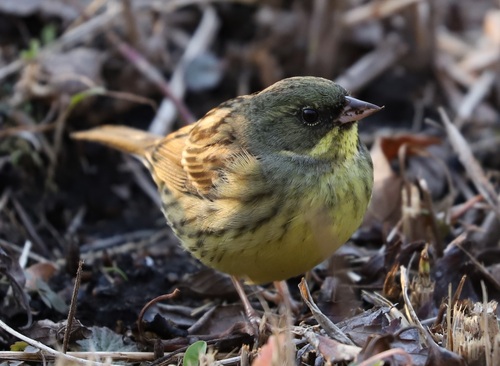
The Japanese bush warbler (Horornis diphone), known in Japanese as uguisu (鶯), is an Asian passerine bird more often heard than seen. Its distinctive breeding song can be heard throughout much of Japan from the start of spring.

The Japanese bush warbler is olive brown above and tending toward dusky colors below. It has pale eyebrows. It has a beak that curves up making it look like it is smiling. The bird is typically 15.5 centimetres (6.1 in) in length.

The Japanese bush warbler is a common year-round resident throughout Japan (except Hokkaidō) and the northern Philippines. In summer the Japanese bush warbler can also be found in Hokkaidō, Manchuria, Korea, and central China. In winter, the bush-warbler can also be found in southern China and Taiwan.

It was introduced to Oahu between 1929 and 1941 and has since spread throughout the main Hawaiian Islands. In summer, it ranges from low hills to high mountains, preferring bamboo thickets and black pine trees. In winter it seeks cover at lower elevations.

The propensity of the Japanese bush warbler to sing has led to the birds being kept as cage birds. Robert... Wikipedia →

Sounds

Song0:28

Japan · 2026

© Ding Li Yong · XC1148006 · CC BY-NC-ND 4.0

Call0:28

Japan · 2024

© Barry Edmonston · XC884474 · CC BY-NC-SA 4.0

Alarm call1:01

South Korea · 2020

© Wonseok Jang · XC660617 · CC BY-NC-SA 4.0

Global Distribution

Parks Where Found

# Park Country Daily sighting probability
1 Nikko National Park 🇯🇵 Japan
~70%
2 Taroko National Park 🇹🇼 Taiwan
<5%

Cities Where Found

# City Country Daily sighting probability
1 Sendai 🇯🇵 Japan
~70%
2 Nagoya 🇯🇵 Japan
~40%
3 Tokyo 🇯🇵 Japan
~30%
4 Fukuoka 🇯🇵 Japan
~30%
5 Osaka 🇯🇵 Japan
~20%
6 Naha 🇯🇵 Japan
~20%
7 Busan 🇰🇷 South Korea
~10%
8 Hiroshima 🇯🇵 Japan
~10%
9 Gwangju 🇰🇷 South Korea
~10%
10 Qingdao 🇨🇳 China
~10%

Zoos & Centres Where Found

# Zoo / Centre Country
1 Ueno Zoo 🇯🇵 Japan In captivity
2 Inokashira Park Zoo 🇯🇵 Japan In captivity

Before you go

What are the chances of seeing a Japanese Bush Warbler in Nikko National Park?

Very likely

About 70% of wildlife watchers report a Japanese Bush Warbler sighting in Nikko National Park on a given day, based on 379 verified sightings from GBIF citizen-science data from 2019 to 2026. It is the 2nd most-seen of the 102 birds we can rate there. Over three days the chance rises to over 90%, if each day is a fresh chance.

When is the best time to see a Japanese Bush Warbler in Nikko National Park?

May and June

In those months about 90% of wildlife watchers report a Japanese Bush Warbler in Nikko National Park on a given day, against about 20% in December, the lowest month.

What time of day is best to see a Japanese Bush Warbler?

Between 7 and 10 am

Across all the parks we cover, that three-hour window holds the most Japanese Bush Warbler sightings with a recorded time, and about 8 in 10 of them come between 6 am and 6 pm: it is a daytime animal.

Is Nikko National Park the best place to see a Japanese Bush Warbler?

Yes

Of the 2 parks where we can rate Japanese Bush Warbler sightings, Nikko National Park has the highest daily chance: about 70%. Next come Taroko National Park (Taiwan, under 5%).

Where does the Japanese Bush Warbler sighting chance come from?

GBIF citizen-science records

It is estimated from how often the Japanese Bush Warbler is recorded against all the birds logged in Nikko National Park (379 verified sightings from 2019 to 2026), calibrated against known sighting rates. Figures are rounded to the nearest 10% because citizen-science data supports honest approximations, not decimals, and months with records from fewer than five people show "—". How it works.

← Back to Nikko National Park