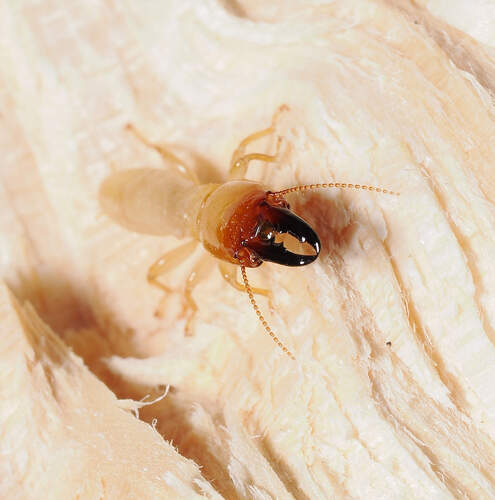
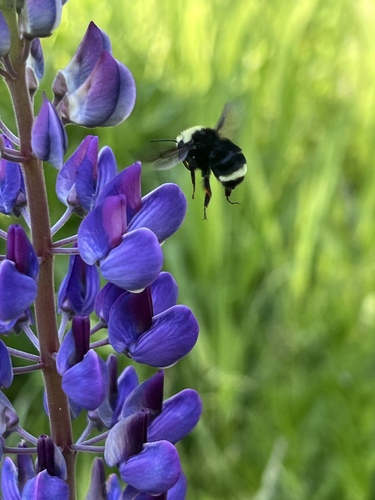

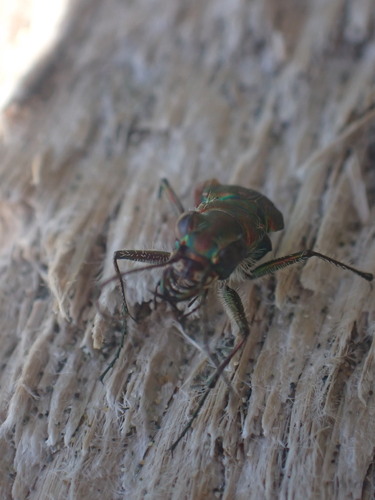
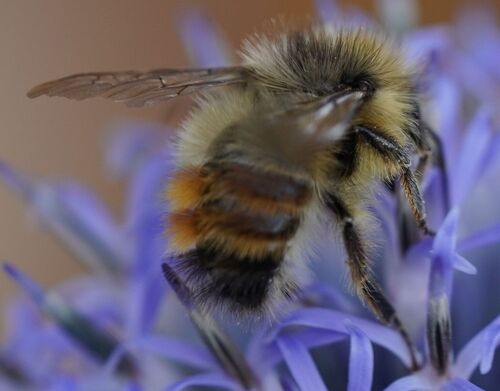
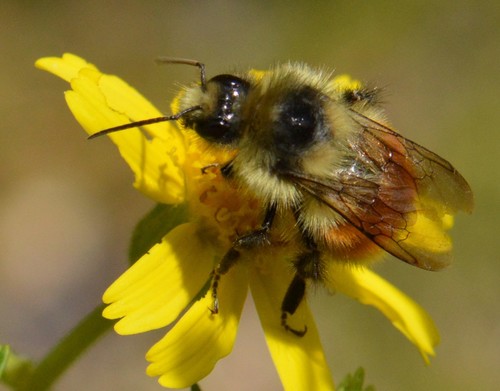

Pacific Dampwood Termite

Pacific Dampwood Termite

Zootermopsis angusticollis

Daily sighting probability ~10% · With luck
at Pacific Rim National Park Reserve

In 3 days ~20% in a week ~50%

10 Verified sightings at Pacific Rim National Park Reserve From 2019 to 2026
52 In all 4 parks
August Best month
🌅 Crepuscular When it's spotted

About the Pacific Dampwood Termite

Zootermopsis angusticollis is a species of termite (Order: Blattodea (formerly 'Isoptera)[1]') in the family Archotermopsidae, a group known as the Pacific dampwood termites, or the rottenwood termites. As their name suggests, the dampwood termites can only survive by living off of wood that contains high amounts of moisture. They are found along the wet environments of the Pacific coast of North America. Most are found in the states of California, Oregon, Washington, Idaho, Western Nevada and in southern British Columbia. Termites are well known to be destroyers of wood, and although the dampwood termites can cause some damage, they are not as notoriously known to cause as much damage to buildings as the drywood termites. They occasionally have been carried to other parts of the country through wood shipments, but have not been able to become established in these areas due to undesirable environmental conditions.

Zootermopsis angusticollis is a hemimetabolous, diploid species. Upon hatching from their egg, they are quite similar to adults except for their lack of genitalia. Their series of morphological instars allows them to increase in size until they reach their... Wikipedia →

Global Distribution

Parks Where Found

# Park Country Daily sighting probability
1 Pacific Rim National Park Reserve 🇨🇦 Canada
~10%
2 Redwood National Park 🇺🇸 United States
~10%
3 Great Bear Rainforest 🇨🇦 Canada
~10%
4 Olympic National Park 🇺🇸 United States
~10%

Cities Where Found

# City Country Daily sighting probability
1 Seattle 🇺🇸 United States
~10%
2 Portland 🇺🇸 United States
~10%
3 Vancouver 🇨🇦 Canada
<5%
4 San Francisco 🇺🇸 United States
<5%

Before you go

What are the chances of seeing a Pacific Dampwood Termite in Pacific Rim National Park Reserve?

With luck

About 10% of wildlife watchers report a Pacific Dampwood Termite sighting in Pacific Rim National Park Reserve on a given day, based on 10 verified sightings from GBIF citizen-science data from 2019 to 2026. It is the 57th most-seen of the 107 insects we can rate there. Over three days the chance rises to about 20%, and over a week to about 50%, if each day is a fresh chance.

When is the best time to see a Pacific Dampwood Termite in Pacific Rim National Park Reserve?

August

In that month about 30% of wildlife watchers report a Pacific Dampwood Termite in Pacific Rim National Park Reserve on a given day, against under 5% in July and October–May, the lowest months. That is one of Pacific Rim National Park Reserve's driest months, with about 70 mm of rain against 470 mm in November.

What time of day is best to see a Pacific Dampwood Termite?

Between 6 and 9 pm

Across all the parks we cover, that three-hour window holds the most Pacific Dampwood Termite sightings with a recorded time, and about 6 in 10 of them come between 6 pm and 6 am: it is most active around dawn and dusk.

Is Pacific Rim National Park Reserve the best place to see a Pacific Dampwood Termite?

Yes

Of the 4 parks where we can rate Pacific Dampwood Termite sightings, Pacific Rim National Park Reserve has the highest daily chance: about 10%. Next come Redwood National Park (United States, about 10%) and Great Bear Rainforest (Canada, about 10%).

Where does the Pacific Dampwood Termite sighting chance come from?

GBIF citizen-science records

It is estimated from how often the Pacific Dampwood Termite is recorded against all the insects logged in Pacific Rim National Park Reserve (10 verified sightings from 2019 to 2026), calibrated against known sighting rates. Figures are rounded to the nearest 10% because citizen-science data supports honest approximations, not decimals, and months with records from fewer than five people show "—". How it works.

← Back to Pacific Rim National Park Reserve