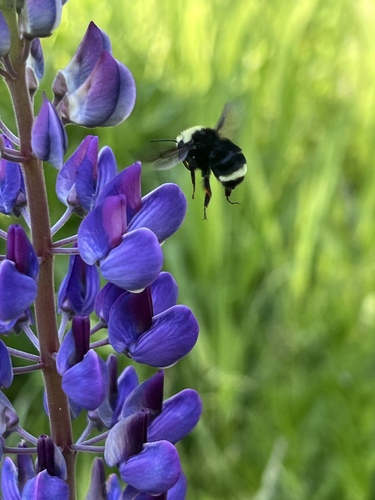
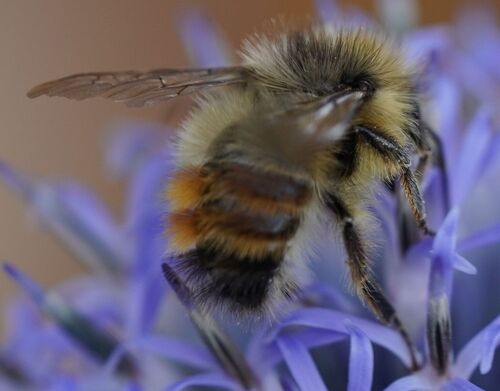
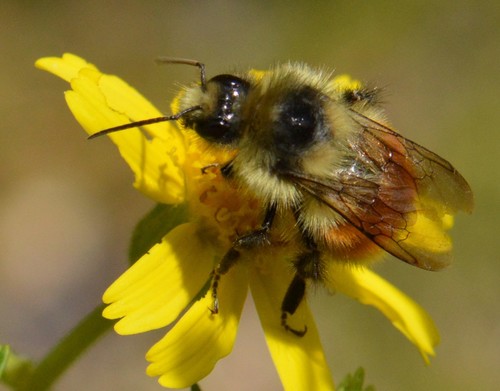
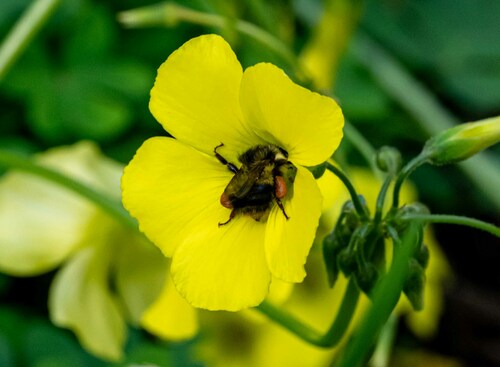
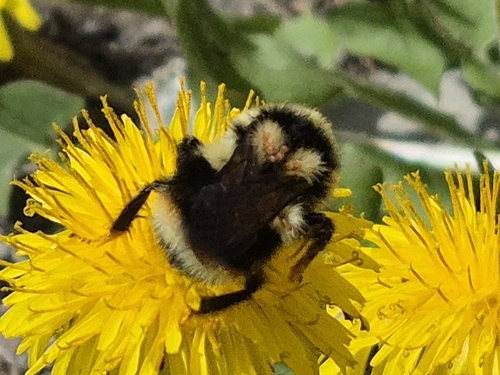
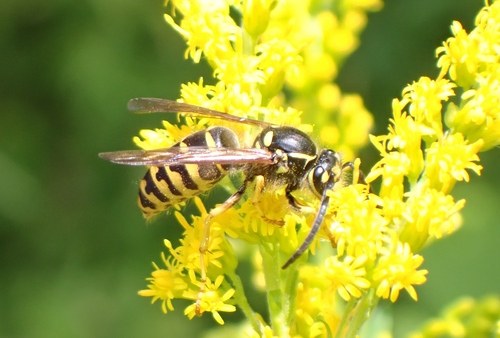
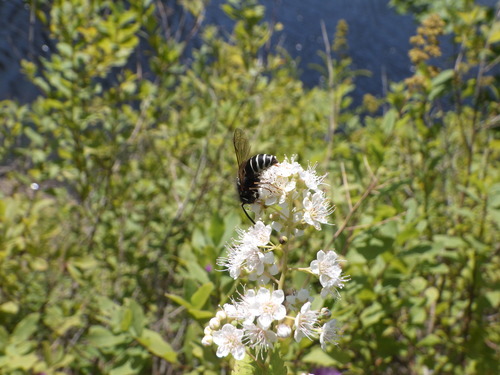
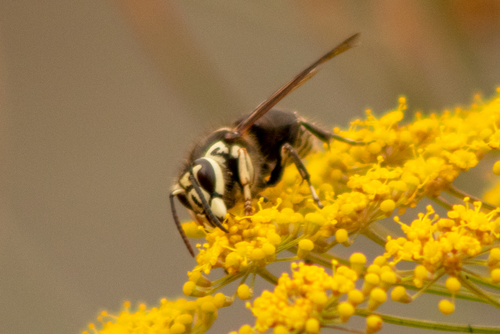
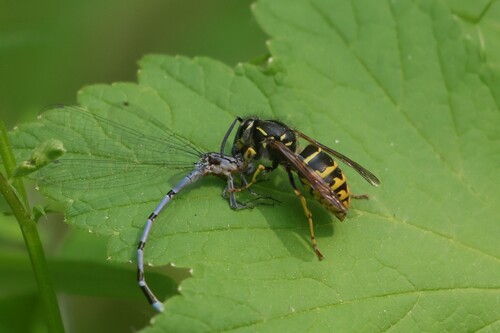
Fuzzy-Horned Bumble Bee

Fuzzy-Horned Bumble Bee

Bombus mixtus

Daily sighting probability ~30% · Possible
at Pacific Rim National Park Reserve

In 3 days ~60% in a week ~90%

93 Verified sightings at Pacific Rim National Park Reserve From 2019 to 2026
475 In all 12 parks
August Best month
☀️ Diurnal When it's spotted

About the Fuzzy-Horned Bumble Bee

Bombus mixtus is a species of bumblebee. It is native to western North America, where it occurs in western Canada and the United States. It is also disjunct in the Great Lakes region. It is known commonly as the fuzzy-horned bumblebee, tricoloured bumblebee, orange-belted bumblebee, and mixed bumblebee.

This bee lives in mountain habitat, and taiga and tundra habitat in northern areas. It lives in open, grassy habitat, chaparral, shrublands, and meadows. It feeds at the flowers of ceanothus, fireweed, coyote mints, penstemons, phacelias, rhododendrons, and groundsels. It nests underground or on the surface.

NatureServe. 2015. Bombus mixtus. NatureServe Explorer Version 7.1. Accessed 8 March 2016. Wikipedia →

Global Distribution

Parks Where Found

# Park Country Daily sighting probability
1 Wrangell-St. Elias National Park 🇺🇸 United States
~40%
2 Pacific Rim National Park Reserve 🇨🇦 Canada
~30%
3 Kluane National Park 🇨🇦 Canada
~20%
4 Denali National Park 🇺🇸 United States
~20%
5 Glacier National Park 🇺🇸 United States
~20%
6 Olympic National Park 🇺🇸 United States
~10%
7 Great Bear Rainforest 🇨🇦 Canada
~10%
8 Grand Teton National Park 🇺🇸 United States
~10%
9 Banff National Park 🇨🇦 Canada
~10%
10 Yellowstone National Park 🇺🇸 United States
~10%
11 Rocky Mountain National Park 🇺🇸 United States
~10%
12 Jasper National Park 🇨🇦 Canada
~10%

Cities Where Found

# City Country Daily sighting probability
1 Seattle 🇺🇸 United States
~20%
2 Vancouver 🇨🇦 Canada
~20%
3 Portland 🇺🇸 United States
~10%
4 Calgary 🇨🇦 Canada
<5%

Before you go

What are the chances of seeing a Fuzzy-Horned Bumble Bee in Pacific Rim National Park Reserve?

Possible

About 30% of wildlife watchers report a Fuzzy-Horned Bumble Bee sighting in Pacific Rim National Park Reserve on a given day, based on 93 verified sightings from GBIF citizen-science data from 2019 to 2026. It is the 3rd most-seen of the 107 insects we can rate there. Over three days the chance rises to about 60%, and over a week to about 90%, if each day is a fresh chance.

When is the best time to see a Fuzzy-Horned Bumble Bee in Pacific Rim National Park Reserve?

July and August

In those months about 40% of wildlife watchers report a Fuzzy-Horned Bumble Bee in Pacific Rim National Park Reserve on a given day, against under 5% in October to February, the lowest months. Those are among Pacific Rim National Park Reserve's driest months, with about 55 mm of rain a month against 470 mm in November.

What time of day is best to see a Fuzzy-Horned Bumble Bee?

Between 1 and 4 pm

Across all the parks we cover, that three-hour window holds the most Fuzzy-Horned Bumble Bee sightings with a recorded time, and about 9 in 10 of them come between 6 am and 6 pm: it is a daytime animal.

Is Pacific Rim National Park Reserve the best place to see a Fuzzy-Horned Bumble Bee?

2nd of 12

Of the 12 parks where we can rate Fuzzy-Horned Bumble Bee sightings, Pacific Rim National Park Reserve ranks 2nd at about 30%. The best odds are in Wrangell-St. Elias National Park (United States, about 40%). All parks ranked.

Which relatives of the Fuzzy-Horned Bumble Bee live in Pacific Rim National Park Reserve?

Same genus: Bombus

The closest relatives of the Fuzzy-Horned Bumble Bee that you can see in Pacific Rim National Park Reserve (genus Bombus, Bumble Bees) are Yellow-Faced Bumble Bee (about 30%), Yellow-Fronted Bumble Bee (about 20%) and Black-Tailed Bumble Bee (about 20%), with each one's daily chance of a sighting.

Where does the Fuzzy-Horned Bumble Bee sighting chance come from?

GBIF citizen-science records

It is estimated from how often the Fuzzy-Horned Bumble Bee is recorded against all the insects logged in Pacific Rim National Park Reserve (93 verified sightings from 2019 to 2026), calibrated against known sighting rates. Figures are rounded to the nearest 10% because citizen-science data supports honest approximations, not decimals, and months with records from fewer than five people show "—". How it works.

← Back to Pacific Rim National Park Reserve