Peruvian Tern

Peruvian Tern

Sternula lorata

Silhouette: Sheatherius · PhyloPic

LCNTVUENEndangeredCR
Daily sighting probability ~20% · Possible
at Paracas National Reserve

In 3 days ~40% in a week ~70%

93 Verified sightings at Paracas National Reserve From 2019 to 2026
93 In 1 park
September Best month
☀️ Diurnal When it's spotted

About the Peruvian Tern

The Peruvian tern (Sternula lorata) is a species of tern in the family Laridae. Found in northern Chile, Ecuador, and Peru, its natural habitats are hot deserts, sandy shores, and coastal saline lagoons. It is threatened by habitat loss.

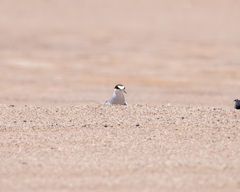
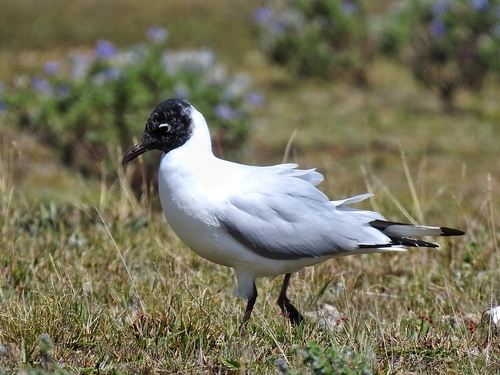
In Spanish, it is known as the "charrancito Peruano" or "gaviotín chico". The Peruvian tern is a very small species with a length of about 24 cm (9.4 in). The upper half of the head and neck are black, and the remaining part of the head is white. The back, wings and tail are grey, the throat, chin and breast are white, and the chest, belly and flanks are pale grey. The under tail-coverts are white. The bill is yellow with a black tip, the irises are brown and the legs are yellowish. The pale grey underparts differentiate it from other small terns. It has a very rapid and characteristic wingbeat. The call is a shrill "kik" and a harsh "gree", and it also utters a descending series of "kee-ee-eer" notes.

This species is endemic to the tropical west coast of South America. Its range extends from north and central Ecuador, through Peru to northern Chile, as far south as the Mejillones Peninsula. Its status in Ecuador...


Wikipedia →

Sounds

Call0:09

Chile · 2014

© sylvia hernandez · XC306286 · CC BY-NC-ND 4.0

Call0:17

Chile · 1997

© Alvaro Jaramillo · XC60180 · CC BY-NC-ND 2.5

Global Distribution

Parks Where Found

# Park Country Daily sighting probability
1 Paracas National Reserve 🇵🇪 Peru
~20%

More parks will be added in future updates.

Cities Where Found

# City Country Daily sighting probability
1 Lima 🇵🇪 Peru
<5%

Before you go

What are the chances of seeing a Peruvian Tern in Paracas National Reserve?

Possible

About 20% of wildlife watchers report a Peruvian Tern sighting in Paracas National Reserve on a given day, based on 93 verified sightings from GBIF citizen-science data from 2019 to 2026. It is the 39th most-seen of the 84 birds we can rate there. Over three days the chance rises to about 40%, and over a week to about 70%, if each day is a fresh chance.

When is the best time to see a Peruvian Tern in Paracas National Reserve?

February and June–December

In those months about 20% of wildlife watchers report a Peruvian Tern in Paracas National Reserve on a given day, against under 5% in April, the lowest month.

What time of day is best to see a Peruvian Tern?

Between 7 and 10 am

Across all the parks we cover, that three-hour window holds the most Peruvian Tern sightings with a recorded time, and about 9 in 10 of them come between 6 am and 6 pm: it is a daytime animal.

Where else can you see a Peruvian Tern?

Only Paracas National Reserve, in our data

Paracas National Reserve is the only park on Wallace's Line with enough records to rate Peruvian Tern sightings: about 20% of wildlife watchers there report one on a given day.

Which relatives of the Peruvian Tern live in Paracas National Reserve?

Same family: Laridae

The closest relatives of the Peruvian Tern that you can see in Paracas National Reserve (family Laridae, Gulls, Terns, and Skimmers) are Belcher's Gull (about 80%), Inca Tern (about 60%) and Dominican Gull (about 60%), with each one's daily chance of a sighting.

Where does the Peruvian Tern sighting chance come from?

GBIF citizen-science records

It is estimated from how often the Peruvian Tern is recorded against all the birds logged in Paracas National Reserve (93 verified sightings from 2019 to 2026), calibrated against known sighting rates. Figures are rounded to the nearest 10% because citizen-science data supports honest approximations, not decimals, and months with records from fewer than five people show "—". How it works.

← Back to Paracas National Reserve