



bucketlist2life.com Web excerpt · 2025
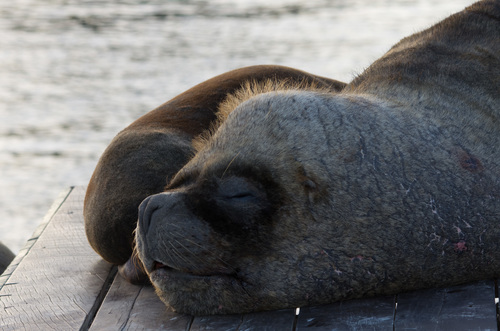
“We circled the buoys a couple of times so that everybody on the boat could see the sea lions relaxing on the buoys and swimming in the sea.”
🇵🇪 Peru
Paracas National Reserve is a protected area in the region of Ica, Peru and protects desert and marine ecosystems for their conservation and sustainable use. There are also archaeological remains of the Paracas culture inside the reserve.
The reserve is located in the region of Ica, 250 km south of Lima, and a few kilometres from the town of Pisco. It spans an area of 335,000 hectares, 65% of which correspond to marine ecosystems. The highest elevation in the reserve is 786 m.
The reserve includes coastal geographic features such as the Paracas Peninsula, Independencia Bay, San Gallán Island, Paracas Bay and Independencia Island. Paracas National Reserve is an arid zone, with intense local winds known as paracas. Precipitation is scarce and occurs in winter, falling mostly on the top of the highest hills, which is vital to the lomas ecosystem. The following climograph corresponds to the nearby town of Pisco.
-14.206° S 76.260° W

Warmer areas are where all species together are recorded most often.
How rich is the wildlife?
How likely to see animals?
How easy and pleasant is the visit?
Your review
“We circled the buoys a couple of times so that everybody on the boat could see the sea lions relaxing on the buoys and swimming in the sea.”
“We were then fortunate enough to spot penguins and a seals throughout the morning sailing.”
“At the islands themselves, we spotted about 10 Humboldt penguins, our third wild penguin sighting of the trip.”
“The kelp, under water fauna and sea life feels much more alike to the wildlife found in my home waters of Guernsey, with one major exception, Humboldt penguins!”
421 species
Paracas National Reserve has 421 recorded vertebrate species. The ones wildlife watchers report most often on a given day are Southern Sea Lion (about 90%), Bigua cormorant (about 80%), Belcher's Gull (about 80%), Peruvian Booby (about 80%) and Peruvian Pelican (about 80%). Among reptiles, the most-seen is Peru Pacific Iguana (about 60%).
Any time of year
Wildlife is about as easy to see all year: the park's 12 most-seen species average about 70% on a given day in every month with enough records. The driest month is April (almost no rain) and the wettest January (about 5 mm).
Yes
About 40% of wildlife watchers report a Humboldt Penguin sighting in Paracas National Reserve on a given day, based on 706 verified sightings from GBIF citizen-science data from 2019 to 2026. The best time is June (about 60%).
Yes
About 90% of wildlife watchers report a Southern Sea Lion sighting in Paracas National Reserve on a given day, based on 401 verified sightings from GBIF citizen-science data from 2019 to 2026. The best time is February to November (about 90%).
Yes
About 80% of wildlife watchers report a Peruvian Pelican sighting in Paracas National Reserve on a given day, based on 959 verified sightings from GBIF citizen-science data from 2019 to 2026. The best time is April–May and July (about 90%).
Yes
About 50% of wildlife watchers report a Chilean Flamingo sighting in Paracas National Reserve on a given day, based on 325 verified sightings from GBIF citizen-science data from 2019 to 2026. The best time is May–June and November–December (about 60%).
Around North park edge
The richest sighting zone is around North park edge, followed by Playa Roja and Información Turística, ranked by how many of the park's headline animals visitors can expect to see in each. See the zones on the map.
3.0 out of 5
On the Wallace's Line Score, Paracas National Reserve rates 3.0/5: 305th of 340 parks worldwide and 37th in South America. 27 of its species are reported by about 40% or more of wildlife watchers on a given day.


