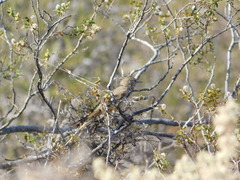
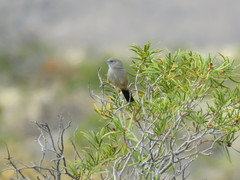
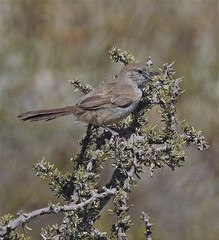
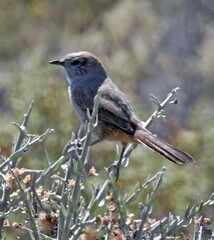

Patagonian Canastero

Patagonian Canastero

Asthenes patagonica

Silhouette: Abraão B. Leite · PhyloPic

Daily sighting probability ~20% · Possible
at Península Valdés

In 3 days ~50% in a week ~80%

76 Verified sightings at Península Valdés From 2019 to 2026
76 In 1 park
December Best month
☀️🌙 Day & Night When it's spotted

About the Patagonian Canastero

The Patagonian canastero (Pseudasthenes patagonica) is a species of bird in the subfamily Furnariinae of the ovenbird family Furnariidae. It is endemic to Argentina. The Patagonian canastero was long placed in genus Asthenes. Beginning in 2010 it and three other members of Asthenes were moved to the newly coined genus Pseudasthenes. The Patagonian canastero is monotypic.

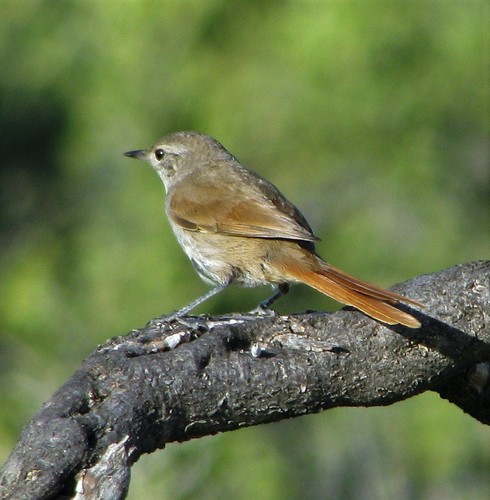
The Patagonian canastero is 14 to 15 cm (5.5 to 5.9 in) long and weighs 14 to 19 g (0.49 to 0.67 oz). The sexes have the same plumage. Adults have a light grayish brown face with hints of a paler supercilium and darker line behind the eye. Their crown and upperparts are light gray-brown. Their wings are somewhat browner and the feathers have somewhat rufescent edges. Their tail is dark gray-brown with chestnut on the outer feathers. Their chin and throat are grayish white with black flecks and streaks on the latter. Their breast is pale grayish, their upper belly pale buff-gray, their lower belly and flanks tawny, and their undertail coverts tawny-rufous.

The Patagonian canastero is found in southern Argentina from the provinces of Mendoza... Wikipedia →

Global Distribution

Parks Where Found

# Park Country Daily sighting probability
1 Península Valdés 🇦🇷 Argentina
~20%

More parks will be added in future updates.

Before you go

What are the chances of seeing a Patagonian Canastero in Península Valdés?

Possible

About 20% of wildlife watchers report a Patagonian Canastero sighting in Península Valdés on a given day, based on 76 verified sightings from GBIF citizen-science data from 2019 to 2026. It is the 41st most-seen of the 96 birds we can rate there. Over three days the chance rises to about 50%, and over a week to about 80%, if each day is a fresh chance.

When is the best time to see a Patagonian Canastero in Península Valdés?

December

In that month about 40% of wildlife watchers report a Patagonian Canastero in Península Valdés on a given day, against about 10% in February–April and August–September, the lowest months. June and July have too few records to rate.

What time of day is best to see a Patagonian Canastero?

Between 10 am and 1 pm

Across all the parks we cover, that three-hour window holds the most Patagonian Canastero sightings with a recorded time, and about 7 in 10 of them come between 6 am and 6 pm: it is seen both by day and at night.

Where else can you see a Patagonian Canastero?

Only Península Valdés, in our data

Península Valdés is the only park on Wallace's Line with enough records to rate Patagonian Canastero sightings: about 20% of wildlife watchers there report one on a given day.

Where does the Patagonian Canastero sighting chance come from?

GBIF citizen-science records

It is estimated from how often the Patagonian Canastero is recorded against all the birds logged in Península Valdés (76 verified sightings from 2019 to 2026), calibrated against known sighting rates. Figures are rounded to the nearest 10% because citizen-science data supports honest approximations, not decimals, and months with records from fewer than five people show "—". How it works.

← Back to Península Valdés