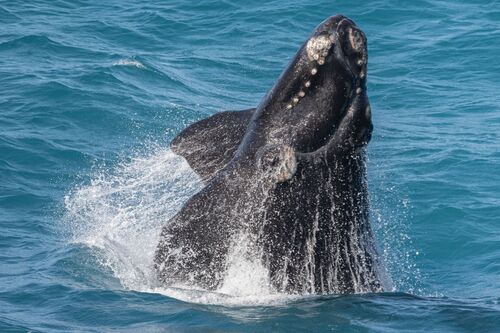
Southern Sea Lion

Southern Sea Lion

Otaria byronia

Silhouette: Leonardo Hostos Olivera · PhyloPic

LCLeast ConcernNTVUENCR
Daily sighting probability ~80% · Very likely
at Península Valdés

In 3 days >90%

211 Verified sightings at Península Valdés From 2019 to 2026
251 In all 3 parks
January Best month
☀️ Diurnal When it's spotted

About the Southern Sea Lion

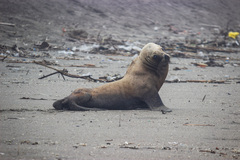
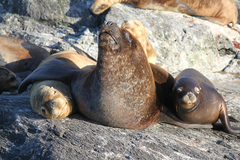
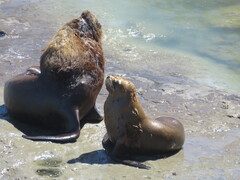
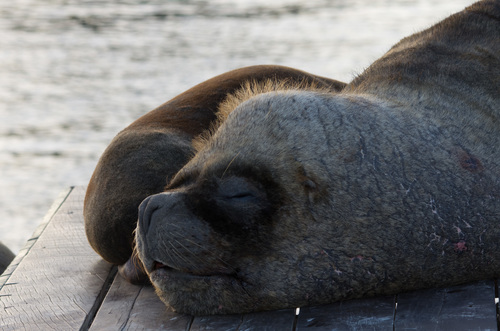
The South American sea lion (Otaria flavescens, formerly Otaria byronia), also called the southern sea lion and the Patagonian sea lion, is a sea lion found on the western and southeastern coasts of South America. It is the only extant member of the genus Otaria, which also includes the extinct Otaria josefinae. The species is highly sexually dimorphic. Males have a large head and prominent mane. They mainly feed on fish and cephalopods and haul out on sand, gravel, rocky, or pebble beaches. Breeding males typically defend both territories and individual females, though this can vary. Less dominant males may try to achieve success by causing chaos in the group. The overall population of the species is considered stable, estimated at 265,000 animals.

The South American sea lion was classified as Phoca flavescens by George Shaw in 1800 and as Otaria byronia by Henri Marie Ducrotay de Blainville in 1820. The two nomenclatures were historically used interchangeably, but O. flavescens has become the preferred name. The species is also known by the common name "southern sea lion", although it is not preferred since the Australian sea lion and New Zealand sea lion also range in... Wikipedia →
Sounds

Recording0:13

Chile · 2021

© Diego Almendras · iNaturalist · CC BY-NC 4.0

Recording0:06

Peru · 2022

© jocean · iNaturalist · CC BY-NC 4.0

Global Distribution

Parks Where Found

# Park Country Daily sighting probability
1 Península Valdés 🇦🇷 Argentina
~80%
2 Machalilla National Park 🇪🇨 Ecuador
~30%
3 Tierra del Fuego National Park 🇦🇷 Argentina
~20%

Cities Where Found

# City Country Daily sighting probability
1 Montevideo 🇺🇾 Uruguay
~10%
2 Lima 🇵🇪 Peru
~10%

Before you go

What are the chances of seeing a Southern Sea Lion in Península Valdés?

Very likely

About 80% of wildlife watchers report a Southern Sea Lion sighting in Península Valdés on a given day, based on 211 verified sightings from GBIF citizen-science data from 2019 to 2026. It is the 2nd most-seen of the 12 mammals we can rate there. Over three days the chance rises to over 90%, if each day is a fresh chance.

When is the best time to see a Southern Sea Lion in Península Valdés?

January and July–September

In those months about 90% of wildlife watchers report a Southern Sea Lion in Península Valdés on a given day, against about 50% in March, the lowest month.

What time of day is best to see a Southern Sea Lion?

Between 10 am and 1 pm

Across all the parks we cover, that three-hour window holds the most Southern Sea Lion sightings with a recorded time, and about 9 in 10 of them come between 6 am and 6 pm: it is a daytime animal.

Is Península Valdés the best place to see a Southern Sea Lion?

Yes

Of the 3 parks where we can rate Southern Sea Lion sightings, Península Valdés has the highest daily chance: about 80%. Next come Machalilla National Park (Ecuador, about 30%) and Tierra del Fuego National Park (Argentina, about 20%).

Which relatives of the Southern Sea Lion live in Península Valdés?

Same order: Carnivora

The closest relatives of the Southern Sea Lion that you can see in Península Valdés (order Carnivora, Carnivorans) are Southern Elephant Seal (about 90%), Pampas Fox (about 40%) and Humboldt's Hog-nosed Skunk (about 30%), with each one's daily chance of a sighting.

Where does the Southern Sea Lion sighting chance come from?

GBIF citizen-science records

It is estimated from how often the Southern Sea Lion is recorded against all the mammals logged in Península Valdés (211 verified sightings from 2019 to 2026), calibrated against known sighting rates. Figures are rounded to the nearest 10% because citizen-science data supports honest approximations, not decimals, and months with records from fewer than five people show "—". How it works.

← Back to Península Valdés