Red Slug Caterpillar

Red Slug Caterpillar

Eterusia aedea

Daily sighting probability ~20% · Possible
at Periyar National Park

In 3 days ~50% in a week ~80%

5 Verified sightings at Periyar National Park From 2019 to 2026
44 In all 4 parks
October Best month
☀️ Diurnal When it's spotted

About the Red Slug Caterpillar

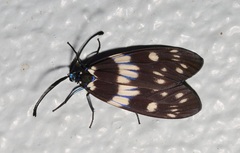
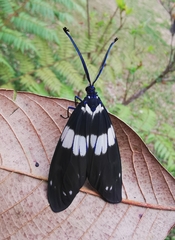
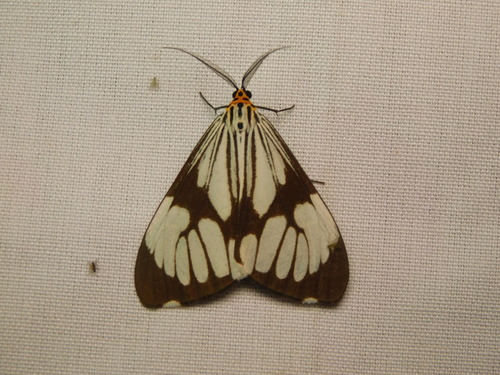
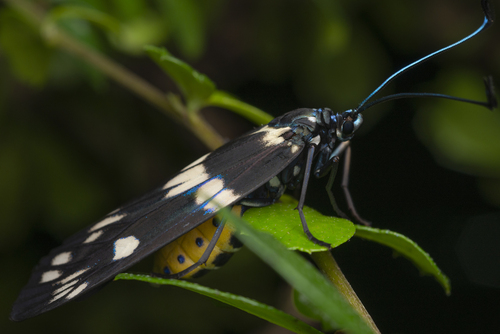
Eterusia aedea, the red slug caterpillar, is a species of moth in the family Zygaenidae. It was described by Carl Linnaeus in his 1763 Centuria Insectorum. It is found in Sri Lanka, India, Nepal, Taiwan, Japan and China.

The wingspan is about 50 mm for males and 56 mm for females. They have a semi-diurnal habit and rather elongated narrow body. The first two segments of the abdomen are black, and there are no dorsal bands in the male. The forewings are dark green. The basal black area of the hindwings is larger, reducing the width of the yellow band, which is very pale. The end of the abdomen is black in the male.

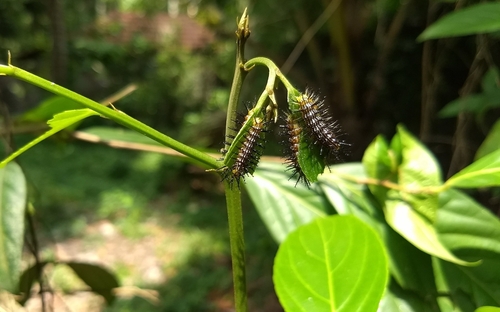
The larvae have been recorded feeding on a wide range of plants, including Bischofia javanica, Aporosa lindleyana, Aporosa villosa, Cornus florida, Lagerstroemia, Melastoma candidum, Myrica rubra, Sloanea formosana, Rhododendron, Symplocos glauca, Camellia (including C. japonica, C. sasanqua, C. sinensis, C. oleifera), Eurya japonica, Eurya septata, Cleyera japonica and Buddleja. The larvae of subspecies aedea, sinica, formosana, cingala and virescens have been reported as pests on tea.

Eterusia aedea aedea (Linnaeus, 1763)... Wikipedia →
Global Distribution

Parks Where Found

# Park Country Daily sighting probability
1 Periyar National Park 🇮🇳 India
~20%
2 Taroko National Park 🇹🇼 Taiwan
~20%
3 Sinharaja Forest Reserve 🇱🇰 Sri Lanka
~10%
4 Khao Yai National Park 🇹🇭 Thailand
~10%

Cities Where Found

# City Country Daily sighting probability
1 Taipei 🇹🇼 Taiwan
~10%
2 Hong Kong 🇨🇳 China
~10%
3 Tuen Mun 🇨🇳 China
~10%
4 Guangzhou 🇨🇳 China
~10%

Before you go

What are the chances of seeing a Red Slug Caterpillar in Periyar National Park?

Possible

About 20% of wildlife watchers report a Red Slug Caterpillar sighting in Periyar National Park on a given day, based on 5 verified sightings from GBIF citizen-science data from 2019 to 2026. It is the 31st most-seen of the 44 insects we can rate there. Over three days the chance rises to about 50%, and over a week to about 80%, if each day is a fresh chance.

When is the best time to see a Red Slug Caterpillar in Periyar National Park?

October

In that month about 50% of wildlife watchers report a Red Slug Caterpillar in Periyar National Park on a given day, against under 5% in January–July, September and November, the lowest months. That is one of Periyar National Park's wettest months, with about 330 mm of rain against 15 mm in February.

What time of day is best to see a Red Slug Caterpillar?

Between 8 and 11 am

Across all the parks we cover, that three-hour window holds the most Red Slug Caterpillar sightings with a recorded time, and about 8 in 10 of them come between 6 am and 6 pm: it is a daytime animal.

Is Periyar National Park the best place to see a Red Slug Caterpillar?

Yes

Of the 4 parks where we can rate Red Slug Caterpillar sightings, Periyar National Park has the highest daily chance: about 20%. Next come Taroko National Park (Taiwan, about 20%) and Sinharaja Forest Reserve (Sri Lanka, about 10%).

Which relatives of the Red Slug Caterpillar live in Periyar National Park?

Same order: Lepidoptera

The closest relatives of the Red Slug Caterpillar that you can see in Periyar National Park (order Lepidoptera, Butterflies and Moths) are Marbled White Moth (about 50%), Tamil Yeoman (about 40%) and Glad-Eye Bushbrown (about 40%), with each one's daily chance of a sighting.

Where does the Red Slug Caterpillar sighting chance come from?

GBIF citizen-science records

It is estimated from how often the Red Slug Caterpillar is recorded against all the insects logged in Periyar National Park (5 verified sightings from 2019 to 2026), calibrated against known sighting rates. Figures are rounded to the nearest 10% because citizen-science data supports honest approximations, not decimals, and months with records from fewer than five people show "—". How it works.

← Back to Periyar National Park