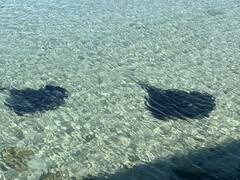
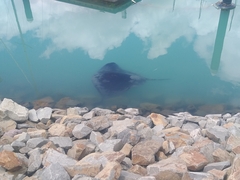
Short-tail Stingray

Short-tail Stingray

Bathytoshia brevicaudata

Daily sighting probability ~80% ยท Very likely
at Phillip Island Nature Park

In 3 days >90%

37 Verified sightings at Phillip Island Nature Park From 2019 to 2026
50 In all 2 parks
January Best month
โ˜€๏ธ Diurnal When it's spotted

About the Short-tail Stingray

The short-tail stingray or smooth stingray (Bathytoshia brevicaudata) is a common species of stingray in the family Dasyatidae. It occurs off southern Africa, typically offshore at a depth of 180โ€“480 m (590โ€“1,570 ft), and off southern Australia and New Zealand, from the intertidal zone to a depth of 156 m (512 ft). It is mostly bottom-dwelling in nature and can be found across a range of habitats from estuaries to reefs, but also frequently will swim into open water. One of the largest stingrays in the world, this heavy-bodied species can grow upwards of 2.1 m (6.9 ft) across and 350 kg (770 lb) in weight. Its plain-colored, diamond-shaped pectoral fin disc is characterized by a lack of dermal denticles (scales) even in adults, and white pores beside the head on either side. The body can have colors as well as dark grey or black with rows of white spots along each wing. Its tail is usually shorter than the disc and thick at the base. It is armed with large tubercles and a midline row of large thorns in front of the stinging spine which has the dorsal and ventral fin folds behind.

The diet of the short-tail stingray consists of invertebrates and bony fishes, including burrowing and midwater species. It tends to remain within a relatively limited area throughout the year, preferring deeper waters during the winter, and is not known to perform long migrations. Large aggregations of rays form seasonally at certain locations, such as in the summer at the Poor Knight Islands off New Zealand. Both birthing and mating have been documented within the aggregations at Poor Knights. This species is aplacental viviparous, with the developing embryos sustained by histotroph ("uterine milk") produced by the mother. The litter size is typically 6โ€Šโ€“10, but litter sizes of up to fifteen are not unheard of.

The short-tail stingray is not aggressive, but is capable of inflicting a lethal wound with its long, venomous sting. It is often caught incidentally by commercial and recreational fisheries throughout its range, usually surviving to be released. Because its population does not appear threatened by human activity, the International Union for Conservation of Nature (IUCN) lists it under least concern.

Wikipedia โ†’

Global Distribution

Parks Where Found

# Park Country Daily sighting probability
1 Phillip Island Nature Park ๐Ÿ‡ฆ๐Ÿ‡บ Australia
~80%
2 Rottnest Island ๐Ÿ‡ฆ๐Ÿ‡บ Australia
~50%

Zoos & Centres Where Found

# Zoo / Centre Country
1 Lisbon Oceanarium ๐Ÿ‡ต๐Ÿ‡น Portugal In captivity
2 Oceanarium in Saint Petersburg ๐Ÿ‡ท๐Ÿ‡บ Russia In captivity
3 Greensboro Science Center ๐Ÿ‡บ๐Ÿ‡ธ United States In captivity
4 Sea World ๐Ÿ‡ฆ๐Ÿ‡บ Australia In captivity
5 Yokohama Hakkeijima Sea Paradise ๐Ÿ‡ฏ๐Ÿ‡ต Japan In captivity
6 Kamogawa Sea World ๐Ÿ‡ฏ๐Ÿ‡ต Japan In captivity
7 Notojima Aquarium ๐Ÿ‡ฏ๐Ÿ‡ต Japan In captivity
8 Georgia Aquarium ๐Ÿ‡บ๐Ÿ‡ธ United States In captivity
9 Kelly Tarlton's Sea Life Aquarium ๐Ÿ‡ณ๐Ÿ‡ฟ New Zealand In captivity
10 Kyoto Aquarium ๐Ÿ‡ฏ๐Ÿ‡ต Japan In captivity
11 Marine World Uminonakamichi ๐Ÿ‡ฏ๐Ÿ‡ต Japan In captivity
12 Melbourne Aquarium ๐Ÿ‡ฆ๐Ÿ‡บ Australia In captivity
13 Osaka Aquarium Kaiyukan ๐Ÿ‡ฏ๐Ÿ‡ต Japan In captivity
14 Sea Life Sydney Aquarium ๐Ÿ‡ฆ๐Ÿ‡บ Australia In captivity
15 Two Oceans Aquarium ๐Ÿ‡ฟ๐Ÿ‡ฆ South Africa In captivity
16 Xpark ๐Ÿ‡น๐Ÿ‡ผ Taiwan In captivity
17 Aquarium of Western Australia ๐Ÿ‡ฆ๐Ÿ‡บ Australia In captivity
18 Wild Life Sydney ๐Ÿ‡ฆ๐Ÿ‡บ Australia In captivity
19 National Aquarium of New Zealand ๐Ÿ‡ณ๐Ÿ‡ฟ New Zealand In captivity
20 ็ฎฑๆ นๅœ’ๆฐดๆ—้คจ ๐Ÿ‡ฏ๐Ÿ‡ต Japan In captivity

Before you go

What are the chances of seeing a Short-tail Stingray in Phillip Island Nature Park?

Very likely

About 80% of wildlife watchers report a Short-tail Stingray sighting in Phillip Island Nature Park on a given day, based on 37 verified sightings from GBIF citizen-science data from 2019 to 2026. Over three days the chance rises to over 90%, if each day is a fresh chance.

When is the best time to see a Short-tail Stingray in Phillip Island Nature Park?

Any time of year

In every month with enough records, about 90% of wildlife watchers report a Short-tail Stingray in Phillip Island Nature Park on a given day, so our monthly data shows no clear season. June to September have too few records to rate.

What time of day is best to see a Short-tail Stingray?

Between 9 am and noon

Across all the parks we cover, that three-hour window holds the most Short-tail Stingray sightings with a recorded time, and about 8 in 10 of them come between 6 am and 6 pm: it is a daytime animal.

Is Phillip Island Nature Park the best place to see a Short-tail Stingray?

Yes

Of the 2 parks where we can rate Short-tail Stingray sightings, Phillip Island Nature Park has the highest daily chance: about 80%. Next come Rottnest Island (Australia, about 50%).

Where does the Short-tail Stingray sighting chance come from?

GBIF citizen-science records

It is estimated from how often the Short-tail Stingray is recorded against all the sharks and rays logged in Phillip Island Nature Park (37 verified sightings from 2019 to 2026), calibrated against known sighting rates. Figures are rounded to the nearest 10% because citizen-science data supports honest approximations, not decimals, and months with records from fewer than five people show "โ€”". How it works.

โ† Back to Phillip Island Nature Park