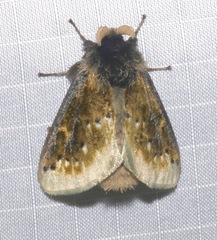
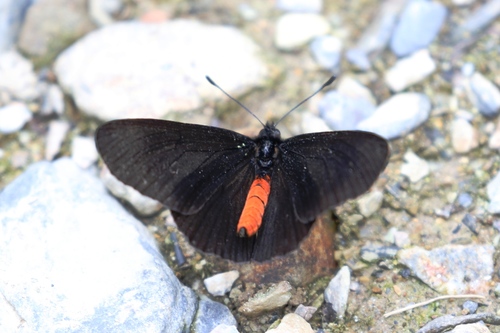
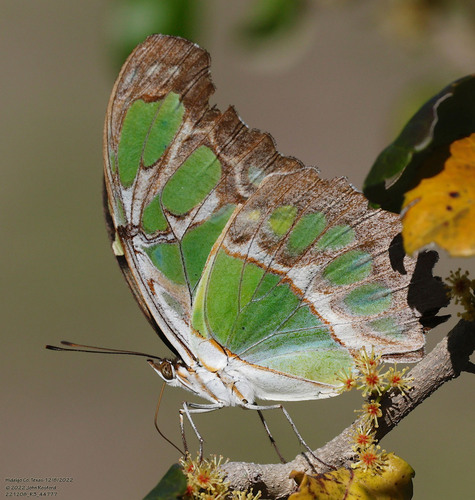
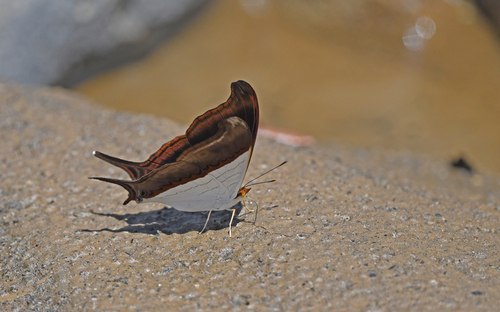
Macara alydda
Daily sighting probability ~10% · With luck
at Podocarpus National Park

In 3 days ~40% in a week ~70%

6 Verified sightings at Podocarpus National Park From 2019 to 2026
6 In 1 park
January Best month
🌙 Nocturnal When it's spotted

About the Macara alydda

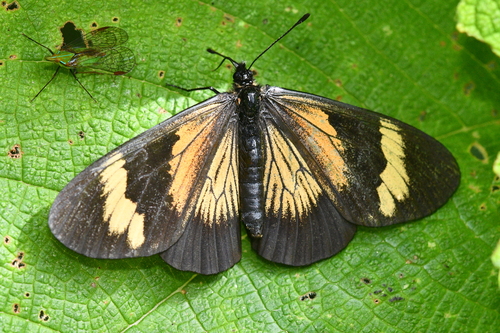
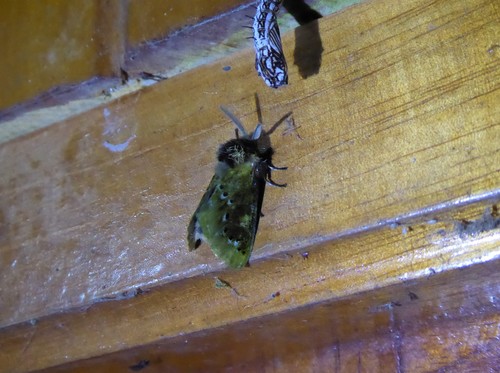
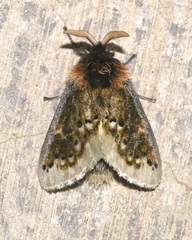
Macara alydda is a moth of the family Megalopygidae. It was described by Herbert Druce in 1887. It is found in Costa Rica and Napo Province, Ecuador. The habitat consists of montane cloud forests. The forewings are dark silky brown, with the outer margin, from the apex to the anal angle, broadly banded with pale fawn. There is a series of silvery white spots (which have black dots on the side nearest the base) on the inner side of the pale colour. There are two black spots close to the apex and a pale-fawn mark at the end of the cell. The hindwings are uniform pale silky grey.

The larvae have been recorded feeding on a wide range of host plants, including Miconia capitellata, Miconia dielsii, Monochaetum lineatum, Andesanthus lepidotus (syn. Tibouchina lepidota), Nectandra species, Gunnera brephogea, Disterigma acuminatum, Psammisia species, Croton species, Alchornea pearcei, Alchornea grandis, Acalypha scandens, Acalypha macrstachya, Acalypha platyphylla, Erythrina edulis, Weinmania balbisiana, Clusia multiflora, Cayaponia macrocalix, Chusquea scandens and Rubus species. Early instar larvae feed in large groups. Wikipedia →
Global Distribution

Parks Where Found

# Park Country Daily sighting probability
1 Podocarpus National Park 🇪🇨 Ecuador
~10%

More parks will be added in future updates.

Before you go

What are the chances of seeing a Macara alydda in Podocarpus National Park?

With luck

About 10% of wildlife watchers report a Macara alydda sighting in Podocarpus National Park on a given day, based on 6 verified sightings from GBIF citizen-science data from 2019 to 2026. It is the 42nd most-seen of the 61 insects we can rate there. Over three days the chance rises to about 40%, and over a week to about 70%, if each day is a fresh chance.

When is the best time to see a Macara alydda in Podocarpus National Park?

January

In that month about 40% of wildlife watchers report a Macara alydda in Podocarpus National Park on a given day, against under 5% in February to December, the lowest months.

What time of day is best to see a Macara alydda?

Between 4 and 7 am

Across all the parks we cover, that three-hour window holds the most Macara alydda sightings with a recorded time, and about 8 in 10 of them come between 6 pm and 6 am: it is mostly seen at night.

Where else can you see a Macara alydda?

Only Podocarpus National Park, in our data

Podocarpus National Park is the only park on Wallace's Line with enough records to rate Macara alydda sightings: about 10% of wildlife watchers there report one on a given day.

Which relatives of the Macara alydda live in Podocarpus National Park?

Same order: Lepidoptera

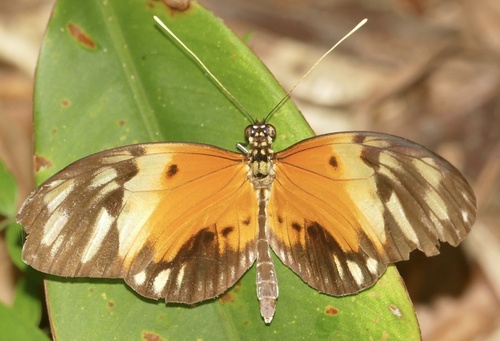
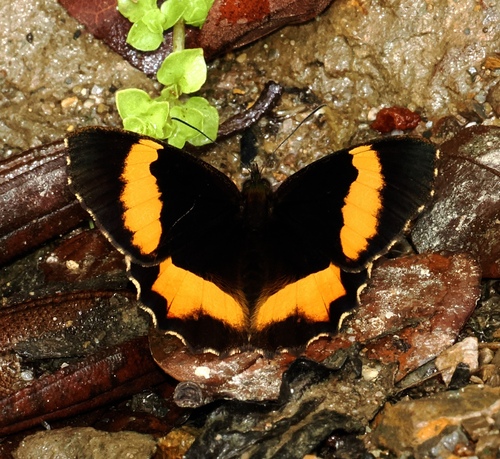
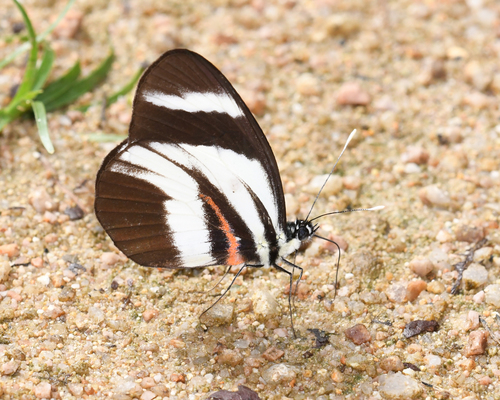
The closest relatives of the Macara alydda that you can see in Podocarpus National Park (order Lepidoptera, Butterflies and Moths) are Numata Longwing (about 30%), Smicropus eucyrta (about 30%) and Pedaliodes pelinna (about 30%), with each one's daily chance of a sighting.

Where does the Macara alydda sighting chance come from?

GBIF citizen-science records

It is estimated from how often the Macara alydda is recorded against all the insects logged in Podocarpus National Park (6 verified sightings from 2019 to 2026), calibrated against known sighting rates. Figures are rounded to the nearest 10% because citizen-science data supports honest approximations, not decimals, and months with records from fewer than five people show "—". How it works.

← Back to Podocarpus National Park