
Spangled Coquette

Spangled Coquette

Lophornis stictolophus

Silhouette: Ferran Sayol · PhyloPic

LCLeast ConcernNTVUENCR
Daily sighting probability <5% · Rare
at Podocarpus National Park

In 3 days ~10%

31 Verified sightings at Podocarpus National Park From 2019 to 2026
31 In 1 park
February Best month
☀️ Diurnal When it's spotted

About the Spangled Coquette

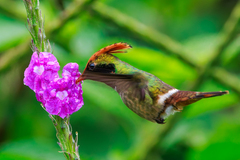
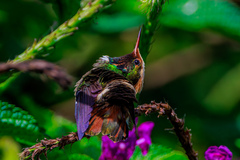
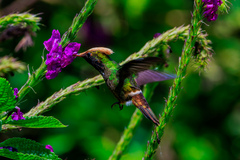
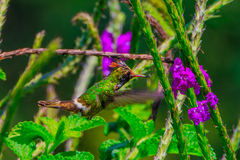
The spangled coquette, coquette pailletée (French), coqueta coronada, or coqueta lentejuelada (both Spanish) (Lophornis stictolophus) is a species of hummingbird in the "coquettes", tribe Lesbiini of subfamily Lesbiinae. It is found in Brazil, Colombia, Ecuador, Peru, and Venezuela.

The spangled coquette is believed to be most closely related to the short-crested coquette (L. brachylophus) and rufous-crested coquette (L. delattrei). It is monotypic. The spangled coquette is 6.4 to 6.9 cm (2.5 to 2.7 in) long. Both sexes have a short, straight, red bill with a black tip and bronzy green upperparts with a white band across the rump. Their lower rump and uppertail coverts are purplish bronze. Adult males have a short, bushy, rufous crest with black tips on the feathers, and short rufous and iridescent green cheek tufts. Its throat is iridescent green with a few white-tipped feathers and the rest of the underparts bronzy green. Its central tail feathers are green and the rest cinnamon-rufous with black tips. The adult female does not have the male's crest or cheek tufts. It has a whitish throat with large rufous spots. It underparts are... Wikipedia →

Sounds

Call0:30

Ecuador · 2014

© Jerome Fischer · XC208697 · CC BY-NC-SA 4.0

Global Distribution

Parks Where Found

# Park Country Daily sighting probability
1 Podocarpus National Park 🇪🇨 Ecuador
<5%

More parks will be added in future updates.

Before you go

What are the chances of seeing a Spangled Coquette in Podocarpus National Park?

Rare

Under 5% of wildlife watchers report a Spangled Coquette sighting in Podocarpus National Park on a given day, based on 31 verified sightings from GBIF citizen-science data from 2019 to 2026. It is the 274th most-seen of the 446 birds we can rate there. Over three days the chance rises to about 10%, if each day is a fresh chance.

When is the best time to see a Spangled Coquette in Podocarpus National Park?

February

In that month about 10% of wildlife watchers report a Spangled Coquette in Podocarpus National Park on a given day, against under 5% in March to January, the lowest months.

What time of day is best to see a Spangled Coquette?

Between 11 am and 2 pm

Across all the parks we cover, that three-hour window holds the most Spangled Coquette sightings with a recorded time, and about 8 in 10 of them come between 6 am and 6 pm: it is a daytime animal.

Where else can you see a Spangled Coquette?

Only Podocarpus National Park, in our data

Podocarpus National Park is the only park on Wallace's Line with enough records to rate Spangled Coquette sightings: under 5% of wildlife watchers there report one on a given day.

Which relatives of the Spangled Coquette live in Podocarpus National Park?

Same family: Trochilidae

The closest relatives of the Spangled Coquette that you can see in Podocarpus National Park (family Trochilidae, Hummingbirds) are Collared Inca (about 40%), Amethyst-throated Sunangel (about 40%) and Chestnut-breasted Coronet (about 40%), with each one's daily chance of a sighting.

Where does the Spangled Coquette sighting chance come from?

GBIF citizen-science records

It is estimated from how often the Spangled Coquette is recorded against all the birds logged in Podocarpus National Park (31 verified sightings from 2019 to 2026), calibrated against known sighting rates. Figures are rounded to the nearest 10% because citizen-science data supports honest approximations, not decimals, and months with records from fewer than five people show "—". How it works.

← Back to Podocarpus National Park