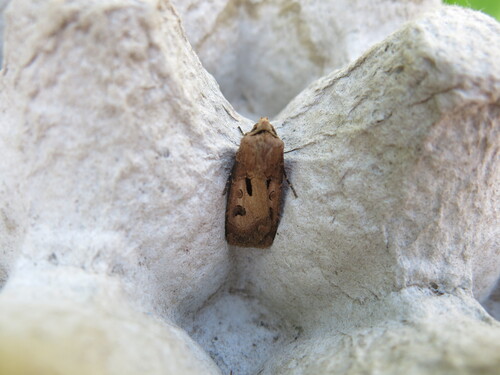
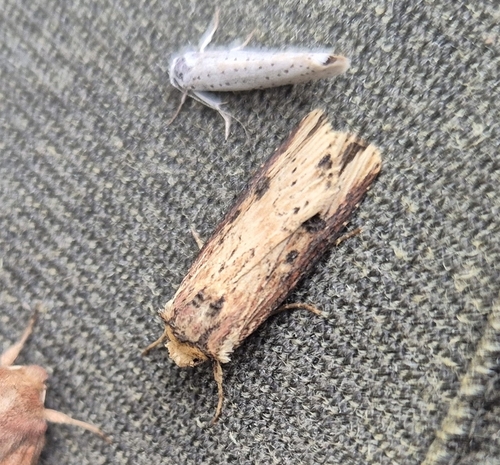
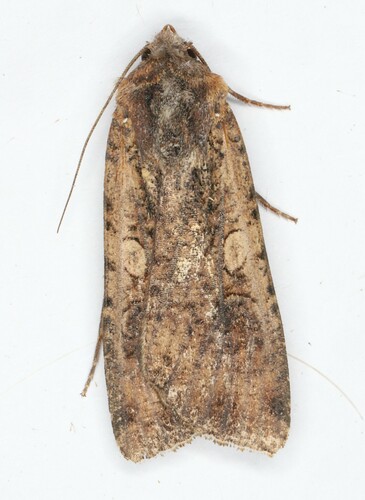
Feathered Ear

Feathered Ear

Pachetra sagittigera

Daily sighting probability <5% · Rare
at Pyrénées National Park

In 3 days ~10% in a week ~20%

8 Verified sightings at Pyrénées National Park From 2019 to 2026
31 In all 2 parks
June Best month
☀️🌙 Day & Night When it's spotted

About the Feathered Ear

Pachetra is a monotypic genus of moth in the family Noctuidae erected by Achille Guenée in 1841. Its only species, Pachetra sagittigera, the feathered ear, was first described by Johann Siegfried Hufnagel in 1766. It is found in central and southern Europe, east to the Ural, north to southern England, Sweden and Finland. Southwards it is found from Anatolia, central Asia and the Altai up to Mongolia. It is also present in North Africa.

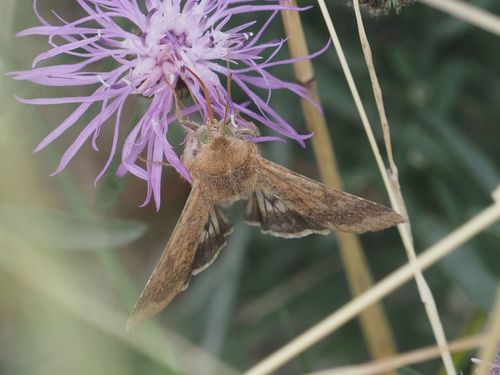
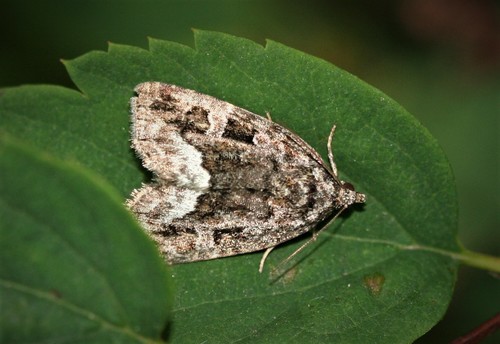
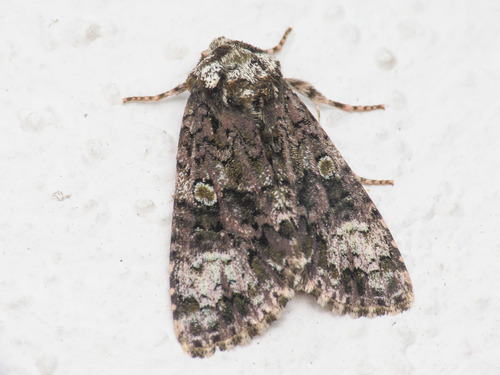
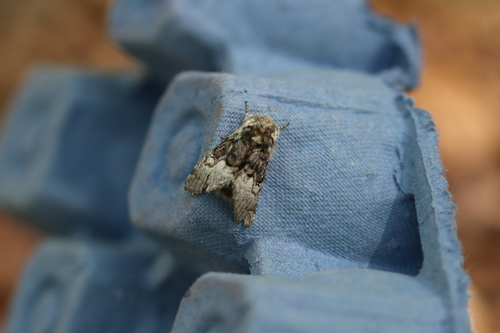
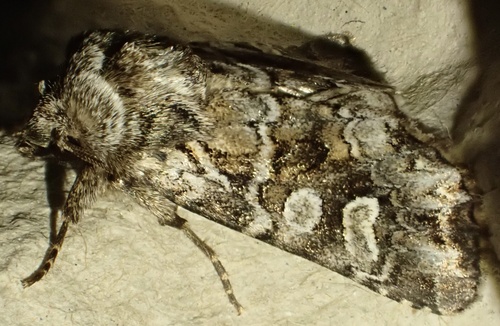
The wingspan is 32–45 mm. Forewing grey suffused with darker grey and brown; claviform stigma variable in size, blackish; upper stigmata large, white edged with grey centres, sometimes wholly white: submarginal line diffusely pale, preceded by black wedge-shaped marks; hindwing dirty grey, with darker cellspot, postmedian line, and submarginal cloud; in vestigialis Esp. there is a prominent white patch at base of costa of forewing; — ravida Esp. is a rarer form in which the median and marginal areas are both reddish brown; — pyrenaica Oberth. [now ssp.], from the Pyrenees, is a melanic form in which the forewings are suffused all over with blackish grey; — bombycina Ev., from the Ural Mts., is smaller and darker... Wikipedia →

Global Distribution

Parks Where Found

# Park Country Daily sighting probability
1 Mercantour National Park 🇫🇷 France
~20%
2 Pyrénées National Park 🇫🇷 France
<5%

Before you go

What are the chances of seeing a Feathered Ear in Pyrénées National Park?

Rare

Under 5% of wildlife watchers report a Feathered Ear sighting in Pyrénées National Park on a given day, based on 8 verified sightings from GBIF citizen-science data from 2019 to 2026. It is the 940th most-seen of the 1277 insects we can rate there. Over three days the chance rises to about 10%, and over a week to about 20%, if each day is a fresh chance.

When is the best time to see a Feathered Ear in Pyrénées National Park?

May and June

In those months about 10% of wildlife watchers report a Feathered Ear in Pyrénées National Park on a given day, against under 5% in July to April, the lowest months.

What time of day is best to see a Feathered Ear?

Between 10 pm and 1 am

Across all the parks we cover, that three-hour window holds the most Feathered Ear sightings with a recorded time, and about 6 in 10 of them come between 6 pm and 6 am: it is seen both by day and at night.

Is Pyrénées National Park the best place to see a Feathered Ear?

2nd of 2

Of the 2 parks where we can rate Feathered Ear sightings, Pyrénées National Park ranks 2nd at under 5%. The best odds are in Mercantour National Park (France, about 20%).

Which relatives of the Feathered Ear live in Pyrénées National Park?

Same family: Noctuidae

The closest relatives of the Feathered Ear that you can see in Pyrénées National Park (family Noctuidae, Cutworm Moths and Allies) are Silver Υ (about 10%), Cotton Bollworm Moth (about 10%) and Marbled White-Spot (about 10%), with each one's daily chance of a sighting.

Where does the Feathered Ear sighting chance come from?

GBIF citizen-science records

It is estimated from how often the Feathered Ear is recorded against all the insects logged in Pyrénées National Park (8 verified sightings from 2019 to 2026), calibrated against known sighting rates. Figures are rounded to the nearest 10% because citizen-science data supports honest approximations, not decimals, and months with records from fewer than five people show "—". How it works.

← Back to Pyrénées National Park