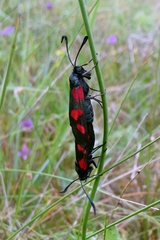
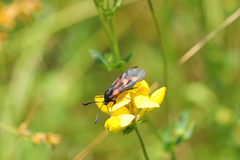
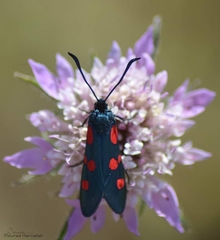
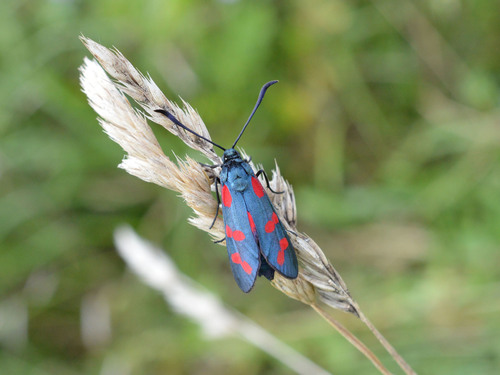
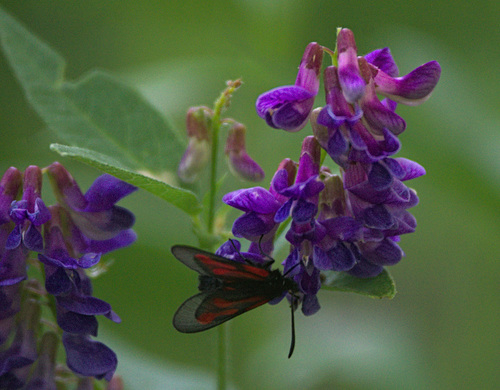
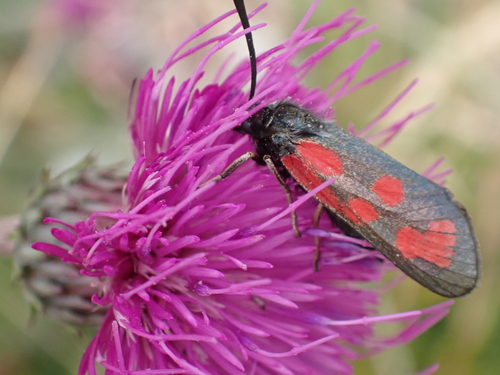
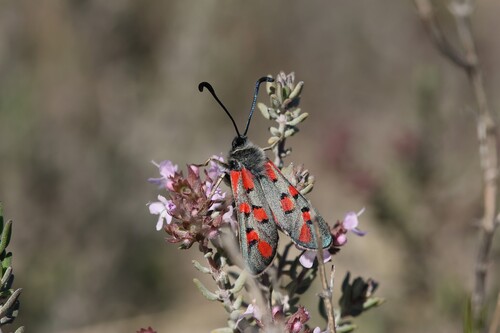
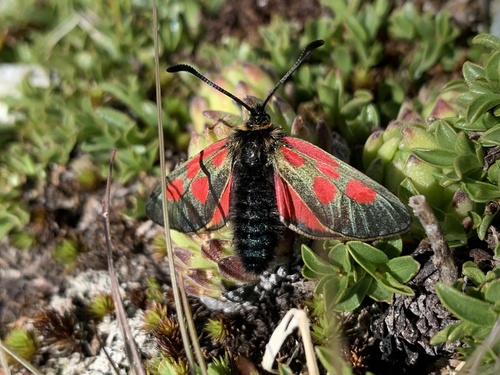
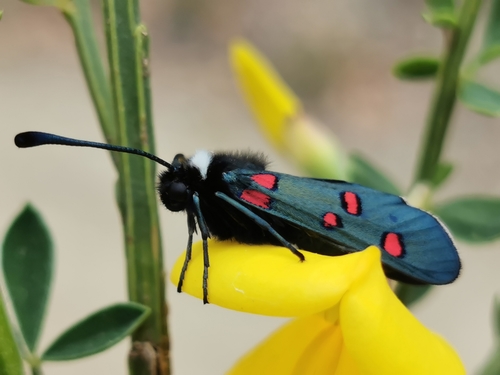
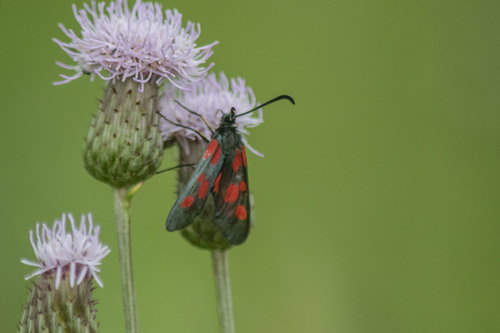
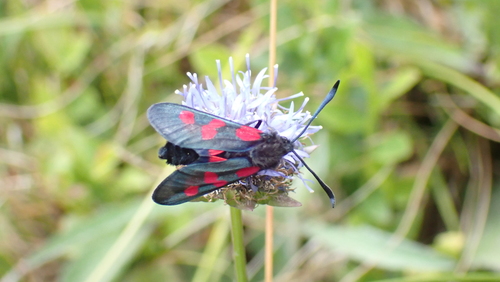
Five-Spot Burnet

Five-Spot Burnet

Zygaena trifolii

Daily sighting probability ~10% · With luck
at Pyrénées National Park

In 3 days ~20% in a week ~40%

22 Verified sightings at Pyrénées National Park From 2019 to 2026
53 In all 3 parks
May Best month
☀️ Diurnal When it's spotted

About the Five-Spot Burnet

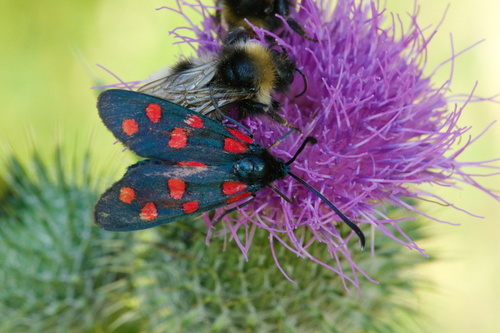
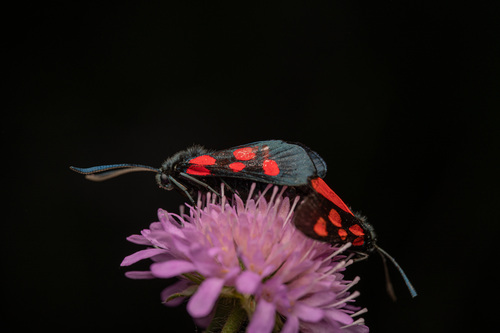
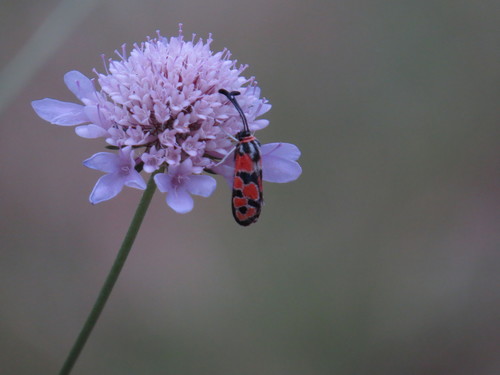
Zygaena trifolii, the five-spot burnet, is a day-flying moth in the family Zygaenidae found in North Africa and Europe. It was described by the German zoologist Eugenius Johann Christoph Esper in 1783 from the type specimen found in Frankfurt am Main, Germany.

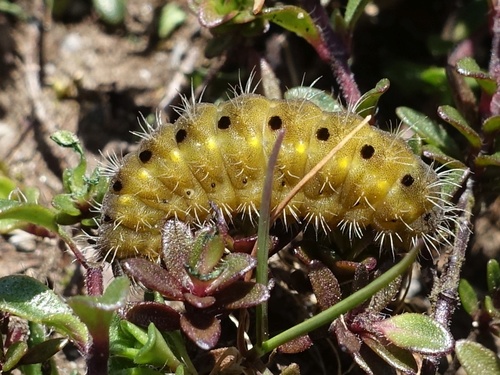
The wingspan is 28–33 mm. Adults are on wing from the mid-June to the beginning of August in one generation per year. Ovum Eggs are pale yellow and deposited in several layers to form an irregularly shaped batch. Larvae The larvae feed on the leaves of greater bird's-foot trefoil (Lotus uliginosus) and bird's-foot trefoil (Lotus corniculatus). The species overwinters in the larval stage and may overwinter twice.

Pupa The pupa is shiny, black or blackish-brown and 10–18 mm long. Pupation of subsp descreta takes place in June and July in a cocoon which is spun high on marsh vegetation such as soft rush (Juncus effusus). Pupation of subsp palustrella takes place close to the ground and concealed amongst grass and other herbage in late-April to May. The cocoon is fusiform, irregularly ribbed and ranges from dirty white to creamy-white to bright yellow.

Distributions where known. Wikipedia →
Global Distribution

Parks Where Found

# Park Country Daily sighting probability
1 Sierra Nevada National Park 🇪🇸 Spain
~10%
2 Pyrénées National Park 🇫🇷 France
~10%
3 Wadden Sea National Park 🇩🇪 Germany
<5%

Cities Where Found

# City Country Daily sighting probability
1 Porto 🇵🇹 Portugal
<5%
2 London 🇬🇧 United Kingdom
<5%

Before you go

What are the chances of seeing a Five-Spot Burnet in Pyrénées National Park?

With luck

About 10% of wildlife watchers report a Five-Spot Burnet sighting in Pyrénées National Park on a given day, based on 22 verified sightings from GBIF citizen-science data from 2019 to 2026. It is the 415th most-seen of the 1277 insects we can rate there. Over three days the chance rises to about 20%, and over a week to about 40%, if each day is a fresh chance.

When is the best time to see a Five-Spot Burnet in Pyrénées National Park?

May–July and September

In those months about 10% of wildlife watchers report a Five-Spot Burnet in Pyrénées National Park on a given day, against under 5% in August and October–April, the lowest months.

What time of day is best to see a Five-Spot Burnet?

Between noon and 3 pm

Across all the parks we cover, that three-hour window holds the most Five-Spot Burnet sightings with a recorded time, and about 9 in 10 of them come between 6 am and 6 pm: it is a daytime animal.

Is Pyrénées National Park the best place to see a Five-Spot Burnet?

Among the best

Of the 3 parks where we can rate Five-Spot Burnet sightings, Pyrénées National Park ranks 2nd at about 10%, level with the leaders once rounded. The best odds are in Sierra Nevada National Park (Spain, about 10%).

Where does the Five-Spot Burnet sighting chance come from?

GBIF citizen-science records

It is estimated from how often the Five-Spot Burnet is recorded against all the insects logged in Pyrénées National Park (22 verified sightings from 2019 to 2026), calibrated against known sighting rates. Figures are rounded to the nearest 10% because citizen-science data supports honest approximations, not decimals, and months with records from fewer than five people show "—". How it works.

← Back to Pyrénées National Park