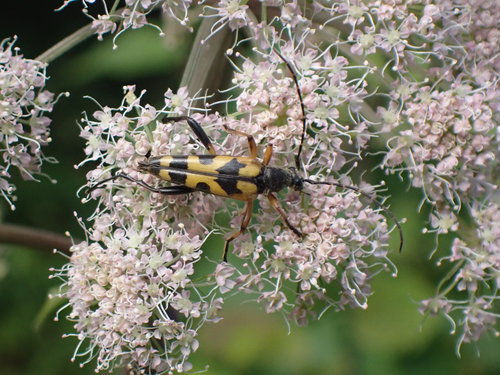
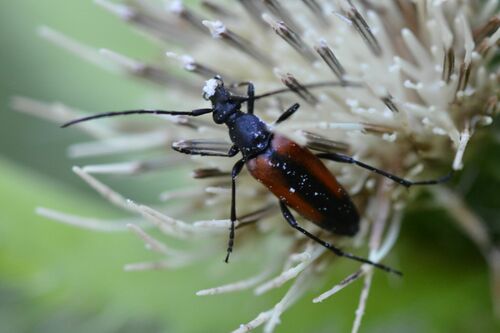
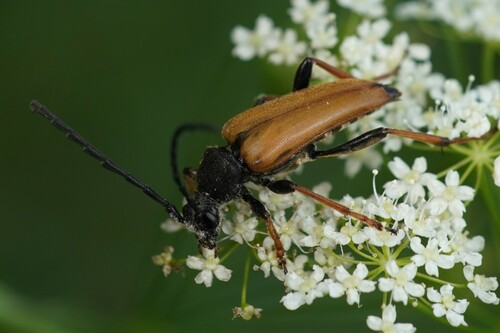
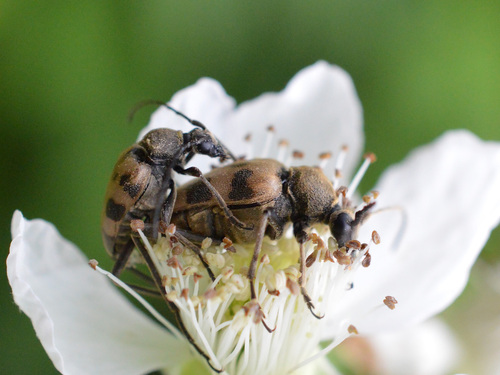
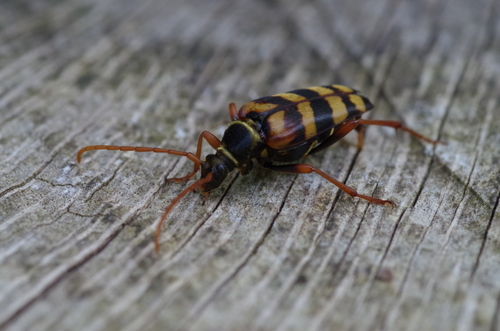
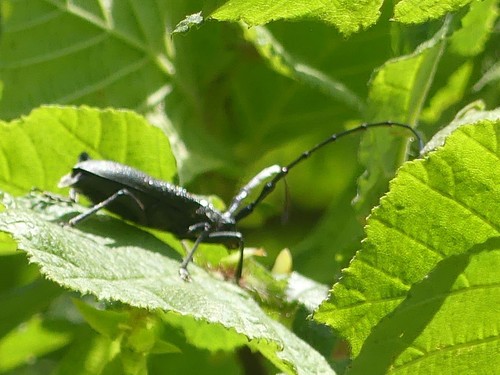
Iberodorcadion fuliginator

Iberodorcadion fuliginator

Iberodorcadion fuliginator

Daily sighting probability ~20% · Possible
at Pyrénées National Park

In 3 days ~40% in a week ~70%

108 Verified sightings at Pyrénées National Park From 2019 to 2026
144 In all 4 parks
May Best month
☀️ Diurnal When it's spotted

About the Iberodorcadion fuliginator

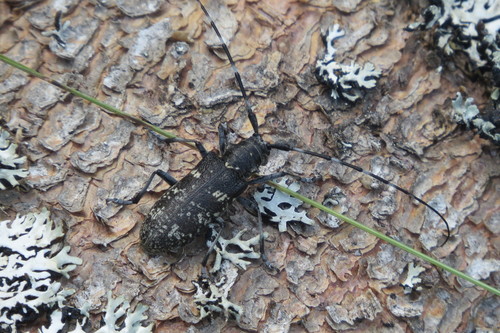
Iberodorcadion fuliginator is a species of beetle in the family Cerambycidae. It was described by Carl Linnaeus in his landmark 1758 10th edition of Systema Naturae. It is known from Central Europe: Spain, Belgium, Luxembourg (from where it is considered to be extirpated), Netherlands, Portugal, France, Germany, Austria, Lithuania, and Switzerland.

Iberodorcadion fuliginator is a flightless beetle that feeds on grass. Its range extends from the Iberian Peninsula through Central Europe to Poland and from the southern Netherlands to northern Switzerland. It is highly endangered.

The beetle has a 2-year life cycle. In the spring, eggs are deposited in stems of grass such as Bromus erectus, their main larval host. The larvae hatch in May or June, feed on grass roots, and pupate after winter hibernation. Adults emerge from the pupae in July or August, but remain in the soil until the end of their second winter hibernation. They emerge from the soil in the spring and are sexually active for about a month.

Iberodorcadion has sometimes been considered a subgenus of the genus Dorcadion, resulting in the name Dorcadion fuliginator for this species. Wikipedia →
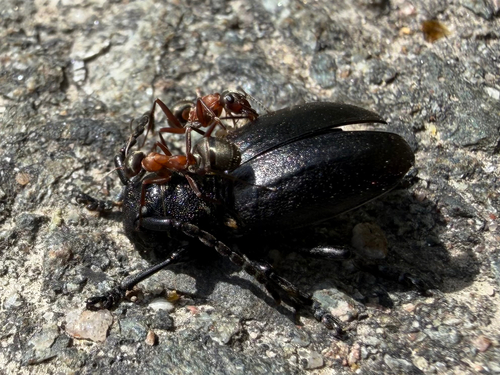
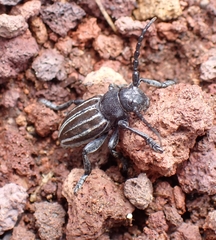
Global Distribution

Parks Where Found

# Park Country Daily sighting probability
1 Aigüestortes National Park 🇪🇸 Spain
~30%
2 Pyrénées National Park 🇫🇷 France
~20%
3 Ordesa y Monte Perdido National Park 🇪🇸 Spain
~10%
4 Cévennes National Park 🇫🇷 France
<5%

Before you go

What are the chances of seeing an Iberodorcadion fuliginator in Pyrénées National Park?

Possible

About 20% of wildlife watchers report an Iberodorcadion fuliginator sighting in Pyrénées National Park on a given day, based on 108 verified sightings from GBIF citizen-science data from 2019 to 2026. It is the 56th most-seen of the 1277 insects we can rate there. Over three days the chance rises to about 40%, and over a week to about 70%, if each day is a fresh chance.

When is the best time to see an Iberodorcadion fuliginator in Pyrénées National Park?

May

In that month about 30% of wildlife watchers report an Iberodorcadion fuliginator in Pyrénées National Park on a given day, against under 5% in March and September–January, the lowest months.

What time of day is best to see an Iberodorcadion fuliginator?

Between noon and 3 pm

Across all the parks we cover, that three-hour window holds the most Iberodorcadion fuliginator sightings with a recorded time, and nearly all of them come between 6 am and 6 pm: it is a daytime animal.

Is Pyrénées National Park the best place to see an Iberodorcadion fuliginator?

2nd of 4

Of the 4 parks where we can rate Iberodorcadion fuliginator sightings, Pyrénées National Park ranks 2nd at about 20%. The best odds are in Aigüestortes National Park (Spain, about 30%).

Which relatives of the Iberodorcadion fuliginator live in Pyrénées National Park?

Same family: Cerambycidae

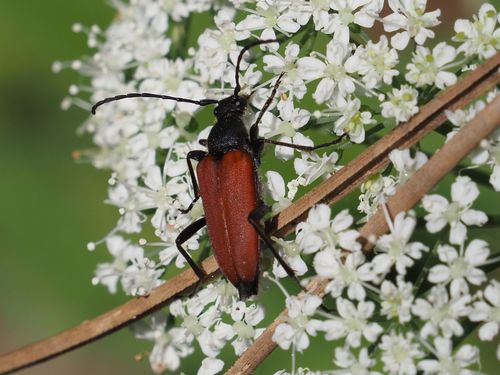
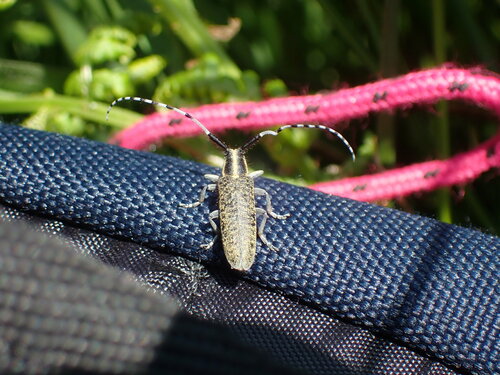
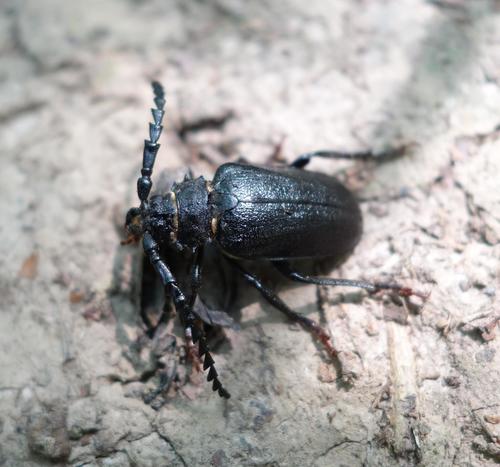
The closest relatives of the Iberodorcadion fuliginator that you can see in Pyrénées National Park (family Cerambycidae, Longhorn Beetles) are Spotted Longhorn Beetle (about 20%), Alpine Longhorn Rosalia (about 10%) and Morimus asper (about 10%), with each one's daily chance of a sighting.

Where does the Iberodorcadion fuliginator sighting chance come from?

GBIF citizen-science records

It is estimated from how often the Iberodorcadion fuliginator is recorded against all the insects logged in Pyrénées National Park (108 verified sightings from 2019 to 2026), calibrated against known sighting rates. Figures are rounded to the nearest 10% because citizen-science data supports honest approximations, not decimals, and months with records from fewer than five people show "—". How it works.

← Back to Pyrénées National Park