Long-Winged Pearl

Long-Winged Pearl

Anania lancealis

Daily sighting probability <5% · Rare
at Pyrénées National Park

In 3 days ~10% in a week ~20%

5 Verified sightings at Pyrénées National Park From 2019 to 2026
23 In all 3 parks
May Best month
☀️🌙 Day & Night When it's spotted

About the Long-Winged Pearl

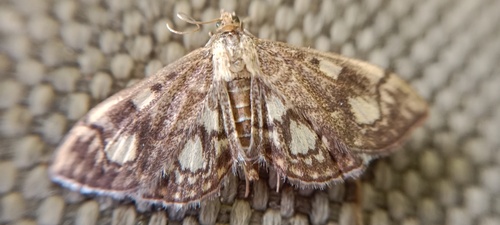
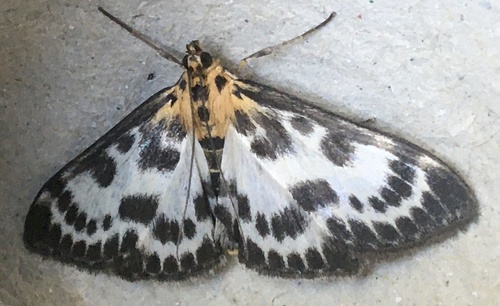
Anania lancealis is a species of moth of the family Crambidae, described by the Austrian lepidopterists Michael Denis and Ignaz Schiffermüller in 1775. The moth is found in Asia and Europe. Anania lancealis lancealis Anania lancealis bergmani

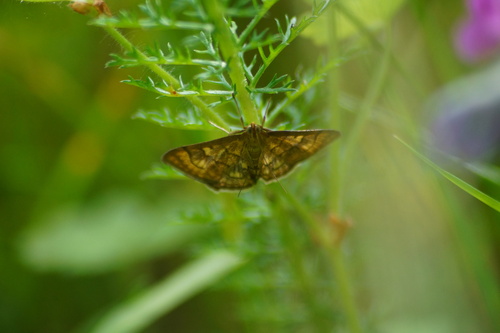
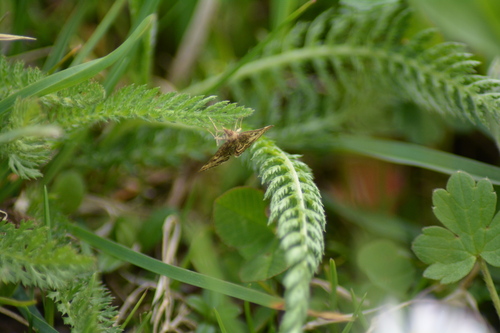
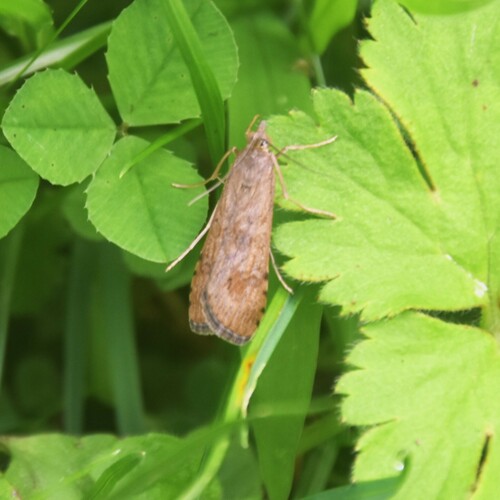
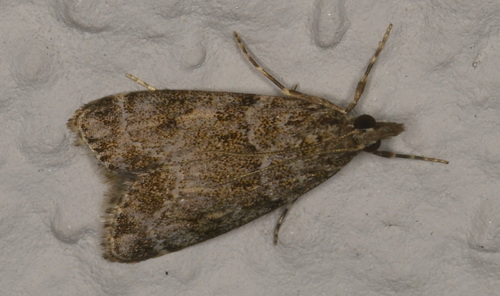
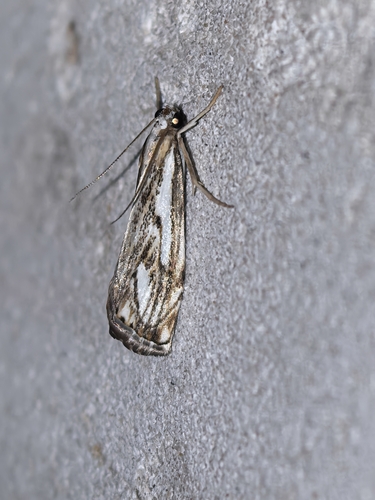
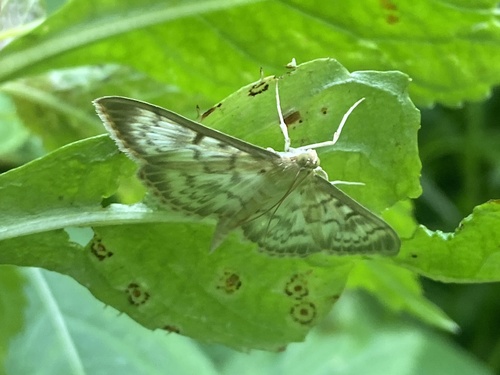
Anania lancealis honshuensis Anania lancealis pryeri Anania lancealis sinensis Anania lancealis taiwanensis The wingspan of Anania lancealis can reach 30–34 mm. Its forewings are long and narrow, especially in males. The upperside of the wings is whitish, with brown lines and patches. Meyrick - Forewings whitish ochreous, mostly suffused with fuscous-grey; lines dark fuscous, first irregular, second serrate, curved, indented below middle, preceded by a clear blotch in disc and edged posteriorly by a clear line; small dark fuscous orbicular and discal marks, separated by a clear patch. Hindwings as forewings, but anterior markings absent. Larva green; dorsal line darker, broadly edged with grey-whitish or grey; spiracular whitish; head pale brownish, dark-speckled.

See also Parsons et al. These moths fly at dusk from May to mid-August depending on the location. The larvae feed on hemp agrimony (Eupatorium cannabinum... Wikipedia →
Global Distribution

Parks Where Found

# Park Country Daily sighting probability
1 Snowdonia National Park 🇬🇧 United Kingdom
~10%
2 Bavarian Forest National Park 🇩🇪 Germany
~10%
3 Pyrénées National Park 🇫🇷 France
<5%

Before you go

What are the chances of seeing a Long-Winged Pearl in Pyrénées National Park?

Rare

Under 5% of wildlife watchers report a Long-Winged Pearl sighting in Pyrénées National Park on a given day, based on 5 verified sightings from GBIF citizen-science data from 2019 to 2026. It is the 1144th most-seen of the 1277 insects we can rate there. Over three days the chance rises to about 10%, and over a week to about 20%, if each day is a fresh chance.

When is the best time to see a Long-Winged Pearl in Pyrénées National Park?

May

In that month about 10% of wildlife watchers report a Long-Winged Pearl in Pyrénées National Park on a given day, against under 5% in June to April, the lowest months.

What time of day is best to see a Long-Winged Pearl?

Between 10 pm and 1 am

Across all the parks we cover, that three-hour window holds the most Long-Winged Pearl sightings with a recorded time, and about half of them come between 6 pm and 6 am: it is seen both by day and at night.

Is Pyrénées National Park the best place to see a Long-Winged Pearl?

3rd of 3

Of the 3 parks where we can rate Long-Winged Pearl sightings, Pyrénées National Park ranks 3rd at under 5%. The best odds are in Snowdonia National Park (United Kingdom, about 10%) and Bavarian Forest National Park (Germany, about 10%).

Where does the Long-Winged Pearl sighting chance come from?

GBIF citizen-science records

It is estimated from how often the Long-Winged Pearl is recorded against all the insects logged in Pyrénées National Park (5 verified sightings from 2019 to 2026), calibrated against known sighting rates. Figures are rounded to the nearest 10% because citizen-science data supports honest approximations, not decimals, and months with records from fewer than five people show "—". How it works.

← Back to Pyrénées National Park