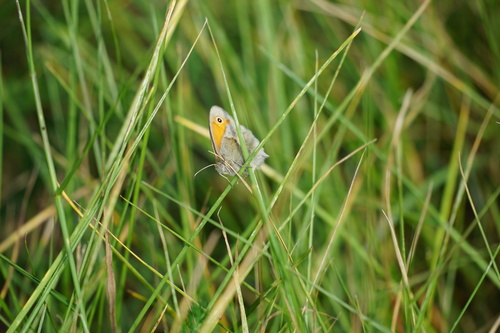
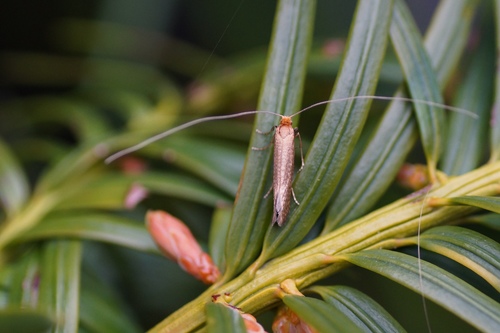
Nematopogon adansoniella

Nematopogon adansoniella

Nematopogon adansoniella

Daily sighting probability <5% · Rare
at Pyrénées National Park

In 3 days ~10% in a week ~20%

5 Verified sightings at Pyrénées National Park From 2019 to 2026
5 In 1 park
May Best month
☀️🌙 Day & Night When it's spotted

About the Nematopogon adansoniella

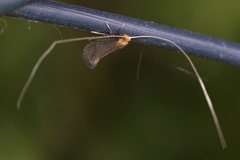
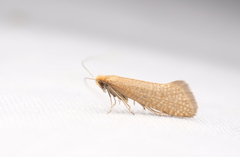
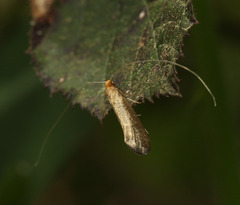
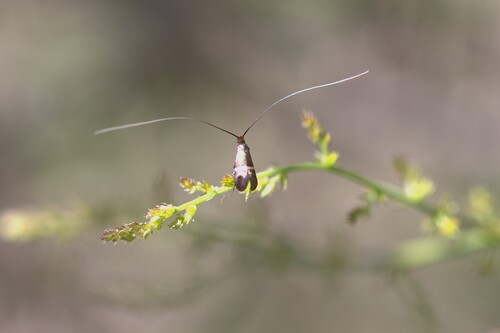
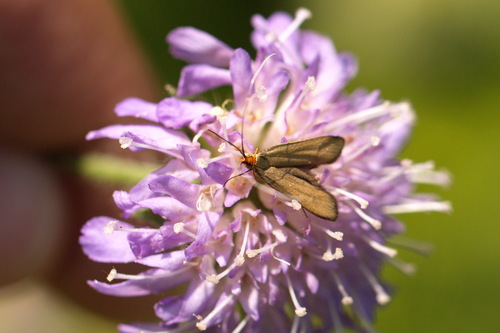
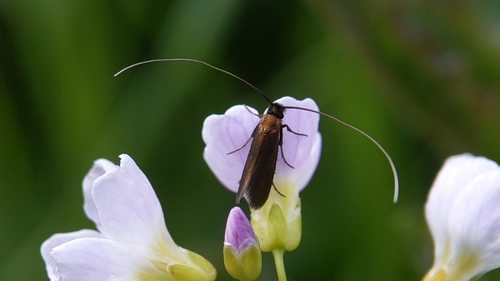
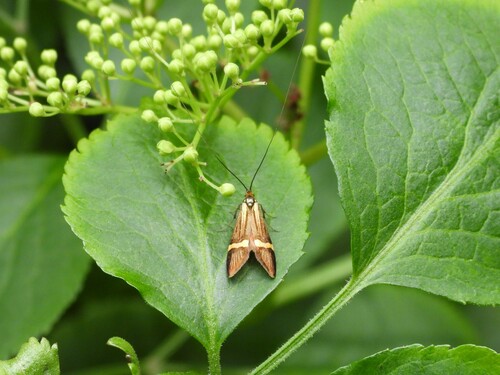
Nematopogon adansoniella is a lepidopteran, a moth of the family Adelidae. It is found in Europe. Its wingspan is 15–20 mm. The moth flies from late April to June depending on the location. The larvae feed on Fagus sylvatica, oak, Prunus spinosa and bilberry.

The synonym Tinea panzerella has also been applied to Pseudatemelia subochreella in error. To certainly determine the species of the genus Nematopogon dissection and study of the genitalia is necessary. This is a small, rather primitive moth, with wing venation that is heteroneurous and a female reproductive system with a single opening used both for mating and for oviposition.

A tergosternal connection can be observed, posterior to the first abdominal spiracle, formed by a ventrocaudal process of the first tergite that connects to the anterolateral extension of the second sternite. The forewing is lanceolate with a rounded apex; it is dull brownish-grey with greenish iridescence and strongly marked veins; the termen tends to be slightly darker. Microtrichia are present and uniformly distributed.

Its hindwing is stouter and more rounded, a uniform off-white with silvery reflections; as in all Adelidae... Wikipedia →
Global Distribution

Parks Where Found

# Park Country Daily sighting probability
1 Pyrénées National Park 🇫🇷 France
<5%

More parks will be added in future updates.

Before you go

What are the chances of seeing a Nematopogon adansoniella in Pyrénées National Park?

Rare

Under 5% of wildlife watchers report a Nematopogon adansoniella sighting in Pyrénées National Park on a given day, based on 5 verified sightings from GBIF citizen-science data from 2019 to 2026. It is the 1144th most-seen of the 1277 insects we can rate there. Over three days the chance rises to about 10%, and over a week to about 20%, if each day is a fresh chance.

When is the best time to see a Nematopogon adansoniella in Pyrénées National Park?

April and May

In those months about 10% of wildlife watchers report a Nematopogon adansoniella in Pyrénées National Park on a given day, against under 5% in June to March, the lowest months.

What time of day is best to see a Nematopogon adansoniella?

Between 9 pm and midnight

Across all the parks we cover, that three-hour window holds the most Nematopogon adansoniella sightings with a recorded time, and about 6 in 10 of them come between 6 pm and 6 am: it is seen both by day and at night.

Where else can you see a Nematopogon adansoniella?

Only Pyrénées National Park, in our data

Pyrénées National Park is the only park on Wallace's Line with enough records to rate Nematopogon adansoniella sightings: under 5% of wildlife watchers there report one on a given day.

Which relatives of the Nematopogon adansoniella live in Pyrénées National Park?

Same family: Adelidae

The closest relatives of the Nematopogon adansoniella that you can see in Pyrénées National Park (family Adelidae, Fairy Moths) are Adela viridella (about 10%) and Adela australis (about 10%), with each one's daily chance of a sighting.

Where does the Nematopogon adansoniella sighting chance come from?

GBIF citizen-science records

It is estimated from how often the Nematopogon adansoniella is recorded against all the insects logged in Pyrénées National Park (5 verified sightings from 2019 to 2026), calibrated against known sighting rates. Figures are rounded to the nearest 10% because citizen-science data supports honest approximations, not decimals, and months with records from fewer than five people show "—". How it works.

← Back to Pyrénées National Park