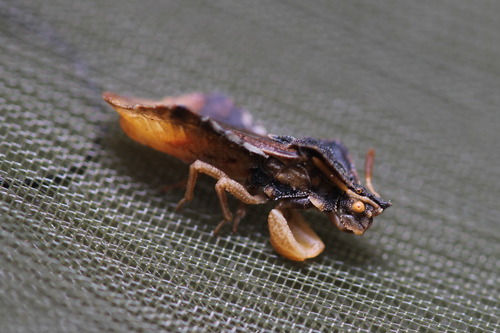
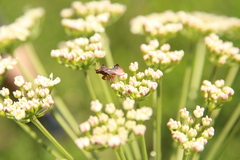
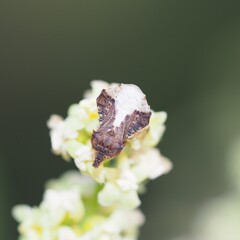
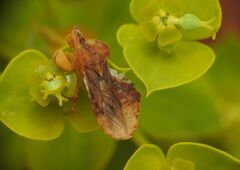
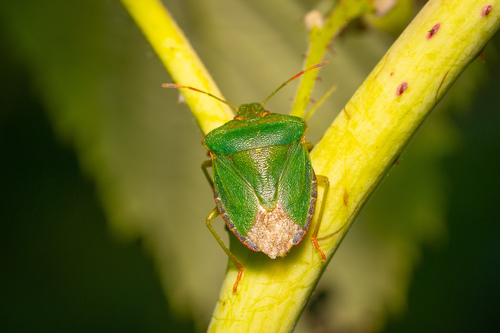
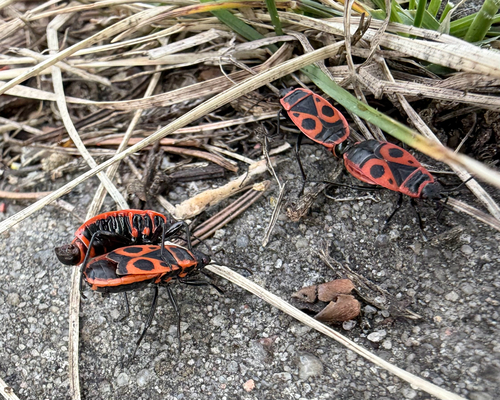
Phymata crassipes
Daily sighting probability <5% · Rare
at Pyrénées National Park

In 3 days ~10% in a week ~30%

10 Verified sightings at Pyrénées National Park From 2019 to 2026
28 In all 3 parks
April Best month
☀️ Diurnal When it's spotted

About the Phymata crassipes

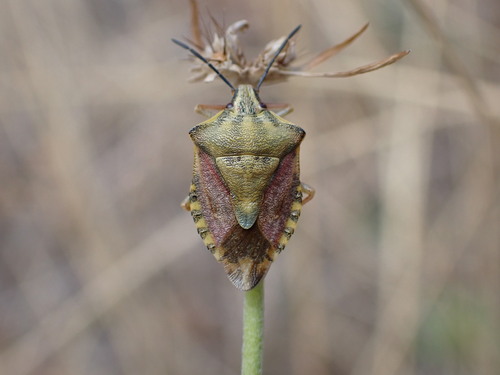
Phymata crassipes is a species of assassin and thread-legged bugs belonging to the family Reduviidae, subfamily Phymatinae. This species is widespread in the Palearctic realm. It can be found in the Mediterranean, North Africa, Central Europe eastward to Korea, north of China and Siberia. It is not present in the north-west of Europe and in the Britain Islands.

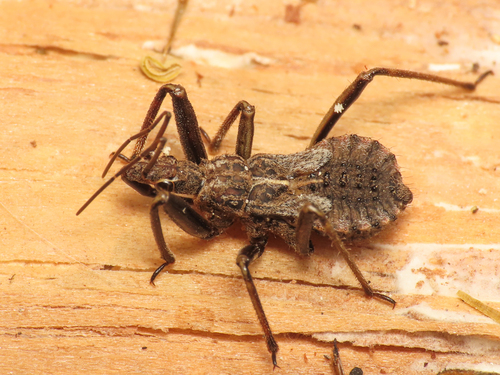
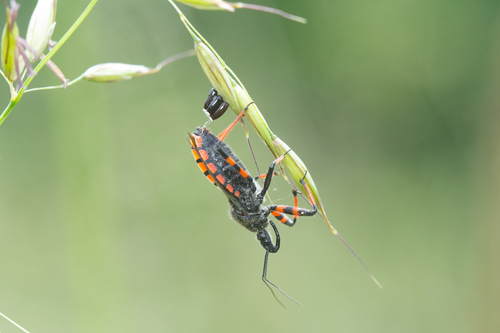
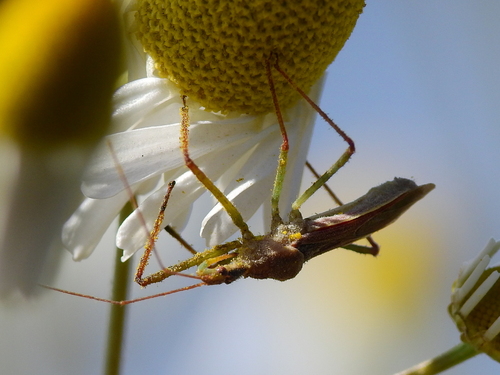
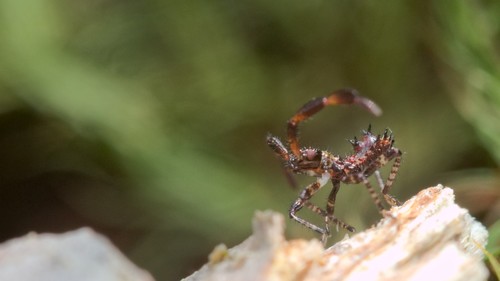
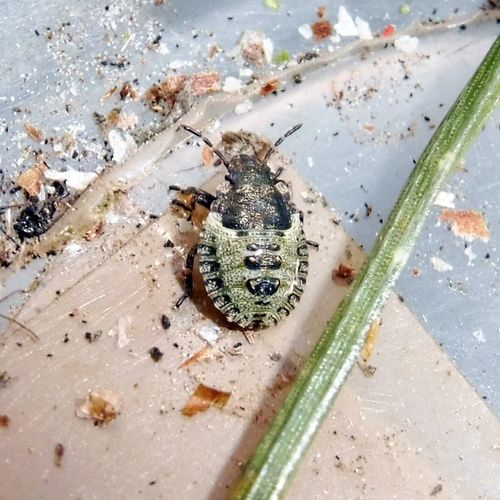
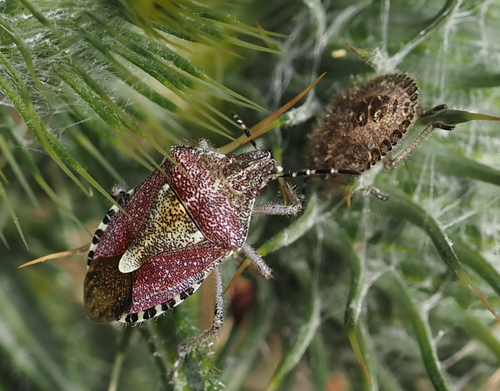
These bugs inhabit dry biotopes with sufficient sun exposure, especially calcareous grasslands, rocky heaths, south-facing slopes or forest edges. Adults of Phymata crassipes can reach a length of about 7–9 mm. The body appear ornamented with some extrusions. Their triangular scutellum is shorter than a pronotum without prominent tubercles. They possess functional wings. They have clubbed antennae and enlarged fore femora and abdomen. The edge of the abdomen expands beyond the edges of the wings. Beautifully camouflaged, they capture their prey using their raptorial fore legs.

The basic body color is dark reddish-brown in males, while females are lighter yellow-brown. Moreover, in the males the antennae terminate with a cylindrical joint, thicker and longer than all other segments... Wikipedia →

Global Distribution

Parks Where Found

# Park Country Daily sighting probability
1 Cévennes National Park 🇫🇷 France
~10%
2 Pyrénées National Park 🇫🇷 France
<5%
3 Bavarian Forest National Park 🇩🇪 Germany
<5%

Cities Where Found

# City Country Daily sighting probability
1 Vienna 🇦🇹 Austria
<5%

Before you go

What are the chances of seeing a Phymata crassipes in Pyrénées National Park?

Rare

Under 5% of wildlife watchers report a Phymata crassipes sighting in Pyrénées National Park on a given day, based on 10 verified sightings from GBIF citizen-science data from 2019 to 2026. It is the 738th most-seen of the 1277 insects we can rate there. Over three days the chance rises to about 10%, and over a week to about 30%, if each day is a fresh chance.

When is the best time to see a Phymata crassipes in Pyrénées National Park?

April to June

In those months about 10% of wildlife watchers report a Phymata crassipes in Pyrénées National Park on a given day, against under 5% in July to March, the lowest months.

What time of day is best to see a Phymata crassipes?

Between 2 and 5 pm

Across all the parks we cover, that three-hour window holds the most Phymata crassipes sightings with a recorded time, and about 9 in 10 of them come between 6 am and 6 pm: it is a daytime animal.

Is Pyrénées National Park the best place to see a Phymata crassipes?

2nd of 3

Of the 3 parks where we can rate Phymata crassipes sightings, Pyrénées National Park ranks 2nd at under 5%. The best odds are in Cévennes National Park (France, about 10%).

Where does the Phymata crassipes sighting chance come from?

GBIF citizen-science records

It is estimated from how often the Phymata crassipes is recorded against all the insects logged in Pyrénées National Park (10 verified sightings from 2019 to 2026), calibrated against known sighting rates. Figures are rounded to the nearest 10% because citizen-science data supports honest approximations, not decimals, and months with records from fewer than five people show "—". How it works.

← Back to Pyrénées National Park