




Completed

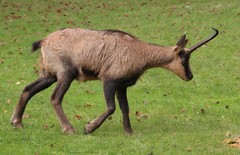



Pyrenean Chamois
Rupicapra pyrenaica
Silhouette: Ferran Sayol · PhyloPic
- KingdomAnimalia (Animals)
- PhylumChordata (Chordates)
- ClassMammalia (Mammals)
- OrderArtiodactyla (Even-toed Ungulates and Cetaceans)
- FamilyBovidae (Bovids)
- GenusRupicapra (Chamois)
- SpeciesRupicapra pyrenaica (Pyrenean Chamois)
In 3 days ~90% in a week >90%
463 Verified sightings at Pyrénées National Park From 2019 to 2026
777 In all 4 parks
November Best month
☀️ Diurnal When it's spotted

Completed
About the Pyrenean Chamois
The Pyrenean chamois (Rupicapra pyrenaica) is a goat-antelope that lives in the Pyrenees and Cantabrian Mountains of Spain, France and Andorra, and the Apennine Mountains of central Italy. It is one of the two species of the genus Rupicapra, the other being the chamois, Rupicapra rupicapra.
Aragonese: sarrio, chizardo Asturian: robecu/robezu Basque: Pirinioetako sarrioa Catalan: isard French: izard/isard Galician: rebezo Italian: camoscio dei Pirenei, camoscio appenninico Occitan: isard, sarri Spanish: rebeco, gamuza
Up to 80 centimetres (31 inches) tall, its summer coat is a ruddy brown; in winter, it is black or brown, with darker patches around the eyes. Both males and females have backward-hooked horns up to 20 centimetres (8 inches) in length. They browse on grass, lichens and buds of trees. Sure-footed and agile, they are found on any elevation up to 3,000 metres (9,800 ft).
Like other species of chamois, it was hunted almost to extinction, especially in the 1940s, for the production of chamois leather. The population has since recovered, and in 2022 was estimated to be about 50,000 mature individuals. Wikipedia →
Recent sightings of Pyrenean Chamois in Pyrénées National Park
LIVEiNaturalistGlobal Distribution
Parks Where Found
| # | Park | Country | Daily sighting probability |
|---|---|---|---|
| 1 | Picos de Europa National Park | 🇪🇸 Spain | |
| 2 | Ordesa y Monte Perdido National Park | 🇪🇸 Spain | |
| 3 | Aigüestortes National Park | 🇪🇸 Spain | |
| 4 | Pyrénées National Park | 🇫🇷 France |
Zoos & Centres Where Found
| # | Zoo / Centre | Country | |
|---|---|---|---|
| 1 | Parc animalier des Angles | 🇫🇷 France | |
| 2 | Hellabrunn Zoo | 🇩🇪 Germany | |
| 3 | Parque Faunístico de Lacuniacha | 🇪🇸 Spain | |
| 4 | Aran Park | 🇪🇸 Spain | |
| 5 | Pyrénées Animal Park | 🇫🇷 France | |
| 6 | Tierpark Schlichtweg 15 in München | 🇩🇪 Germany | |
| 7 | Zoo Schlichtweg 11 in München | 🇩🇪 Germany | |
| 8 | Zoo Siebenbrunner Straße 6 in München | 🇩🇪 Germany |
Closest Relatives at Pyrénées National Park




Before you go
What are the chances of seeing a Pyrenean Chamois in Pyrénées National Park?
Likely
About 50% of wildlife watchers report a Pyrenean Chamois sighting in Pyrénées National Park on a given day, based on 463 verified sightings from GBIF citizen-science data from 2019 to 2026. It is the 2nd most-seen of the 30 mammals we can rate there. Over three days the chance rises to about 90%, and over a week to over 90%, if each day is a fresh chance.
When is the best time to see a Pyrenean Chamois in Pyrénées National Park?
February–March and June–December
In those months about 50% of wildlife watchers report a Pyrenean Chamois in Pyrénées National Park on a given day, against about 30% in January, the lowest month.
What time of day is best to see a Pyrenean Chamois?
Between 1 and 4 pm
Across all the parks we cover, that three-hour window holds the most Pyrenean Chamois sightings with a recorded time, and about 8 in 10 of them come between 6 am and 6 pm: it is a daytime animal.
Is Pyrénées National Park the best place to see a Pyrenean Chamois?
4th of 4
Of the 4 parks where we can rate Pyrenean Chamois sightings, Pyrénées National Park ranks 4th at about 50%. The best odds are in Picos de Europa National Park (Spain, about 80%), Ordesa y Monte Perdido National Park (Spain, about 70%) and Aigüestortes National Park (Spain, about 60%). All parks ranked.
Where does the Pyrenean Chamois sighting chance come from?
GBIF citizen-science records
It is estimated from how often the Pyrenean Chamois is recorded against all the mammals logged in Pyrénées National Park (463 verified sightings from 2019 to 2026), calibrated against known sighting rates. Figures are rounded to the nearest 10% because citizen-science data supports honest approximations, not decimals, and months with records from fewer than five people show "—". How it works.
