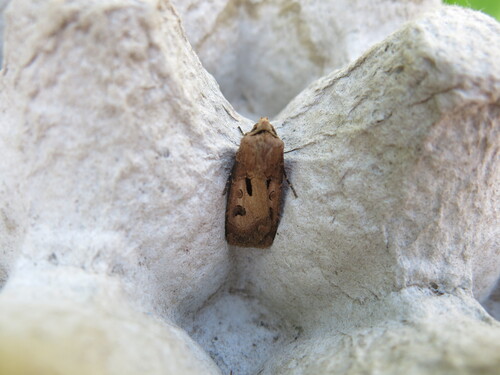
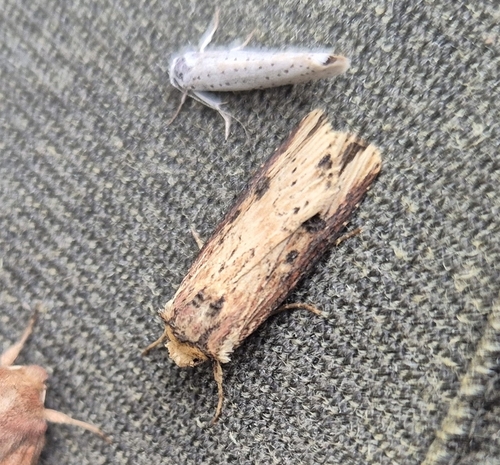
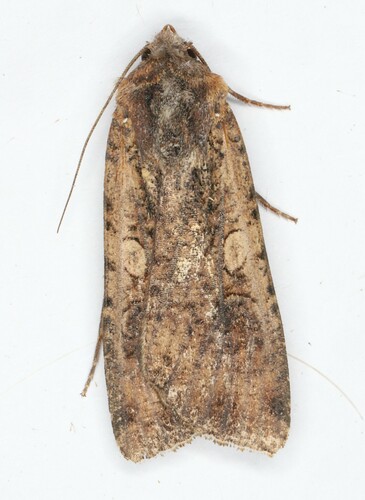
Tomato Looper

Tomato Looper

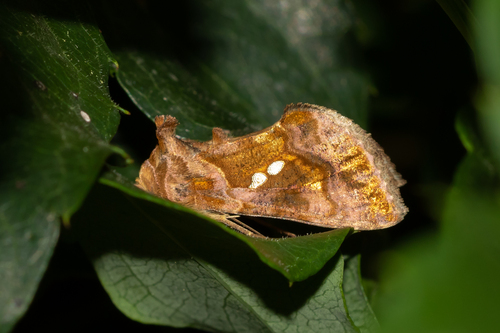
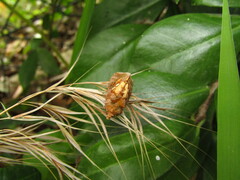
Chrysodeixis chalcites

Daily sighting probability <5% · Rare
at Pyrénées National Park

In 3 days ~10% in a week ~20%

6 Verified sightings at Pyrénées National Park From 2019 to 2026
6 In 1 park
December Best month
🌅 Crepuscular When it's spotted

About the Tomato Looper

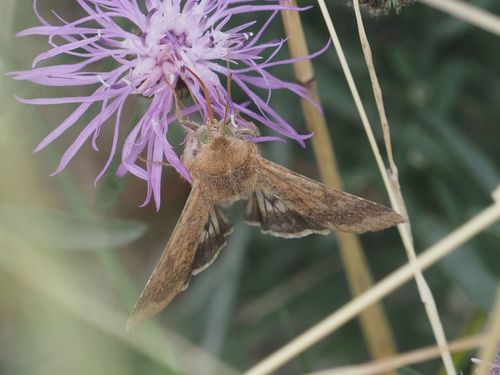
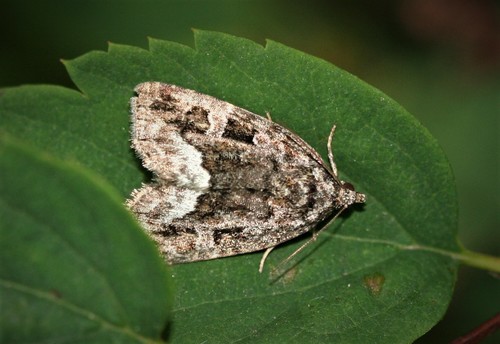
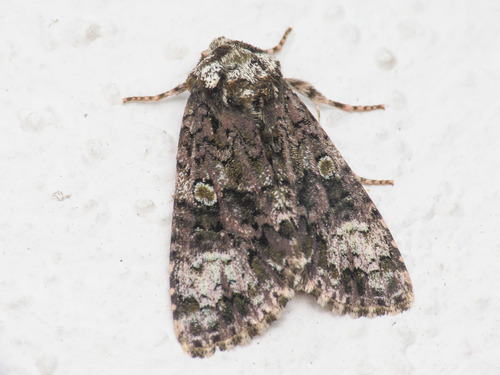
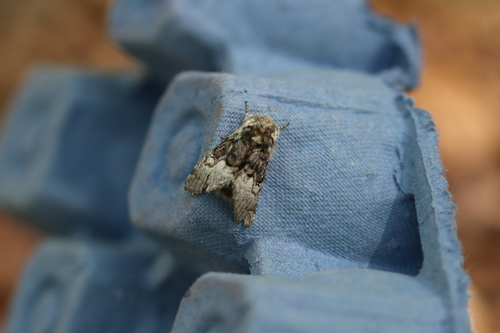
Chrysodeixis chalcites, the tomato looper or golden twin-spot moth, is a moth of the family Noctuidae, subfamily Plusiinae. It mainly lives in southern Europe, the Levant and tropical Africa, but can be seen migrating across much of Europe. In 2013, it was spotted in Canada. It is an important horticultural pest in New Zealand.

The length of the forewings is 15–18 mm. The moth flies from June to October.[1] The larvae feed on various herbaceous plants, such as Echium vulgare, Apium, Rubus, tomato, Fragaria and tobacco which is why it is perceived as a pest.

Chrysodeixis chalcites and Chrysodeixis eriosoma moths cannot be separated morphologically and they may be sibling species. They are distinguished by DNA, pheromones and geographic origin, as C. chalcites is found in the palearctic and C. eriosoma in the tropics and subtropics. The literature referring to C. chalcites in southern and eastern Asia or Oceania may actually refer to C. eriosoma. Wikipedia →
Global Distribution

Parks Where Found

# Park Country Daily sighting probability
1 Pyrénées National Park 🇫🇷 France
<5%

More parks will be added in future updates.

Cities Where Found

# City Country Daily sighting probability
1 Turin 🇮🇹 Italy
~10%
2 Milan 🇮🇹 Italy
~10%
3 Tel Aviv 🇮🇱 Israel
~10%
4 Athens 🇬🇷 Greece
~10%
5 Paris 🇫🇷 France
~10%
6 Rome 🇮🇹 Italy
~10%
7 Porto 🇵🇹 Portugal
~10%
8 Lyon 🇫🇷 France
~10%
9 Barcelona 🇪🇸 Spain
~10%
10 Pretoria 🇿🇦 South Africa
<5%

Before you go

What are the chances of seeing a Tomato Looper in Pyrénées National Park?

Rare

Under 5% of wildlife watchers report a Tomato Looper sighting in Pyrénées National Park on a given day, based on 6 verified sightings from GBIF citizen-science data from 2019 to 2026. It is the 1026th most-seen of the 1277 insects we can rate there. Over three days the chance rises to about 10%, and over a week to about 20%, if each day is a fresh chance.

When is the best time to see a Tomato Looper in Pyrénées National Park?

October and December

In those months about 10% of wildlife watchers report a Tomato Looper in Pyrénées National Park on a given day, against under 5% in January–September and November, the lowest months.

What time of day is best to see a Tomato Looper?

Between 4 and 7 pm

Across all the parks we cover, that three-hour window holds the most Tomato Looper sightings with a recorded time, and about 7 in 10 of them come between 6 pm and 6 am: it is most active around dawn and dusk.

Where else can you see a Tomato Looper?

Only Pyrénées National Park, in our data

Pyrénées National Park is the only park on Wallace's Line with enough records to rate Tomato Looper sightings: under 5% of wildlife watchers there report one on a given day.

Which relatives of the Tomato Looper live in Pyrénées National Park?

Same family: Noctuidae

The closest relatives of the Tomato Looper that you can see in Pyrénées National Park (family Noctuidae, Cutworm Moths and Allies) are Silver Υ (about 10%), Cotton Bollworm Moth (about 10%) and Marbled White-Spot (about 10%), with each one's daily chance of a sighting.

Where does the Tomato Looper sighting chance come from?

GBIF citizen-science records

It is estimated from how often the Tomato Looper is recorded against all the insects logged in Pyrénées National Park (6 verified sightings from 2019 to 2026), calibrated against known sighting rates. Figures are rounded to the nearest 10% because citizen-science data supports honest approximations, not decimals, and months with records from fewer than five people show "—". How it works.

← Back to Pyrénées National Park