Spotted Honeyeater

Spotted Honeyeater

Xanthotis polygrammus

Silhouette: Rachael Joakim · PhyloPic

LCLeast ConcernNTVUENCR
Daily sighting probability ~10% · With luck
at Raja Ampat

In 3 days ~20% in a week ~40%

92 Verified sightings at Raja Ampat From 2019 to 2026
92 In 1 park
August Best month
☀️ Diurnal When it's spotted

About the Spotted Honeyeater

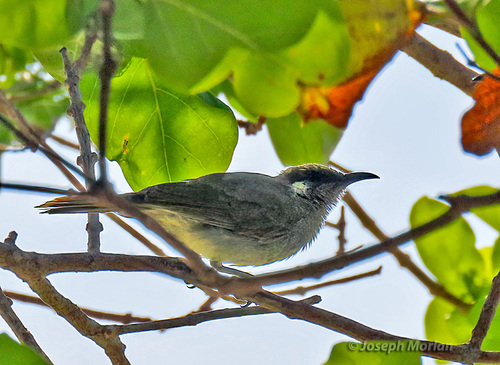
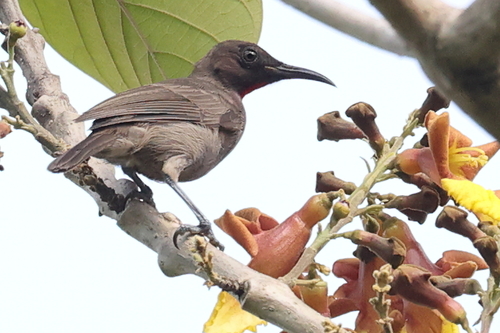
The spotted honeyeater (Xanthotis polygrammus) is a species of bird in the family Meliphagidae. The Spotted Honeyeater was described by the English zoologist George Robert Gray in 1862. Its scientific name, Xanthotis polygrammus, is from Ancient Greek ξανθος xanthos ("yellow") and πολυγραμμος polugrammos ("white-streaked").

Six subspecies recognized: Xanthonis polygrammus polygrammus - Geographic range: Waigeo, in West Papuan. Xanthotis polygrammus kuehni - Geographic range: Misool, in West Papuan. Xanthotis polygrammus poikilosternos - Geographic range: Salawati and mountains of NW and W New Guinea.

Xanthotis polygrammus septentrionalis - Geographic range: Mountains of N New Guinea from Mamberamo R E, including Foja Mts, Cyclops Mts, and mountains of Sepik R region, to Adelbert Mts. Xanthotis polygrammus lophotis - Geographic range: Mountains of Huon Peninsula and SE New Guinea.

Xanthotis polygrammus candidior - Geographic range: S New Guinea. This bird is a medium-small honeyeater that measures around 15 to 17 cm. In the lophotis race, the males weigh between 19.7 and 23.5 g, and females weigh around 18–19.5 g. The... Wikipedia →

Sounds

Call0:51

Papua New Guinea · 2022

© Iain Woxvold · XC750412 · CC BY-NC-SA 4.0

Global Distribution

Parks Where Found

# Park Country Daily sighting probability
1 Raja Ampat 🇮🇩 Indonesia
~10%

More parks will be added in future updates.

Before you go

What are the chances of seeing a Spotted Honeyeater in Raja Ampat?

With luck

About 10% of wildlife watchers report a Spotted Honeyeater sighting in Raja Ampat on a given day, based on 92 verified sightings from GBIF citizen-science data from 2019 to 2026. It is the 103rd most-seen of the 200 birds we can rate there. Over three days the chance rises to about 20%, and over a week to about 40%, if each day is a fresh chance.

When is the best time to see a Spotted Honeyeater in Raja Ampat?

February, May and July–November

In those months about 10% of wildlife watchers report a Spotted Honeyeater in Raja Ampat on a given day, against under 5% in March–April, June and December–January, the lowest months.

What time of day is best to see a Spotted Honeyeater?

Between 8 and 11 am

Across all the parks we cover, that three-hour window holds the most Spotted Honeyeater sightings with a recorded time, and about 9 in 10 of them come between 6 am and 6 pm: it is a daytime animal.

Where else can you see a Spotted Honeyeater?

Only Raja Ampat, in our data

Raja Ampat is the only park on Wallace's Line with enough records to rate Spotted Honeyeater sightings: about 10% of wildlife watchers there report one on a given day.

Where does the Spotted Honeyeater sighting chance come from?

GBIF citizen-science records

It is estimated from how often the Spotted Honeyeater is recorded against all the birds logged in Raja Ampat (92 verified sightings from 2019 to 2026), calibrated against known sighting rates. Figures are rounded to the nearest 10% because citizen-science data supports honest approximations, not decimals, and months with records from fewer than five people show "—". How it works.

← Back to Raja Ampat