Helms's Stag Beetle

Helms's Stag Beetle

Geodorcus helmsi

Endemic
Daily sighting probability ~30% · Possible
at Rakiura National Park

In 3 days ~60% in a week ~90%

37 Verified sightings at Rakiura National Park From 2019 to 2026
77 In all 2 parks
March Best month
☀️ Diurnal When it's spotted

About the Helms's Stag Beetle

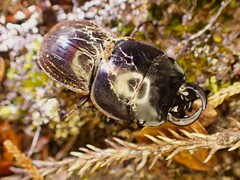
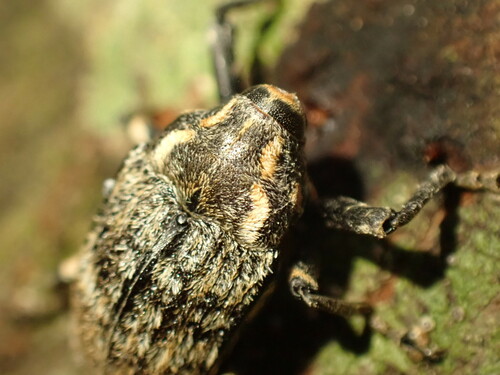
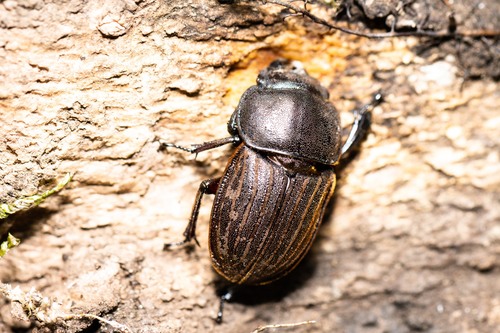
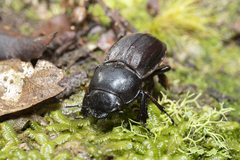
Geodorcus helmsi, known as New Zealand giant stag beetle or Helms's stag beetle, is a large, slow-moving, flightless stag beetle in the family Lucanidae. It is endemic to New Zealand. Geodorcus helmsi is a large flightless stag beetle that varies in colour from black to brownish-black. Its dorsal surface can vary from dull to glossy. Like other stag beetles, they show sexual dimorphism: males range in size from 17.5–44.0 mm, including their large mandibles, while females are smaller (16.5–27.5 mm) with less conspicuous mandibles. In larger male specimens, the mandibles are long, slender and strongly arched with a conspicuous tooth near their base. There is no evidence of different male morphs in this species. G. helmsi is distinguished from other Geodorcus by its straight un-arched tibiae, and five setose ridges on the elytra.

Geodorcus helmsi is the most widespread of the ten Geodorcus species, having been collected from Karamea on the northern West Coast of New Zealand to the south of the South Island, as far as Tapanui in West Otago. It has also been collected from islands in Fiordland and from Stewart Island. Adults have a wide altitudinal range... Wikipedia →
Global Distribution

Parks Where Found

# Park Country Daily sighting probability
1 Rakiura National Park 🇳🇿 New Zealand
~30%
2 Fiordland National Park 🇳🇿 New Zealand
~20%

Before you go

What are the chances of seeing a Helms's Stag Beetle in Rakiura National Park?

Possible

About 30% of wildlife watchers report a Helms's Stag Beetle sighting in Rakiura National Park on a given day, based on 37 verified sightings from GBIF citizen-science data from 2019 to 2026. It is the 7th most-seen of the 118 insects we can rate there. Over three days the chance rises to about 60%, and over a week to about 90%, if each day is a fresh chance.

When is the best time to see a Helms's Stag Beetle in Rakiura National Park?

March

In that month about 40% of wildlife watchers report a Helms's Stag Beetle in Rakiura National Park on a given day, against under 5% in May–June, September and November, the lowest months.

What time of day is best to see a Helms's Stag Beetle?

Between 10 am and 1 pm

Across all the parks we cover, that three-hour window holds the most Helms's Stag Beetle sightings with a recorded time, and about 9 in 10 of them come between 6 am and 6 pm: it is a daytime animal.

Is Rakiura National Park the best place to see a Helms's Stag Beetle?

Yes

Of the 2 parks where we can rate Helms's Stag Beetle sightings, Rakiura National Park has the highest daily chance: about 30%. Next come Fiordland National Park (New Zealand, about 20%).

Which relatives of the Helms's Stag Beetle live in Rakiura National Park?

Same order: Coleoptera

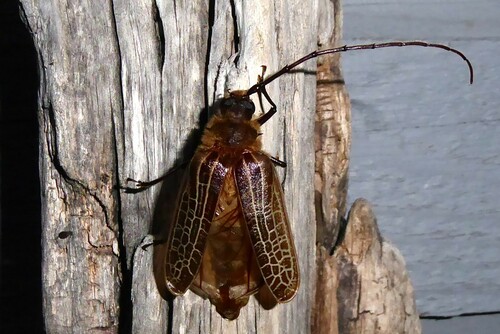
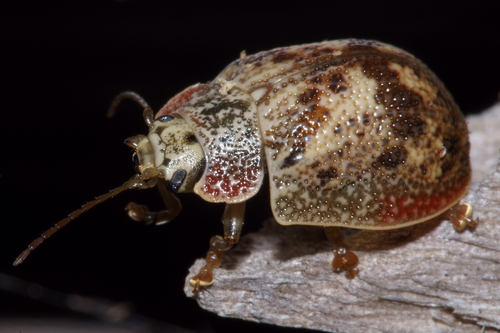
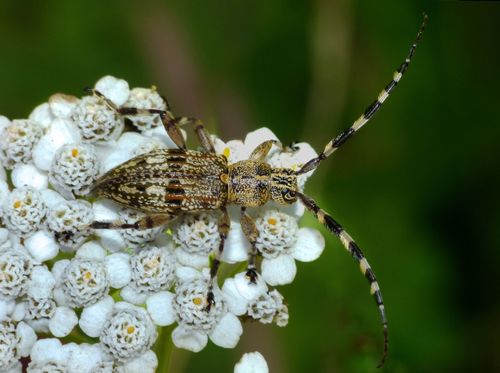
The closest relatives of the Helms's Stag Beetle that you can see in Rakiura National Park (order Coleoptera, Beetles) are Huhu (about 20%), Eucalyptus Tortoise Beetle (about 20%) and Squeaking Longhorn (about 10%), with each one's daily chance of a sighting.

Where does the Helms's Stag Beetle sighting chance come from?

GBIF citizen-science records

It is estimated from how often the Helms's Stag Beetle is recorded against all the insects logged in Rakiura National Park (37 verified sightings from 2019 to 2026), calibrated against known sighting rates. Figures are rounded to the nearest 10% because citizen-science data supports honest approximations, not decimals, and months with records from fewer than five people show "—". How it works.

← Back to Rakiura National Park