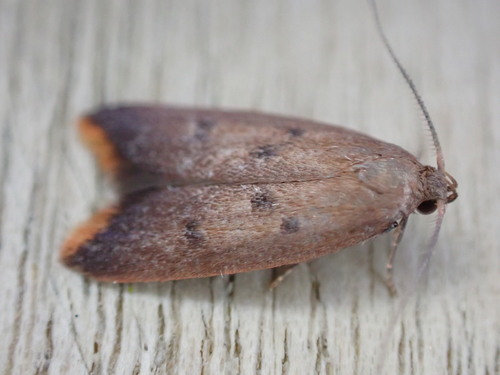
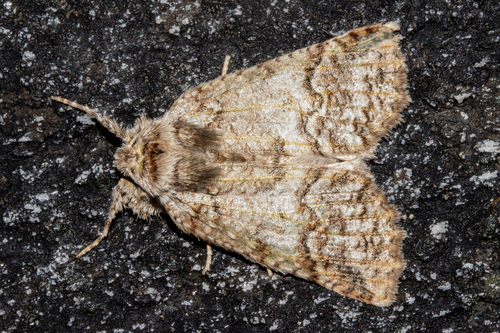
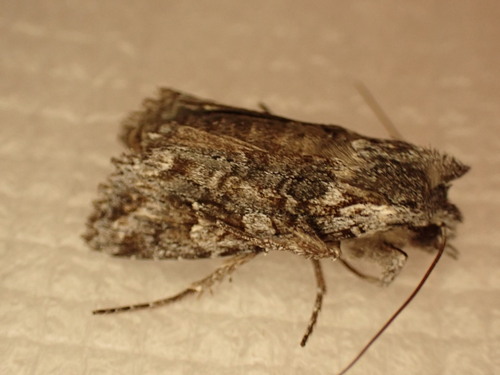
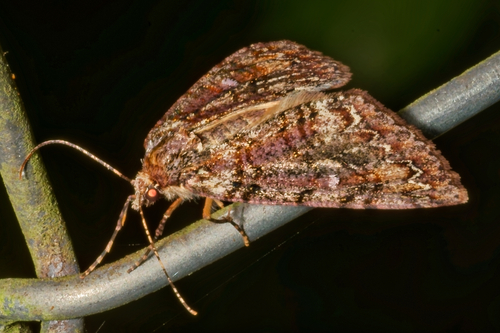
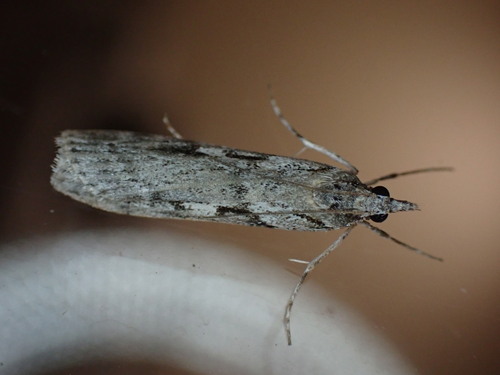
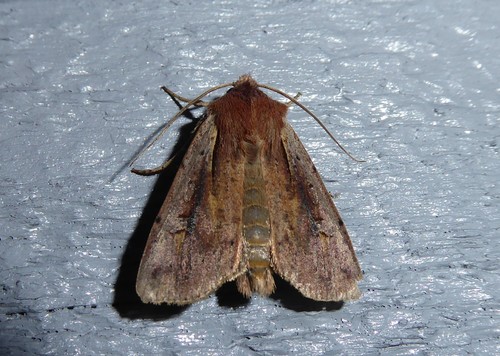
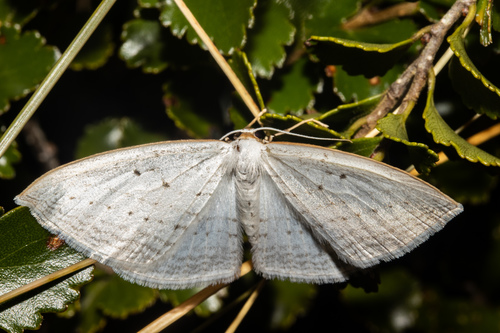
Izatha huttoni
Daily sighting probability ~20% · Possible
at Rakiura National Park

In 3 days ~50% in a week ~80%

36 Verified sightings at Rakiura National Park From 2019 to 2026
48 In all 2 parks
January Best month
☀️🌙 Day & Night When it's spotted

About the Izatha huttoni

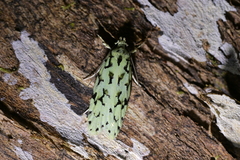
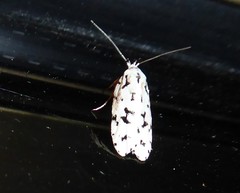
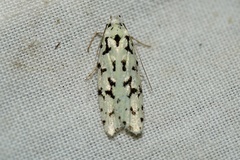
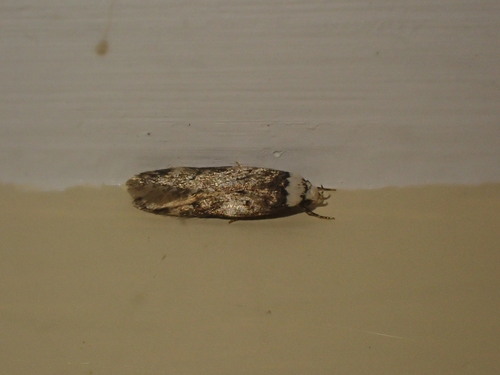
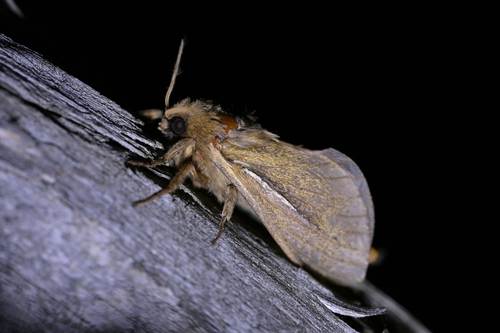
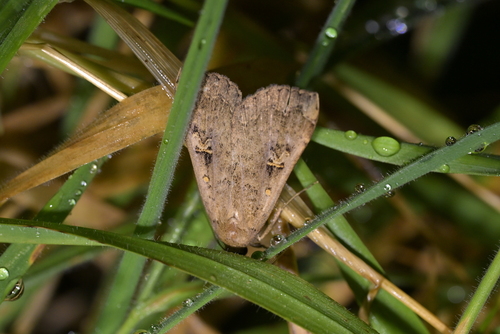
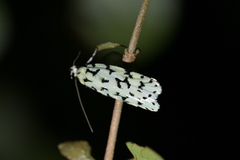
Izatha huttonii is a moth of the family Oecophoridae. It is endemic to New Zealand, where it is known from the Wellington district of the North Island, the South Island, and Stewart Island. Although similar in appearance to related species I. huttonii can be distinguished as it has a distinctive M-shaped mark on its forewings. The larvae feed on the dead wood of makomako and karamu. Adult moths have been collected from October to March.

This species was first described by Arthur Gardiner Butler in 1879 using a female specimen obtained in Otago by Frederick Hutton and named Oecophora huttonii. In 1888 I. huttonii was synonymised by Edward Meyrick with Izatha peroneanella. However 2014 Robert J. B. Hoare removed I. huttonii from synonymy with I. peroneanella and reinstated it as a species. The holotype specimen is held at the Natural History Museum, London.

Butler originally described the species as follows: Allied to O. picarclla; primaries above greyish-white; a short bifurcate black line lying along the base of costal margin, a, Y-shaped black marking at base of median vein, and beyond it an oblong spot, above the latter a zigzag line running to the... Wikipedia →
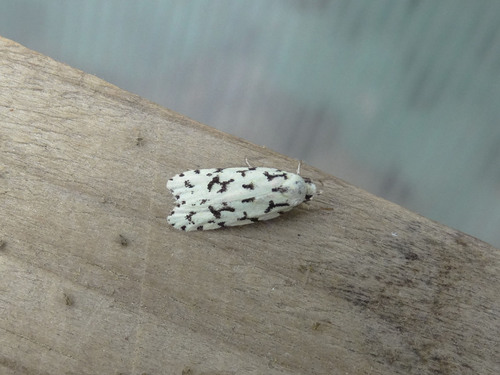
Global Distribution

Parks Where Found

# Park Country Daily sighting probability
1 Rakiura National Park 🇳🇿 New Zealand
~20%
2 Fiordland National Park 🇳🇿 New Zealand
~10%

Before you go

What are the chances of seeing an Izatha huttoni in Rakiura National Park?

Possible

About 20% of wildlife watchers report an Izatha huttoni sighting in Rakiura National Park on a given day, based on 36 verified sightings from GBIF citizen-science data from 2019 to 2026. It is the 16th most-seen of the 118 insects we can rate there. Over three days the chance rises to about 50%, and over a week to about 80%, if each day is a fresh chance.

When is the best time to see an Izatha huttoni in Rakiura National Park?

January

In that month about 40% of wildlife watchers report an Izatha huttoni in Rakiura National Park on a given day, against under 5% in April to November, the lowest months.

What time of day is best to see an Izatha huttoni?

Between 10 pm and 1 am

Across all the parks we cover, that three-hour window holds the most Izatha huttoni sightings with a recorded time, and about 6 in 10 of them come between 6 pm and 6 am: it is seen both by day and at night.

Is Rakiura National Park the best place to see an Izatha huttoni?

Yes

Of the 2 parks where we can rate Izatha huttoni sightings, Rakiura National Park has the highest daily chance: about 20%. Next come Fiordland National Park (New Zealand, about 10%).

Which relatives of the Izatha huttoni live in Rakiura National Park?

Same family: Oecophoridae

The closest relatives of the Izatha huttoni that you can see in Rakiura National Park (family Oecophoridae, Concealer Moths) are White-Shouldered House Moth (about 20%) and Ruddy Streak (about 20%), with each one's daily chance of a sighting.

Where does the Izatha huttoni sighting chance come from?

GBIF citizen-science records

It is estimated from how often the Izatha huttoni is recorded against all the insects logged in Rakiura National Park (36 verified sightings from 2019 to 2026), calibrated against known sighting rates. Figures are rounded to the nearest 10% because citizen-science data supports honest approximations, not decimals, and months with records from fewer than five people show "—". How it works.

← Back to Rakiura National Park