



Completed

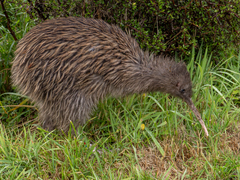
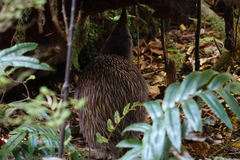


Southern Brown Kiwi
Apteryx australis
Silhouette: Steven Traver · PhyloPic
- KingdomAnimalia (Animals)
- PhylumChordata (Chordates)
- ClassAves (Birds)
- OrderApterygiformes (Kiwis)
- FamilyApterygidae (Kiwis)
- GenusApteryx (Kiwis)
- SpeciesApteryx australis (Southern Brown Kiwi)
In 3 days ~70% in a week ~90%
960 Verified sightings at Rakiura National Park From 2019 to 2026
1,020 In all 2 parks
April Best month
☀️🌙 Day & Night When it's spotted
About the Southern Brown Kiwi
The southern brown kiwi, tokoeka, or common kiwi (Apteryx australis) is a species of kiwi from South Island of New Zealand. Until 2000 it was considered conspecific with the North Island brown kiwi, and still is by some authorities.
Apteryx australis is based on Greek and Latin. Apteryx means "A-" without "pterux" wings, and "australis" from "auster" the south wind, and "-alis" relating to. The southern brown kiwi belongs to the kiwi family and it is a ratite, and a member of the order Apterygiformes. Like all ratites, its sternum has no keel, it is flightless, and it has a distinctive palate.
The holotype specimen of Apteryx australis Shaw is held in the collections of National Museums Liverpool at World Museum, with accession number NML-VZ D180. The specimen was collected by Captain Barclay at Dusky Sound, South Island, New Zealand and came to the Liverpool national collection via the 13th Earl of Derby's collection which was bequeathed to the people of Liverpool.
The southern brown kiwi is divided into two subspecies, with some conservationists arguing for a third: A. a. australis, the Fiordland tokoeka, with a population of approximately 15,000 birds is found on... Wikipedia →
Sounds
Recording0:25
New Zealand · 2020
© James Lidster · XC525925 · CC BY-NC-SA 4.0
Recording0:09
New Zealand · 2022
© Dave · iNaturalist · CC BY-NC 4.0
Recording0:20
New Zealand · 2026
© Judah G · iNaturalist · CC BY-NC 4.0
Recent sightings of Southern Brown Kiwi in Rakiura National Park
LIVEiNaturalistGlobal Distribution
Parks Where Found
| # | Park | Country | Daily sighting probability |
|---|---|---|---|
| 1 | Rakiura National Park | 🇳🇿 New Zealand | |
| 2 | Fiordland National Park | 🇳🇿 New Zealand |
Zoos & Centres Where Found
| # | Zoo / Centre | Country | |
|---|---|---|---|
| 1 | Franklin Park Zoo | 🇺🇸 United States | |
| 2 | Willowbank Wildlife Reserve | 🇳🇿 New Zealand | |
| 3 | National Kiwi Centre | 🇳🇿 New Zealand |
Closest Relatives at Rakiura National Park
No species of the same family or order lives in Rakiura National Park, so these are its closest relatives here: other birds.




Before you go
What are the chances of seeing a Southern Brown Kiwi in Rakiura National Park?
Possible
About 30% of wildlife watchers report a Southern Brown Kiwi sighting in Rakiura National Park on a given day, based on 960 verified sightings from GBIF citizen-science data from 2019 to 2026. It is the 23rd most-seen of the 80 birds we can rate there. Over three days the chance rises to about 70%, and over a week to about 90%, if each day is a fresh chance.
When is the best time to see a Southern Brown Kiwi in Rakiura National Park?
April
In that month about 50% of wildlife watchers report a Southern Brown Kiwi in Rakiura National Park on a given day, against about 30% in May–June, August–September and December–January, the lowest months.
What time of day is best to see a Southern Brown Kiwi?
Between 9 pm and midnight
Across all the parks we cover, that three-hour window holds the most Southern Brown Kiwi sightings with a recorded time, and about 6 in 10 of them come between 6 pm and 6 am: it is seen both by day and at night.
Is Rakiura National Park the best place to see a Southern Brown Kiwi?
Yes
Of the 2 parks where we can rate Southern Brown Kiwi sightings, Rakiura National Park has the highest daily chance: about 30%. Next come Fiordland National Park (New Zealand, under 5%).
Where does the Southern Brown Kiwi sighting chance come from?
GBIF citizen-science records
It is estimated from how often the Southern Brown Kiwi is recorded against all the birds logged in Rakiura National Park (960 verified sightings from 2019 to 2026), calibrated against known sighting rates. Figures are rounded to the nearest 10% because citizen-science data supports honest approximations, not decimals, and months with records from fewer than five people show "—". How it works.
