Madagascan Buttonquail

Madagascan Buttonquail

Turnix nigricollis

Silhouette: PhyloPic

LCLeast ConcernNTVUENCR
Daily sighting probability <5% · Rare
at Ranomafana National Park

In 3 days ~10% in a week ~20%

21 Verified sightings at Ranomafana National Park From 2019 to 2026
219 In all 3 parks
October Best month
🌅 Crepuscular When it's spotted

About the Madagascan Buttonquail

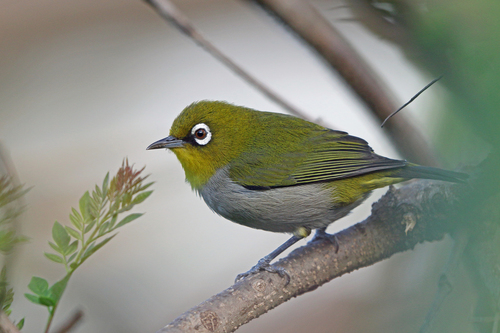
The Madagascar buttonquail or Madagascan buttonquail (Turnix nigricollis) is a species of bird in the buttonquail family, Turnicidae, that is endemic to Madagascar and a few small islands nearby. It is a ground-dwelling species with an unusual breeding biology in which the sexual dimorphism is reversed, with female being more brightly coloured than the male and it is the male that incubates the eggs and mainly cares for the young.

The Madagascar buttonquail was formally described in 1789 by the German naturalist Johann Friedrich Gmelin in his revised and expanded edition of Carl Linnaeus's Systema Naturae. He placed it with grouse like birds in the genus Tetrao and coined the binomial name Tetrao nigricollis. Gmelin based his description on the earlier accounts by the French naturalists Mathurin Jacques Brisson and Georges-Louis Leclerc, Comte de Buffon. The Madagascar buttonquail is now placed in the genus Turnix that was introduced in 1791 by French naturalist in Pierre Bonnaterre. The genus name is an abbreviation of the genus Coturnix. The specific epithet combines the Latin niger meaning "black" with Modern Latin collis meaning "-necked". The species is monotypic... Wikipedia →

Global Distribution

Parks Where Found

# Park Country Daily sighting probability
1 Berenty Reserve 🇲🇬 Madagascar
~40%
2 Ankarafantsika National Park 🇲🇬 Madagascar
~30%
3 Ranomafana National Park 🇲🇬 Madagascar
<5%

Before you go

What are the chances of seeing a Madagascan Buttonquail in Ranomafana National Park?

Rare

Under 5% of wildlife watchers report a Madagascan Buttonquail sighting in Ranomafana National Park on a given day, based on 21 verified sightings from GBIF citizen-science data from 2019 to 2026. It is the 83rd most-seen of the 102 birds we can rate there. Over three days the chance rises to about 10%, and over a week to about 20%, if each day is a fresh chance.

When is the best time to see a Madagascan Buttonquail in Ranomafana National Park?

October

In that month about 10% of wildlife watchers report a Madagascan Buttonquail in Ranomafana National Park on a given day, against under 5% in February–May, July–September and November–December, the lowest months. That is one of Ranomafana National Park's driest months, with about 130 mm of rain against 450 mm in January. January and June have too few records to rate.

What time of day is best to see a Madagascan Buttonquail?

Between 3 and 6 am

Across all the parks we cover, that three-hour window holds the most Madagascan Buttonquail sightings with a recorded time, and about 6 in 10 of them come between 6 am and 6 pm: it is most active around dawn and dusk.

Is Ranomafana National Park the best place to see a Madagascan Buttonquail?

3rd of 3

Of the 3 parks where we can rate Madagascan Buttonquail sightings, Ranomafana National Park ranks 3rd at under 5%. The best odds are in Berenty Reserve (Madagascar, about 40%) and Ankarafantsika National Park (Madagascar, about 30%).

Where does the Madagascan Buttonquail sighting chance come from?

GBIF citizen-science records

It is estimated from how often the Madagascan Buttonquail is recorded against all the birds logged in Ranomafana National Park (21 verified sightings from 2019 to 2026), calibrated against known sighting rates. Figures are rounded to the nearest 10% because citizen-science data supports honest approximations, not decimals, and months with records from fewer than five people show "—". How it works.

← Back to Ranomafana National Park