Madagascar Long-eared Owl

Madagascar Long-eared Owl

Asio madagascariensis

Silhouette: Ferran Sayol · PhyloPic

LCLeast ConcernNTVUENCR Endemic
Daily sighting probability <5% · Rare
at Ranomafana National Park

In 3 days ~10% in a week ~20%

19 Verified sightings at Ranomafana National Park From 2019 to 2026
56 In all 2 parks
May Best month
☀️ Diurnal When it's spotted

About the Madagascar Long-eared Owl

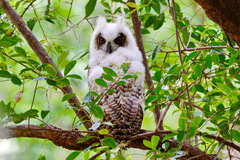
The Madagascar owl (Asio madagascariensis), also known as the Madagascan owl or Madagascar long-eared owl, is a medium-sized owl endemic to the island of Madagascar. It is sometimes considered to be conspecific with the long-eared owl (Asio otus).

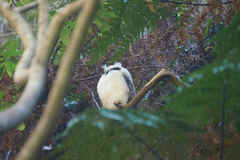
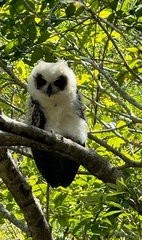
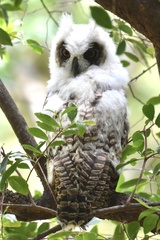
The Madagascar owl is similar in appearance to the Holarctic long-eared owl in that it sits tall and at rest shows prominent ear tufts. The plumage is mainly brown with darker streaks and bars. It has distinctive bright orange eyes. The adults are brown above, and mottled with buff, especially across the mantle. The face is plain dark buff, with darker brown feathers around the eyes, on the edge of the facial disc, and on the ear tufts. The underparts are light brown with darker brown streaks which fade away towards the vent. The juvenile is covered in white down contrasting with a black facial disk and dark brown wings. It ranges from 40–50 cm (16–20 in) in length, making it the largest of the country's owls; females are larger than males.

Its call is usually a series of barks, varying in pitch and volume, but sometimes it will utter a series of more hoot-like notes, described by some as ulooh. Wikipedia →

Sounds

Call0:39

Madagascar · 2022

© George Vlad · XC1039669 · CC BY-NC-SA 4.0

Song0:18

Madagascar · 2023

© Paul Lenrumé · XC828761 · CC BY-NC-SA 4.0

Call1:01

Madagascar · 2019

© Dries Van de Loock · XC536954 · CC BY-NC-SA 4.0

Global Distribution

Parks Where Found

# Park Country Daily sighting probability
1 Mantadia National Park 🇲🇬 Madagascar
~10%
2 Ranomafana National Park 🇲🇬 Madagascar
<5%

Before you go

What are the chances of seeing a Madagascar Long-eared Owl in Ranomafana National Park?

Rare

Under 5% of wildlife watchers report a Madagascar Long-eared Owl sighting in Ranomafana National Park on a given day, based on 19 verified sightings from GBIF citizen-science data from 2019 to 2026. It is the 83rd most-seen of the 102 birds we can rate there. Over three days the chance rises to about 10%, and over a week to about 20%, if each day is a fresh chance.

When is the best time to see a Madagascar Long-eared Owl in Ranomafana National Park?

May and October

In those months about 10% of wildlife watchers report a Madagascar Long-eared Owl in Ranomafana National Park on a given day, against under 5% in February–April, July–September and November–December, the lowest months. Those are among Ranomafana National Park's driest months, with about 130 mm of rain a month against 450 mm in January. January and June have too few records to rate.

What time of day is best to see a Madagascar Long-eared Owl?

Between 3 and 6 pm

Across all the parks we cover, that three-hour window holds the most Madagascar Long-eared Owl sightings with a recorded time, and about 9 in 10 of them come between 6 am and 6 pm: it is a daytime animal.

Is Ranomafana National Park the best place to see a Madagascar Long-eared Owl?

2nd of 2

Of the 2 parks where we can rate Madagascar Long-eared Owl sightings, Ranomafana National Park ranks 2nd at under 5%. The best odds are in Mantadia National Park (Madagascar, about 10%).

Where does the Madagascar Long-eared Owl sighting chance come from?

GBIF citizen-science records

It is estimated from how often the Madagascar Long-eared Owl is recorded against all the birds logged in Ranomafana National Park (19 verified sightings from 2019 to 2026), calibrated against known sighting rates. Figures are rounded to the nearest 10% because citizen-science data supports honest approximations, not decimals, and months with records from fewer than five people show "—". How it works.

← Back to Ranomafana National Park