Deer Mouse

Deer Mouse

Peromyscus maniculatus

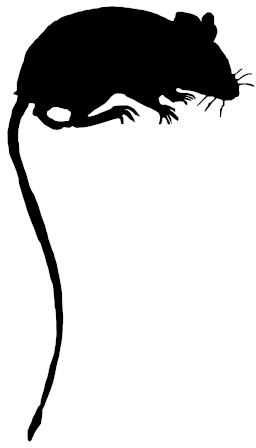
Silhouette: Nina Skinner · PhyloPic

LCLeast ConcernNTVUENCR
Daily sighting probability ~10% · With luck
at Redwood National Park

In 3 days ~30% in a week ~60%

13 Verified sightings at Redwood National Park From 2019 to 2026
69 In all 8 parks
May Best month
☀️ Diurnal When it's spotted

About the Deer Mouse

The eastern deer mouse (Peromyscus maniculatus) is a rodent native to eastern North America. It is a species of the genus Peromyscus, a closely related group of New World mice often called "deermice". When formerly grouped with the western deermouse (P. sonoriensis), it was once referred to as the North American deermouse, a species that is no longer recognized. It is fairly widespread across most of North America east of the Mississippi River, with the major exception being the lowland Southeastern United States.

Like certain other Peromyscus species, it can be a vector and carrier of emerging infectious diseases such as hantaviruses and Lyme disease. It is closely related to Peromyscus leucopus, the white-footed mouse. The species in its former broad sense had 61 subspecies, but some of these now belong to P. sonoriensis. They are all tiny mammals that are plentiful in number. The eastern deermouse is a small rodent that lives in eastern North America and is closely related to the white-footed mouse, Peromyscus leucopus. Because the two species are extremely similar in appearance, they are best distinguished through red blood cell agglutination tests or karyotype techniques... Wikipedia →

Global Distribution

Parks Where Found

# Park Country Daily sighting probability
1 Isle Royale National Park 🇺🇸 United States
~30%
2 Redwood National Park 🇺🇸 United States
~10%
3 Channel Islands National Park 🇺🇸 United States
~10%
4 Glacier National Park 🇺🇸 United States
~10%
5 Jasper National Park 🇨🇦 Canada
~10%
6 Acadia National Park 🇺🇸 United States
~10%
7 Banff National Park 🇨🇦 Canada
<5%
8 Olympic National Park 🇺🇸 United States
<5%

Cities Where Found

# City Country Daily sighting probability
1 Portland 🇺🇸 United States
~10%
2 Seattle 🇺🇸 United States
~10%
3 Edmonton 🇨🇦 Canada
~10%
4 Vancouver 🇨🇦 Canada
<5%
5 Montreal 🇨🇦 Canada
<5%
6 Calgary 🇨🇦 Canada
<5%
7 Toronto 🇨🇦 Canada
<5%
8 Chicago 🇺🇸 United States
<5%
9 Washington 🇺🇸 United States
<5%
10 Los Angeles 🇺🇸 United States
<5%

Before you go

What are the chances of seeing a Deer Mouse in Redwood National Park?

With luck

About 10% of wildlife watchers report a Deer Mouse sighting in Redwood National Park on a given day, based on 13 verified sightings from GBIF citizen-science data from 2019 to 2026. It is the 14th most-seen of the 23 mammals we can rate there. Over three days the chance rises to about 30%, and over a week to about 60%, if each day is a fresh chance.

When is the best time to see a Deer Mouse in Redwood National Park?

April–May, July and December

In those months about 20% of wildlife watchers report a Deer Mouse in Redwood National Park on a given day, against under 5% in January–March and November, the lowest months.

What time of day is best to see a Deer Mouse?

Between noon and 3 pm

Across all the parks we cover, that three-hour window holds the most Deer Mouse sightings with a recorded time, and about 7 in 10 of them come between 6 am and 6 pm: it is a daytime animal.

Is Redwood National Park the best place to see a Deer Mouse?

2nd of 8

Of the 8 parks where we can rate Deer Mouse sightings, Redwood National Park ranks 2nd at about 10%. The best odds are in Isle Royale National Park (United States, about 30%).

Which relatives of the Deer Mouse live in Redwood National Park?

Same order: Rodentia

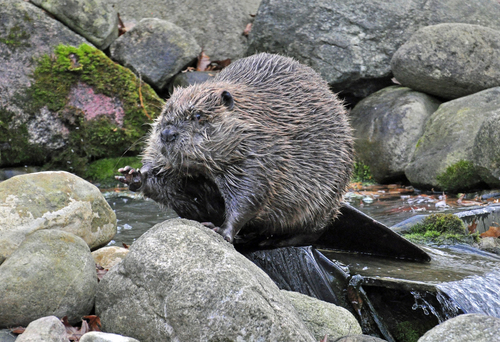
The closest relatives of the Deer Mouse that you can see in Redwood National Park (order Rodentia, Rodents) are Douglas' Squirrel (about 30%), Shadow Chipmunk (about 20%) and American Beaver (about 10%), with each one's daily chance of a sighting.

Where does the Deer Mouse sighting chance come from?

GBIF citizen-science records

It is estimated from how often the Deer Mouse is recorded against all the mammals logged in Redwood National Park (13 verified sightings from 2019 to 2026), calibrated against known sighting rates. Figures are rounded to the nearest 10% because citizen-science data supports honest approximations, not decimals, and months with records from fewer than five people show "—". How it works.

← Back to Redwood National Park