Black Slender-Stingless Bee

Black Slender-Stingless Bee

Frieseomelitta nigra

Daily sighting probability ~10% · With luck
at Ría Lagartos Biosphere Reserve

In 3 days ~40% in a week ~70%

10 Verified sightings at Ría Lagartos Biosphere Reserve From 2019 to 2026
16 In all 2 parks
April Best month
☀️ Diurnal When it's spotted

About the Black Slender-Stingless Bee

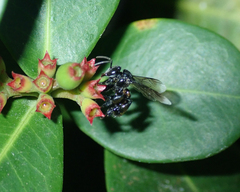
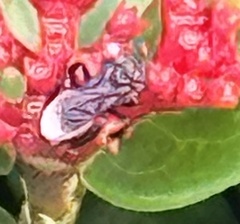
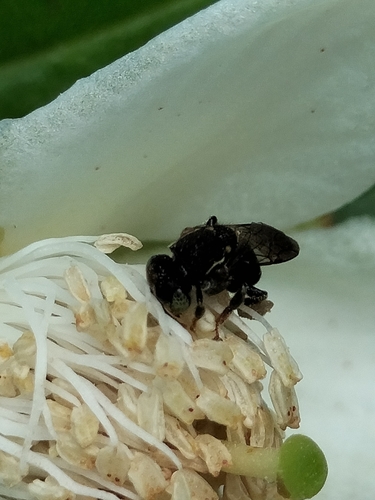
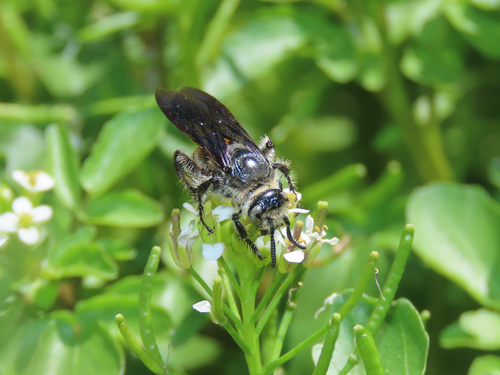
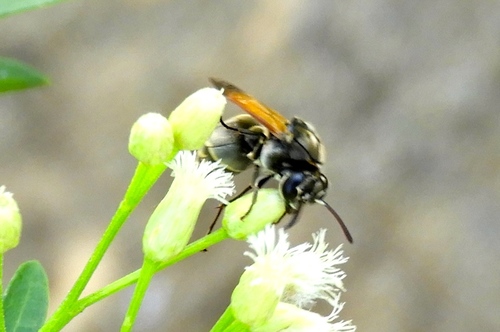
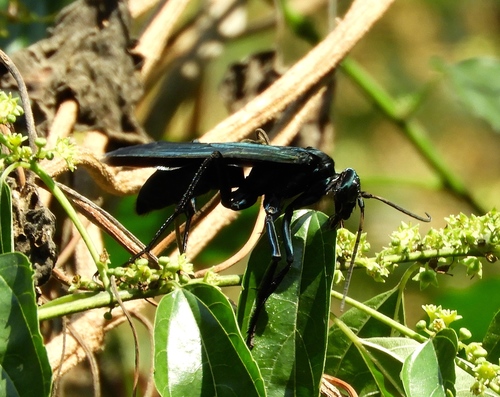
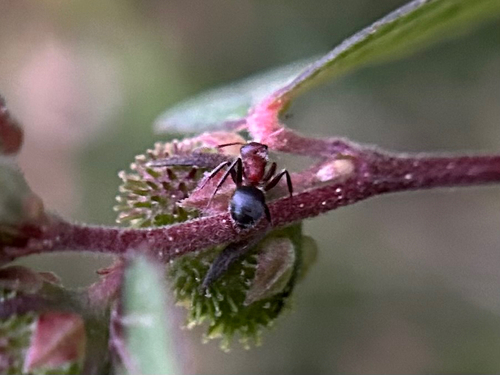
Frieseomelitta nigra, the black slender-stingless bee or buzzard stingless bee, is a species of stingless bee of the Meliponini tribe endemic to Mexico, Belize and possibly Guatemala. Like other bees in the Meliponini tribe, as well as its relatives in the Frieseomelitta genus, the buzzard bee lacks a stinger. It is around 6 mm long, has an entirely black body, and has dark wings with white tips. It shares many characteristics with Frieseomelitta paupera, the latter even being considered a subspecies of Frieseomelitta nigra in countries such as Colombia and Trinidad and Tobago.

Its distribution extends throughout the Mexican states of Sinaloa, Nayarit, Jalisco, Colima, Michoacán, State of Mexico, Morelos, Guerrero, Oaxaca, Veracruz, Chiapas, Tabasco, Campeche, Yucatán and Quintana Roo, as well as Belize and possibly Guatemala, according to observations. It usually prefers warmer climates in ecosystems such as humid forest, dry forest, scrubland, temperate forest, cloud forest and wetlands. It usually builds nests in holes in trees or lampposts, walls and different types of substrate on the ground, which it usually covers with resin.

Agriculturally... Wikipedia →
Global Distribution

Parks Where Found

# Park Country Daily sighting probability
1 Ría Lagartos Biosphere Reserve 🇲🇽 Mexico
~10%
2 Arrecifes de Cozumel National Park 🇲🇽 Mexico
~10%

Before you go

What are the chances of seeing a Black Slender-Stingless Bee in Ría Lagartos Biosphere Reserve?

With luck

About 10% of wildlife watchers report a Black Slender-Stingless Bee sighting in Ría Lagartos Biosphere Reserve on a given day, based on 10 verified sightings from GBIF citizen-science data from 2019 to 2026. It is the 50th most-seen of the 112 insects we can rate there. Over three days the chance rises to about 40%, and over a week to about 70%, if each day is a fresh chance.

When is the best time to see a Black Slender-Stingless Bee in Ría Lagartos Biosphere Reserve?

January and April

In those months about 30% of wildlife watchers report a Black Slender-Stingless Bee in Ría Lagartos Biosphere Reserve on a given day, against under 5% in May to October, the lowest months. Those are among Ría Lagartos Biosphere Reserve's driest months, with about 30 mm of rain a month against 150 mm in June.

What time of day is best to see a Black Slender-Stingless Bee?

Between 9 am and noon

Across all the parks we cover, that three-hour window holds the most Black Slender-Stingless Bee sightings with a recorded time, and nearly all of them come between 6 am and 6 pm: it is a daytime animal.

Is Ría Lagartos Biosphere Reserve the best place to see a Black Slender-Stingless Bee?

Yes

Of the 2 parks where we can rate Black Slender-Stingless Bee sightings, Ría Lagartos Biosphere Reserve has the highest daily chance: about 10%. Next come Arrecifes de Cozumel National Park (Mexico, about 10%).

Where does the Black Slender-Stingless Bee sighting chance come from?

GBIF citizen-science records

It is estimated from how often the Black Slender-Stingless Bee is recorded against all the insects logged in Ría Lagartos Biosphere Reserve (10 verified sightings from 2019 to 2026), calibrated against known sighting rates. Figures are rounded to the nearest 10% because citizen-science data supports honest approximations, not decimals, and months with records from fewer than five people show "—". How it works.

← Back to Ría Lagartos Biosphere Reserve