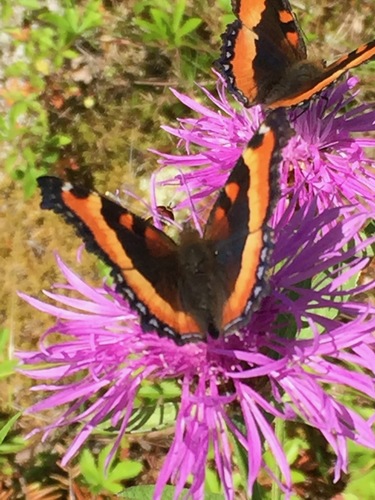
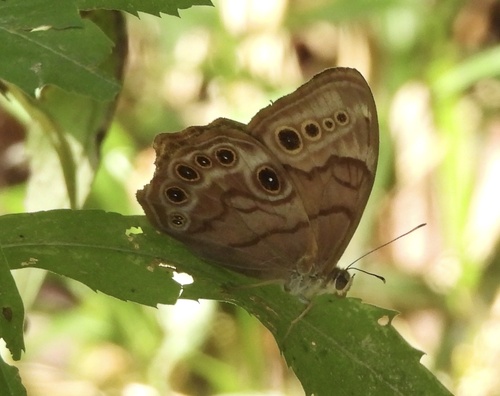
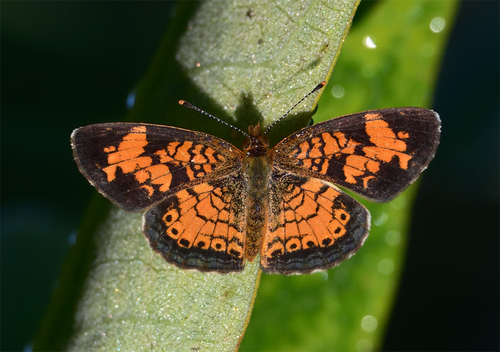
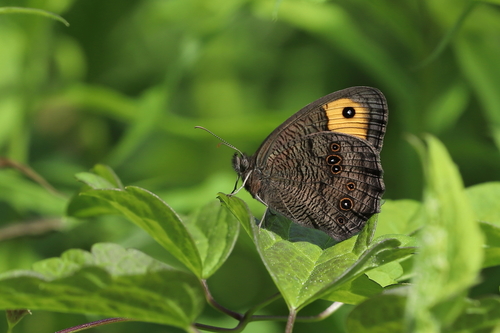
Satyr Comma

Satyr Comma

Polygonia satyrus

Daily sighting probability ~10% · With luck
at Riding Mountain National Park

In 3 days ~20% in a week ~50%

11 Verified sightings at Riding Mountain National Park From 2019 to 2026
245 In all 9 parks
April Best month
☀️ Diurnal When it's spotted

About the Satyr Comma

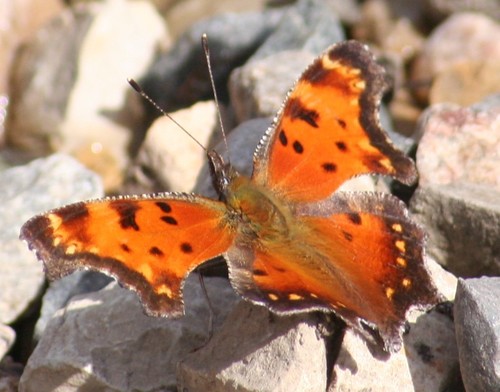
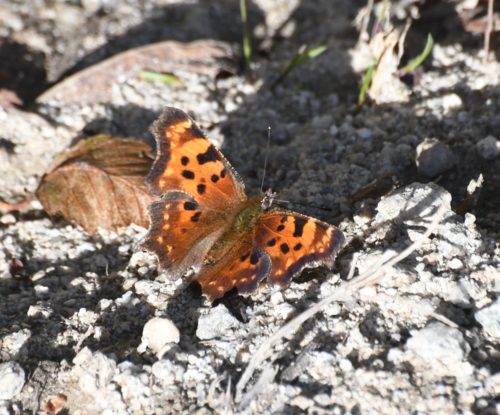
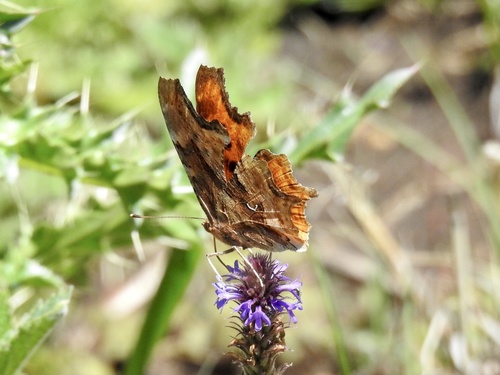
Polygonia satyrus, the satyr comma, is a North American butterfly of the nymphalid family. It is primarily found in western Canada, where it is locally common. It bears a resemblance to Polygonia comma, the eastern comma, with which it is frequently confused.

Polygonia satyrus was first described by William Henry Edwards in 1869 from specimens collected in Colorado. Several names that were historically treated as distinct taxa, including P. marsyas, P. chrysoptera, and P. hollandi, have subsequently been regarded as synonyms of P. satyrus. Some authors previously considered marsyas to represent a distinct Pacific Northwestern subspecies, but breeding experiments and distributional evidence suggested that it represents a dark form of P. satyrus rather than a separate taxon.

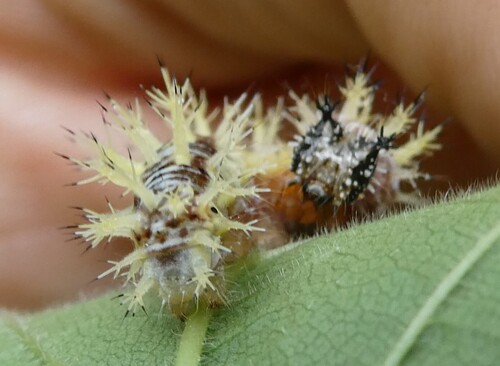
Morphological studies have suggested a close relationship between P. satyrus and the eastern comma (Polygonia comma). Similarities in genital morphology, larval biology, host plant use, and wing pattern have led some authors to regard P. satyrus as a western subspecies of P. comma.

Polygonia satyrus belongs to the tribe Nymphalini within the family Nymphalidae. Phylogenetic studies place the species... Wikipedia →
Global Distribution

Parks Where Found

# Park Country Daily sighting probability
1 Elk Island National Park 🇨🇦 Canada
~20%
2 Glacier National Park 🇺🇸 United States
~20%
3 Grand Teton National Park 🇺🇸 United States
~10%
4 Olympic National Park 🇺🇸 United States
~10%
5 Redwood National Park 🇺🇸 United States
~10%
6 Riding Mountain National Park 🇨🇦 Canada
~10%
7 Zion National Park 🇺🇸 United States
~10%
8 Banff National Park 🇨🇦 Canada
~10%
9 Yellowstone National Park 🇺🇸 United States
<5%

Cities Where Found

# City Country Daily sighting probability
1 Edmonton 🇨🇦 Canada
~10%
2 Calgary 🇨🇦 Canada
~10%
3 Vancouver 🇨🇦 Canada
~10%
4 Seattle 🇺🇸 United States
<5%
5 Denver 🇺🇸 United States
<5%
6 Portland 🇺🇸 United States
<5%
7 San Francisco 🇺🇸 United States
<5%
8 Los Angeles 🇺🇸 United States
<5%

Before you go

What are the chances of seeing a Satyr Comma in Riding Mountain National Park?

With luck

About 10% of wildlife watchers report a Satyr Comma sighting in Riding Mountain National Park on a given day, based on 11 verified sightings from GBIF citizen-science data from 2019 to 2026. It is the 58th most-seen of the 104 insects we can rate there. Over three days the chance rises to about 20%, and over a week to about 50%, if each day is a fresh chance.

When is the best time to see a Satyr Comma in Riding Mountain National Park?

April

In that month about 20% of wildlife watchers report a Satyr Comma in Riding Mountain National Park on a given day, against under 5% in June and October–March, the lowest months.

What time of day is best to see a Satyr Comma?

Between noon and 3 pm

Across all the parks we cover, that three-hour window holds the most Satyr Comma sightings with a recorded time, and about 9 in 10 of them come between 6 am and 6 pm: it is a daytime animal.

Is Riding Mountain National Park the best place to see a Satyr Comma?

6th of 9

Of the 9 parks where we can rate Satyr Comma sightings, Riding Mountain National Park ranks 6th at about 10%. The best odds are in Elk Island National Park (Canada, about 20%), Glacier National Park (United States, about 20%) and Grand Teton National Park (United States, about 10%).

Which relatives of the Satyr Comma live in Riding Mountain National Park?

Same genus: Polygonia

The closest relatives of the Satyr Comma that you can see in Riding Mountain National Park (genus Polygonia, Commas) are Polygonia vaualbum (about 20%), Gray Comma (about 10%) and Green Comma (about 10%), with each one's daily chance of a sighting.

Where does the Satyr Comma sighting chance come from?

GBIF citizen-science records

It is estimated from how often the Satyr Comma is recorded against all the insects logged in Riding Mountain National Park (11 verified sightings from 2019 to 2026), calibrated against known sighting rates. Figures are rounded to the nearest 10% because citizen-science data supports honest approximations, not decimals, and months with records from fewer than five people show "—". How it works.

← Back to Riding Mountain National Park