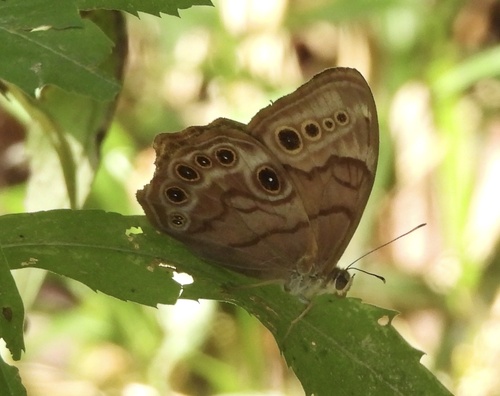



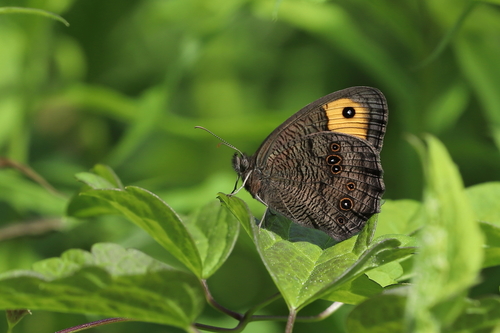
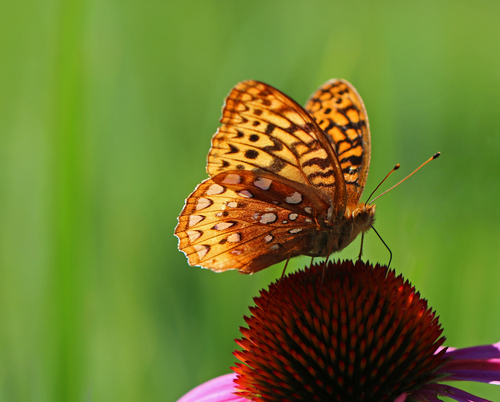
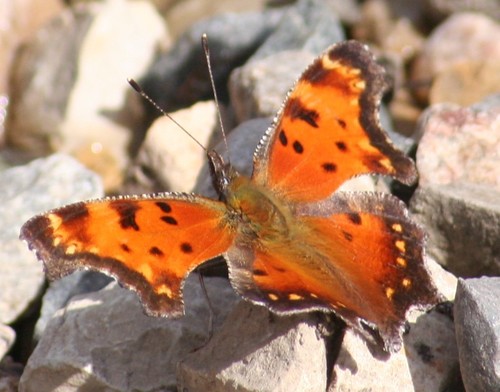
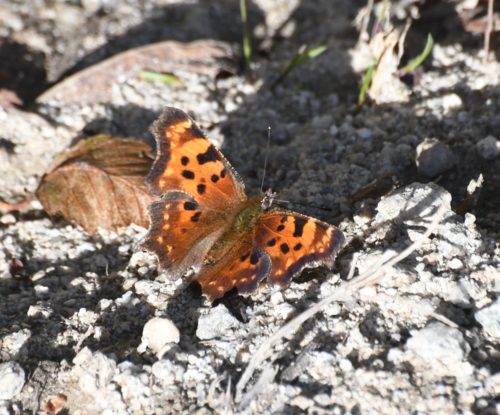
Northern Pearly-Eye

Northern Pearly-Eye

Lethe anthedon

Daily sighting probability ~20% · Possible
at Riding Mountain National Park

In 3 days ~50% in a week ~80%

39 Verified sightings at Riding Mountain National Park From 2019 to 2026
253 In all 6 parks
July Best month
☀️ Diurnal When it's spotted

About the Northern Pearly-Eye

Lethe anthedon, the northern pearly-eye, is a species of butterfly in the subfamily Satyrinae of the family Nymphalidae. It is found in North America, from central Saskatchewan and eastern Nebraska east to Nova Scotia, south to central Alabama and Mississippi.

The wingspan is 1 1/2 to 2 1/2 inches (43–67 mm.) The upperside is brown with dark eyespots and the underside is brown. Adults feed on dung, fungi, carrion and sap from willows, poplars, and birches. The larvae feed on various grasses, including Leersia virginica, Erianthus species, Muhlenbergia species, bearded shortgrass (Brachyelytrum erectum), Chasmanthium latifolium, bottlebrush grass (Hystrix patula), and false melic grass (Schizachne purpurascens). The host plants of a northern population include sedges (Carex species).

The species overwinters in the larval stage. Wikipedia →

Global Distribution

Parks Where Found

# Park Country Daily sighting probability
1 Elk Island National Park 🇨🇦 Canada
~30%
2 Riding Mountain National Park 🇨🇦 Canada
~20%
3 Isle Royale National Park 🇺🇸 United States
~20%
4 Shenandoah National Park 🇺🇸 United States
~10%
5 Acadia National Park 🇺🇸 United States
~10%
6 Great Smoky Mountains National Park 🇺🇸 United States
~10%

Cities Where Found

# City Country Daily sighting probability
1 Washington 🇺🇸 United States
~10%
2 Edmonton 🇨🇦 Canada
~10%
3 Chicago 🇺🇸 United States
<5%
4 Baltimore 🇺🇸 United States
<5%
5 Toronto 🇨🇦 Canada
<5%
6 Minneapolis [Saint Paul] 🇺🇸 United States
<5%
7 Montreal 🇨🇦 Canada
<5%

Before you go

What are the chances of seeing a Northern Pearly-Eye in Riding Mountain National Park?

Possible

About 20% of wildlife watchers report a Northern Pearly-Eye sighting in Riding Mountain National Park on a given day, based on 39 verified sightings from GBIF citizen-science data from 2019 to 2026. It is the 10th most-seen of the 104 insects we can rate there. Over three days the chance rises to about 50%, and over a week to about 80%, if each day is a fresh chance.

When is the best time to see a Northern Pearly-Eye in Riding Mountain National Park?

July

In that month about 40% of wildlife watchers report a Northern Pearly-Eye in Riding Mountain National Park on a given day, against under 5% in September to May, the lowest months. That is one of Riding Mountain National Park's wettest months, with about 70 mm of rain against 20 mm in February.

What time of day is best to see a Northern Pearly-Eye?

Between 10 am and 1 pm

Across all the parks we cover, that three-hour window holds the most Northern Pearly-Eye sightings with a recorded time, and about 9 in 10 of them come between 6 am and 6 pm: it is a daytime animal.

Is Riding Mountain National Park the best place to see a Northern Pearly-Eye?

2nd of 6

Of the 6 parks where we can rate Northern Pearly-Eye sightings, Riding Mountain National Park ranks 2nd at about 20%. The best odds are in Elk Island National Park (Canada, about 30%).

Which relatives of the Northern Pearly-Eye live in Riding Mountain National Park?

Same family: Nymphalidae

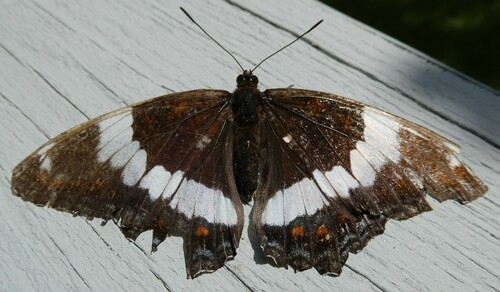
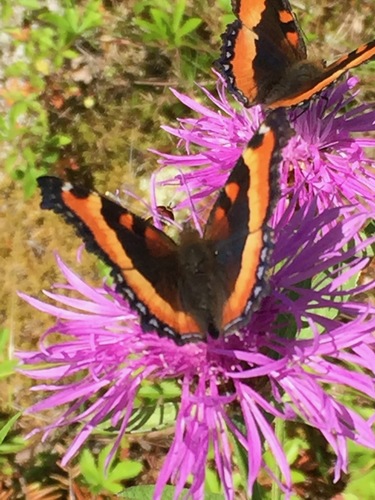
The closest relatives of the Northern Pearly-Eye that you can see in Riding Mountain National Park (family Nymphalidae, Brush-footed Butterflies) are Red-Spotted Admiral (about 30%), Monarch (about 30%) and Milbert's Tortoiseshell (about 20%), with each one's daily chance of a sighting.

Where does the Northern Pearly-Eye sighting chance come from?

GBIF citizen-science records

It is estimated from how often the Northern Pearly-Eye is recorded against all the insects logged in Riding Mountain National Park (39 verified sightings from 2019 to 2026), calibrated against known sighting rates. Figures are rounded to the nearest 10% because citizen-science data supports honest approximations, not decimals, and months with records from fewer than five people show "—". How it works.

← Back to Riding Mountain National Park