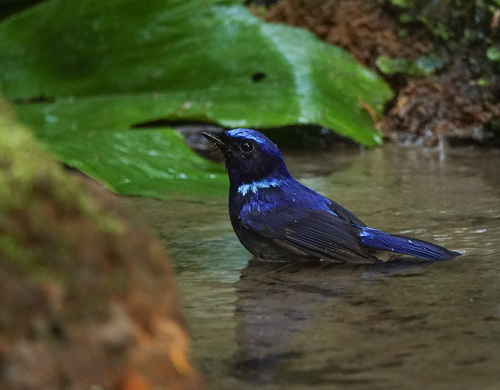
Little Forktail

Little Forktail

Enicurus scouleri

Silhouette: Andy Wilson · PhyloPic

LCLeast ConcernNTVUENCR
Daily sighting probability <5% · Rare
at Royal Manas National Park

In 3 days ~10% in a week ~20%

47 Verified sightings at Royal Manas National Park From 2019 to 2026
480 In all 5 parks
December Best month
🌅 Crepuscular When it's spotted

About the Little Forktail

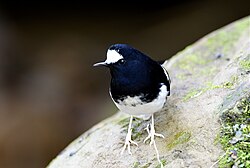
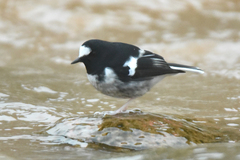
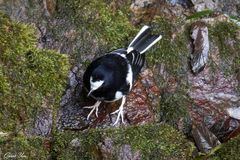
The little forktail (Enicurus scouleri) is a species of bird in the family Muscicapidae. The specific name commemorates Dr. John Scouler of Glasgow. The sexes are alike, with black and white plumage. Black above, with white forehead; white band in wings extends across lower back, small, black rump patch; slightly forked, short tail with white in outer feathers; black throat, white below.

The little forktail is a bird of mountain streams, waterfalls and small shaded forest puddles; breeding between 1200-3700m. It is found in the Tian Shan and Himalayan mountain ranges, southern China and Taiwan. Its natural habitats are subtropical or tropical moist lowland forest and subtropical or tropical moist montane forest.

They are either solitary or found in pairs. They forage energetically on moss-covered and wet slippery rocks. Their diet consists primarily of aquatic insects, and they plunge underwater to pursue prey. It constantly wags and flicks its tail, occasionally launching short sallies. They are generally silent, save for a rarely uttered sharp 'TZitTzit' call. Wikipedia →

Sounds

Recording0:17

India · 2023

© dbeadle · iNaturalist · CC BY-NC 4.0

Global Distribution

Parks Where Found

# Park Country Daily sighting probability
1 Namdapha National Park 🇮🇳 India
~20%
2 Langtang National Park 🇳🇵 Nepal
~10%
3 Taroko National Park 🇹🇼 Taiwan
<5%
4 Royal Manas National Park 🇧🇹 Bhutan
<5%
5 Jim Corbett National Park 🇮🇳 India
<5%

Cities Where Found

# City Country Daily sighting probability
1 Kathmandu 🇳🇵 Nepal
<5%

Before you go

What are the chances of seeing a Little Forktail in Royal Manas National Park?

Rare

Under 5% of wildlife watchers report a Little Forktail sighting in Royal Manas National Park on a given day, based on 47 verified sightings from GBIF citizen-science data from 2019 to 2026. It is the 225th most-seen of the 388 birds we can rate there. Over three days the chance rises to about 10%, and over a week to about 20%, if each day is a fresh chance.

When is the best time to see a Little Forktail in Royal Manas National Park?

December

In that month about 20% of wildlife watchers report a Little Forktail in Royal Manas National Park on a given day, against under 5% in February–July and October, the lowest months. That is one of Royal Manas National Park's driest months, with about 10 mm of rain against 930 mm in July. August and September have too few records to rate.

What time of day is best to see a Little Forktail?

Between 7 and 10 am

Across all the parks we cover, that three-hour window holds the most Little Forktail sightings with a recorded time, and about 6 in 10 of them come between 6 am and 6 pm: it is most active around dawn and dusk.

Is Royal Manas National Park the best place to see a Little Forktail?

4th of 5

Of the 5 parks where we can rate Little Forktail sightings, Royal Manas National Park ranks 4th at under 5%. The best odds are in Namdapha National Park (India, about 20%), Langtang National Park (Nepal, about 10%) and Taroko National Park (Taiwan, under 5%).

Which relatives of the Little Forktail live in Royal Manas National Park?

Same genus: Enicurus

The closest relatives of the Little Forktail that you can see in Royal Manas National Park (genus Enicurus, Forktails) are Slaty-backed Forktail (about 30%), Spotted Forktail (about 10%) and Black-backed Forktail (about 10%), with each one's daily chance of a sighting.

Where does the Little Forktail sighting chance come from?

GBIF citizen-science records

It is estimated from how often the Little Forktail is recorded against all the birds logged in Royal Manas National Park (47 verified sightings from 2019 to 2026), calibrated against known sighting rates. Figures are rounded to the nearest 10% because citizen-science data supports honest approximations, not decimals, and months with records from fewer than five people show "—". How it works.

← Back to Royal Manas National Park