


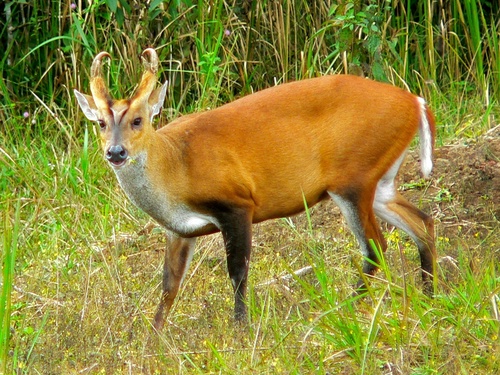
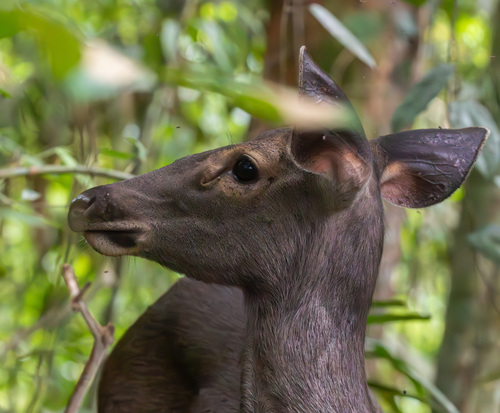


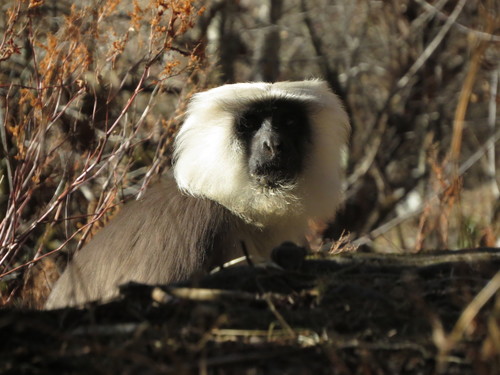



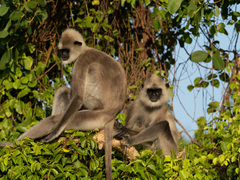
All 4 in 3 days here: ~70%
Jim Corbett National Park
🇮🇳 India
Indian Subcontinent, India 1054 spp. recorded
Jim Corbett National Park is a protected wildlife reserve nestled in the foothills of the Himalayas in northern India. This landscape combines dense tropical pine forests, river valleys, and steep ridges, creating a distinct habitat that separates the mountain ecosystems from the plains below.
29.559° N 78.863° E
🦜 Nature

483 Species sighted
98,235 Verified sightings From 2019 to 2026
Feb Best month
⭐ Iconic Species
📊 Most Spotted
⭐ Iconic Species
📊 Most Spotted
📊 Most Spotted
⭐ Iconic Species
📊 Most Spotted
📊 Most Spotted
📊 Most Spotted
⭐ Iconic Species
🌙 Most active after dark
+ 673 more species with insufficient data
Challenges you can complete here

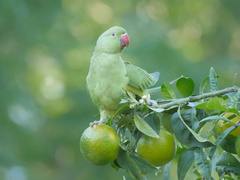


All 5 in 3 days here: ~10%
Recent sightings in Jim Corbett National Park
LIVEiNaturalistSighting Calendar
How many species you'd see in a day
48Jan
50Feb
44Mar
41Apr
45May
42Jun
28Jul
28Aug
31Sep
37Oct
39Nov
44Dec
Sighting Zones
Warmer areas are where all species together are recorded most often.
-
29.481° N, 79.053° E
Daily sight. prob.vs avg -
Rathuwadhab
Daily sight. prob.vs avg
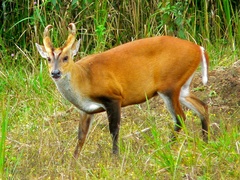




🏕️ Experience
Essentials
Entrance
Paid
Tourism
Medium
Typical stay
2–3
daysTrails
Moderate
World Heritage
No
Climate
Temp °C Rain mm
JanFebMarAprMayJunJulAugSepOctNovDec
0.0 Excellent
Wallace's Line Score
How good is this park for seeing wildlife? 🦜
Biodiversity
ExcellentHow rich is the wildlife?
4.8
Species by taxon
🦅 Birds 843
🐒 Mammals 112
🦎 Reptiles 86
🐸 Amphibians 13
1054 Total Species
828 Global average across 316 parks
63 Threatened 5 Endemic
🔭
Sighting
ExcellentHow likely to see animals?
4.0
🎯
Top-12 Avg Probability
61% 📊
Coverage (231 species at ≥5% of 1054 in the inventory)
22% 🔀
Taxon variety in top 12 (6 mammal, 6 bird)
67% 🔭
Species per 10 outings (distinct species a visitor would meet over 10 outings — effort held equal across parks)
174 🌟
Iconic-group species (≥15%) (every species from the 19 iconic groups — monkeys, cats, toucans, macaws, sloths, crocodilians… — not just the 4 highlighted above)
23 ⭐
High-prob species (>40%)
26 🏕️
Experience
Very goodHow easy and pleasant is the visit?
4.0
Climate Mixed Medium
Entrance Paid Low
Tourism Low High
Trails Moderate Medium
World Heritage No —
What visitors say
It was an adventurous trip where I spotted numerous deer, elephants, barking deer, and sambar deer.
Unfortunately, we didn’t see any tigers, sloth bears or elephants here.
We typically would see a group of one peacock with three or four peahens. male Indian blue peafowl Long-tailed Shrike Eurasian wryneck Shikra Purple Sunbird Crested Hawk-Eagle The sun came up and very quickly thawed us out.
We saw peacocks gracefully spreading their feathers, golden jackals darting through the bushes, herds of deer grazing cautiously, and majestic nilgais blending beautifully into the dry forest.
Before you go
What animals can you see in Jim Corbett National Park?
1,054 species
Jim Corbett National Park has 1,054 recorded vertebrate species. The ones wildlife watchers report most often on a given day are Axis Deer (about 70%), Asian Elephant (about 70%), Tiger (about 60%), White-cheeked Bulbul (about 60%) and Red Junglefowl (about 60%). Among reptiles, the most-seen is Gharial (about 30%).
When is the best time to visit Jim Corbett National Park for wildlife?
February
In that month the park's 12 most-seen species average about 70% on a given day, against about 30% in July. That is one of Jim Corbett National Park's driest months, with about 30 mm of rain against 360 mm in July.
Can you see a Tiger in Jim Corbett National Park?
Yes
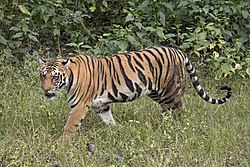
About 60% of wildlife watchers report a Tiger sighting in Jim Corbett National Park on a given day, based on 103 verified sightings from GBIF citizen-science data from 2019 to 2026. The best time is May (about 80%).
Can you see an Asian Elephant in Jim Corbett National Park?
Yes
About 70% of wildlife watchers report an Asian Elephant sighting in Jim Corbett National Park on a given day, based on 126 verified sightings from GBIF citizen-science data from 2019 to 2026. The best time is February to May (about 80%).
Can you see an Axis Deer in Jim Corbett National Park?
Yes
About 70% of wildlife watchers report an Axis Deer sighting in Jim Corbett National Park on a given day, based on 108 verified sightings from GBIF citizen-science data from 2019 to 2026. The best time is February and May (about 80%).
Can you see a Gharial in Jim Corbett National Park?
Yes
About 30% of wildlife watchers report a Gharial sighting in Jim Corbett National Park on a given day, based on 23 verified sightings from GBIF citizen-science data from 2019 to 2026. The best time is March (about 50%).
Where in Jim Corbett National Park is wildlife easiest to see?
Around Bijrani Guest House
The richest sighting zone is around Bijrani Guest House, followed by Jhirna Range, ranked by how many of the park's headline animals visitors can expect to see in each. See the zones on the map.
Is Jim Corbett National Park good for wildlife watching?
4.3 out of 5
On the Wallace's Line Score, Jim Corbett National Park rates 4.3/5: 76th of 316 parks worldwide and 12th in Asia. 33 of its species are reported by about 40% or more of wildlife watchers on a given day.


