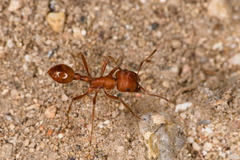
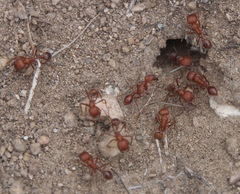
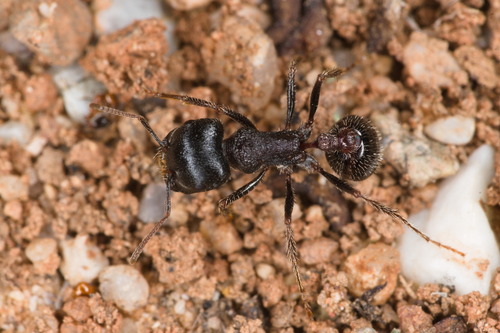
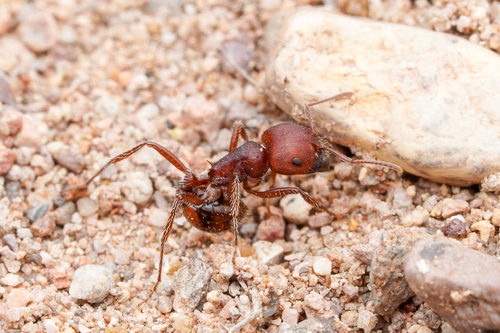
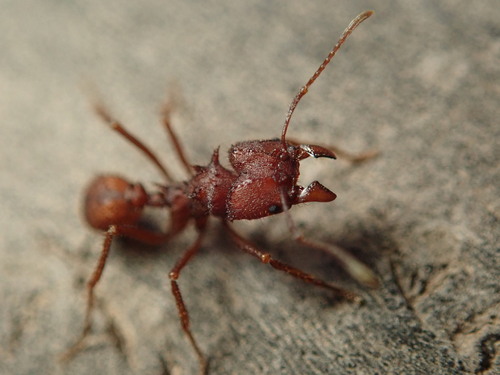
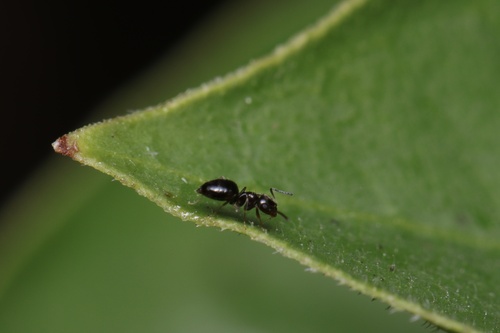
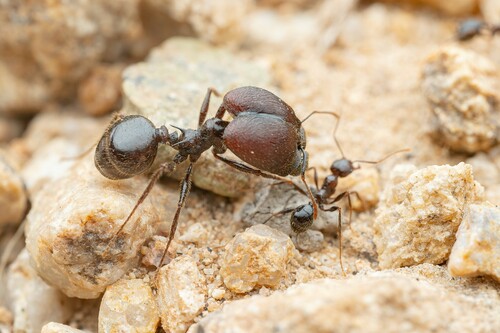
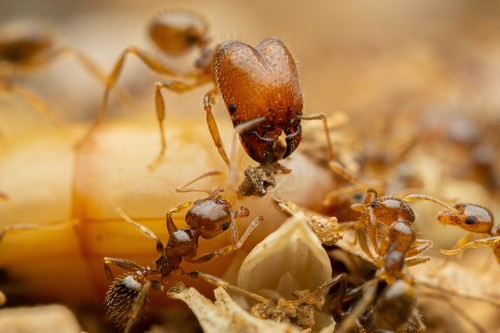
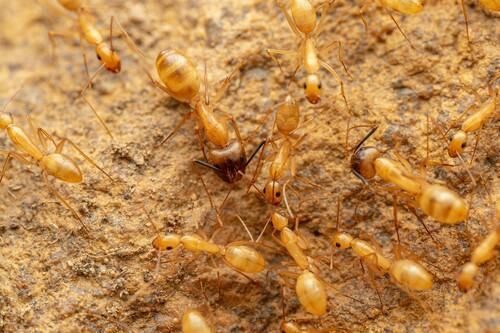
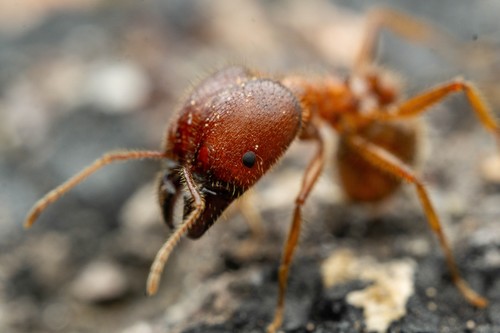
Maricopa Harvester Ant

Maricopa Harvester Ant

Pogonomyrmex maricopa

Daily sighting probability <5% · Rare
at Saguaro National Park

In 3 days ~10% in a week ~20%

8 Verified sightings at Saguaro National Park From 2019 to 2026
8 In 1 park
March Best month
☀️ Diurnal When it's spotted

About the Maricopa Harvester Ant

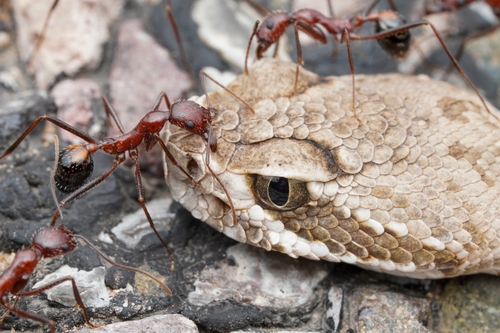
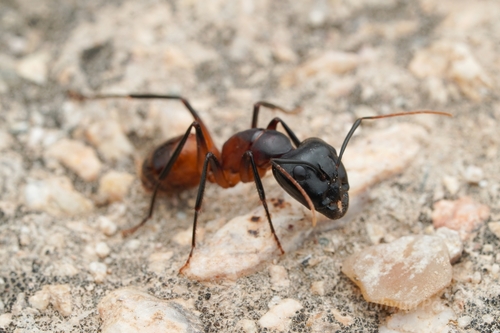
Pogonomyrmex maricopa, the Maricopa harvester ant, is one of the most common species of harvester ant found in the U.S. state of Arizona, but it is also known from California, Colorado, New Mexico, Nevada, Texas and Utah, and the Mexican states of Baja California, Chihuahua, Coahuila, Durango, Sinaloa and Sonora. Its venom is believed to be the most toxic insect venom in the world.

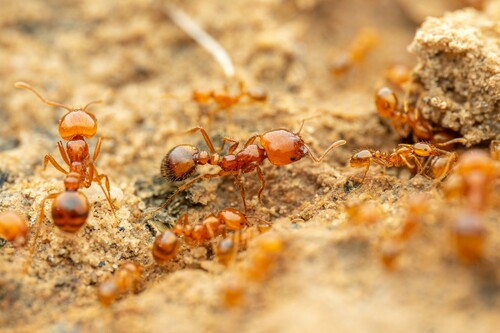
Their nest mounds are likely to incorporate rocks and gravel. The ants construct cemented caps on the sand mound nests in a fine sand dune area. The caps are approximately 60% calcium carbonate that is transported from the underlying calcium carbonate layers, and protect the nest structure from being eroded away during high-wind periods. Partial erosion of the cemented caps adds calcium carbonate to the sand dune soils.

The venom toxicity of the Maricopa harvester ant is well known. Its LD50 value is 0.12 mg/kg (injected intravenously in mice); 12 stings can kill a 2-kg rat. By comparison, the LD50 of the honey bee is 2.8 mg/kg—less than one-twentieth as strong. In humans, a Pogonomyrmex sting produces intense pain that can last from four to eight hours.

Like that of many venomous... Wikipedia →

Global Distribution

Parks Where Found

# Park Country Daily sighting probability
1 Saguaro National Park 🇺🇸 United States
<5%

More parks will be added in future updates.

Before you go

What are the chances of seeing a Maricopa Harvester Ant in Saguaro National Park?

Rare

Under 5% of wildlife watchers report a Maricopa Harvester Ant sighting in Saguaro National Park on a given day, based on 8 verified sightings from GBIF citizen-science data from 2019 to 2026. It is the 248th most-seen of the 354 insects we can rate there. Over three days the chance rises to about 10%, and over a week to about 20%, if each day is a fresh chance.

When is the best time to see a Maricopa Harvester Ant in Saguaro National Park?

February–March and August

In those months about 10% of wildlife watchers report a Maricopa Harvester Ant in Saguaro National Park on a given day, against under 5% in April–July and September–January, the lowest months.

What time of day is best to see a Maricopa Harvester Ant?

Between 8 and 11 am

Across all the parks we cover, that three-hour window holds the most Maricopa Harvester Ant sightings with a recorded time, and nearly all of them come between 6 am and 6 pm: it is a daytime animal.

Where else can you see a Maricopa Harvester Ant?

Only Saguaro National Park, in our data

Saguaro National Park is the only park on Wallace's Line with enough records to rate Maricopa Harvester Ant sightings: under 5% of wildlife watchers there report one on a given day.

Which relatives of the Maricopa Harvester Ant live in Saguaro National Park?

Same genus: Pogonomyrmex

The closest relatives of the Maricopa Harvester Ant that you can see in Saguaro National Park (genus Pogonomyrmex, Typical American Harvester Ants) are Rough Harvester Ant (about 10%) and Red Harvester Ant (about 10%), with each one's daily chance of a sighting.

Where does the Maricopa Harvester Ant sighting chance come from?

GBIF citizen-science records

It is estimated from how often the Maricopa Harvester Ant is recorded against all the insects logged in Saguaro National Park (8 verified sightings from 2019 to 2026), calibrated against known sighting rates. Figures are rounded to the nearest 10% because citizen-science data supports honest approximations, not decimals, and months with records from fewer than five people show "—". How it works.

← Back to Saguaro National Park