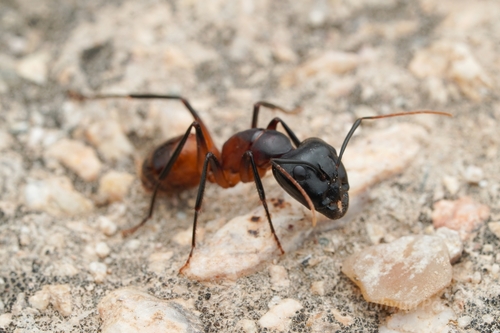
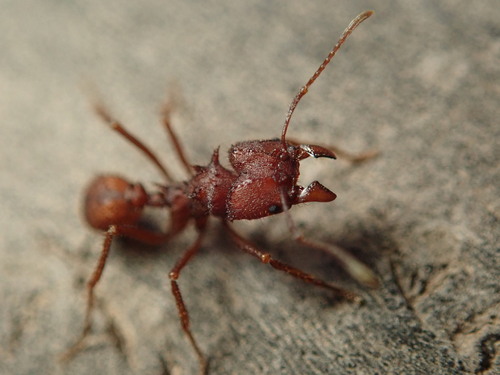
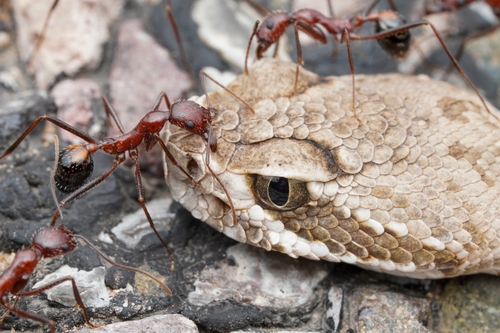
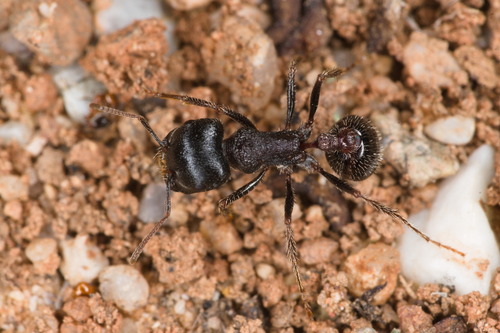
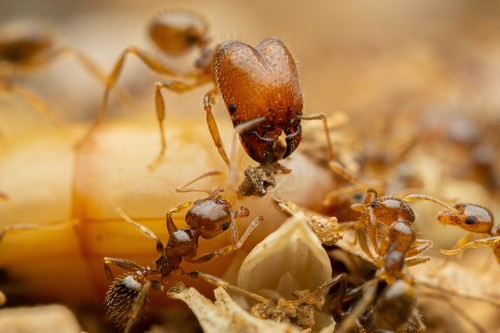
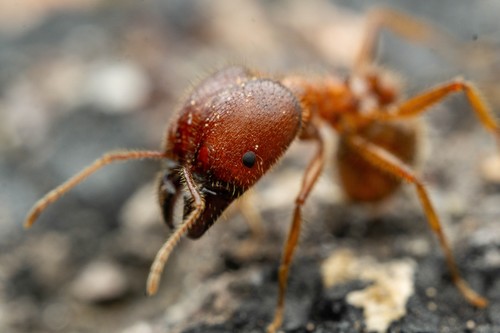
Camponotus festinatus
Daily sighting probability <5% · Rare
at Saguaro National Park

In 3 days ~10% in a week ~20%

5 Verified sightings at Saguaro National Park From 2019 to 2026
19 In all 2 parks
September Best month
🌙 Nocturnal When it's spotted

About the Camponotus festinatus

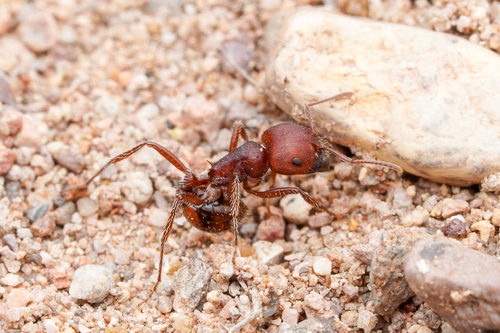
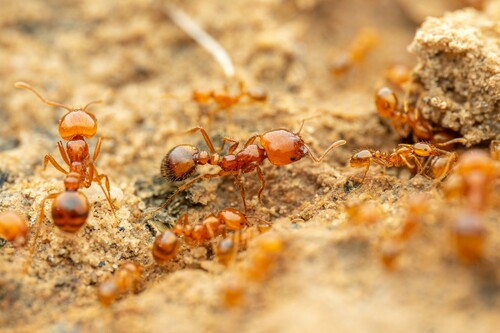
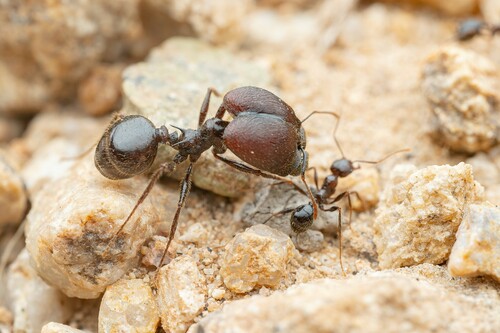
Camponotus festinatus is a species of carpenter ant that is typically found in the Southwestern United States and northern reaches of Mexico. It is most commonly found around Tucson, Arizona. It lives in the semi-dead branches of palo verde trees found in the area. Camponotus festinatus is an exclusively liquid feeder. These ants can only feed on sap from trees or the juices of a deceased animal. Like most ants, their diet is primarily sugar with some protein. Camponotus festinatus ants are not known to be aggressive except towards other ants. Soldiers will prefer to run from humans rather than be aggressive. In principle, these ants can bite with their mandibles. However, as carpenter ants like these are formicines, they have no functional sting. Instead of stinging, they can use an acidopore to spray formic acid.

C. festinatus queens are 'claustral foundresses', in that they sequester themselves in a chamber to begin a new colony and raise the first set of worker ants without seeking out or obtaining additional food. According to Snelling (2006), C. festinatus was a difficult-to-categorize species complex that "displayed a bewildering array of variant forms" over its vast native range. The paper described two new possible undescribed subspecies of C. festinatus, split two new species off from it, Camponotus absquatulator and Camponotus microps, and revived Camponotus pudorosus and Camponotus fragilis from synonymy. Wikipedia →
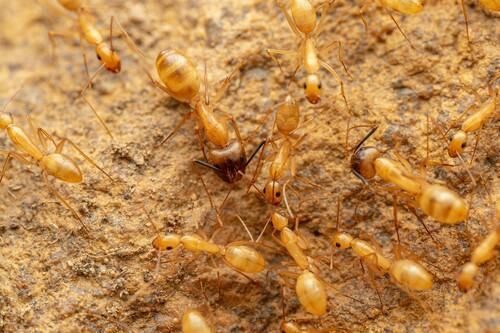

Global Distribution

Parks Where Found

# Park Country Daily sighting probability
1 Big Bend National Park 🇺🇸 United States
~10%
2 Saguaro National Park 🇺🇸 United States
<5%

Cities Where Found

# City Country Daily sighting probability
1 San Antonio 🇺🇸 United States
~10%
2 Austin 🇺🇸 United States
~10%

Before you go

What are the chances of seeing a Camponotus festinatus in Saguaro National Park?

Rare

Under 5% of wildlife watchers report a Camponotus festinatus sighting in Saguaro National Park on a given day, based on 5 verified sightings from GBIF citizen-science data from 2019 to 2026. It is the 300th most-seen of the 354 insects we can rate there. Over three days the chance rises to about 10%, and over a week to about 20%, if each day is a fresh chance.

When is the best time to see a Camponotus festinatus in Saguaro National Park?

March and September

In those months about 10% of wildlife watchers report a Camponotus festinatus in Saguaro National Park on a given day, against under 5% in April–August and October–February, the lowest months.

What time of day is best to see a Camponotus festinatus?

Between 11 pm and 2 am

Across all the parks we cover, that three-hour window holds the most Camponotus festinatus sightings with a recorded time, and about 8 in 10 of them come between 6 pm and 6 am: it is mostly seen at night.

Is Saguaro National Park the best place to see a Camponotus festinatus?

2nd of 2

Of the 2 parks where we can rate Camponotus festinatus sightings, Saguaro National Park ranks 2nd at under 5%. The best odds are in Big Bend National Park (United States, about 10%).

Where does the Camponotus festinatus sighting chance come from?

GBIF citizen-science records

It is estimated from how often the Camponotus festinatus is recorded against all the insects logged in Saguaro National Park (5 verified sightings from 2019 to 2026), calibrated against known sighting rates. Figures are rounded to the nearest 10% because citizen-science data supports honest approximations, not decimals, and months with records from fewer than five people show "—". How it works.

← Back to Saguaro National Park