Dark Rover Ant

Dark Rover Ant

Brachymyrmex patagonicus

Daily sighting probability <5% · Rare
at Saguaro National Park

In 3 days ~10% in a week ~30%

11 Verified sightings at Saguaro National Park From 2019 to 2026
11 In 1 park
December Best month
☀️ Diurnal When it's spotted

About the Dark Rover Ant

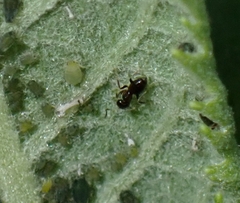
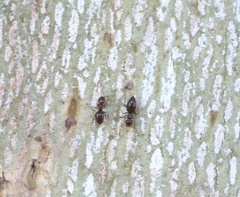
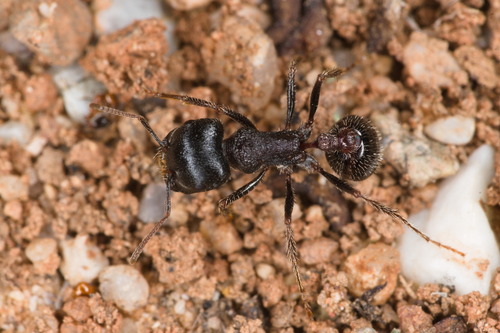
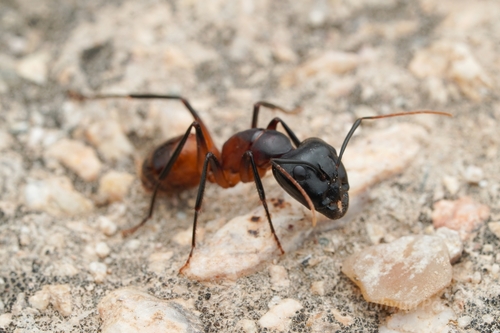
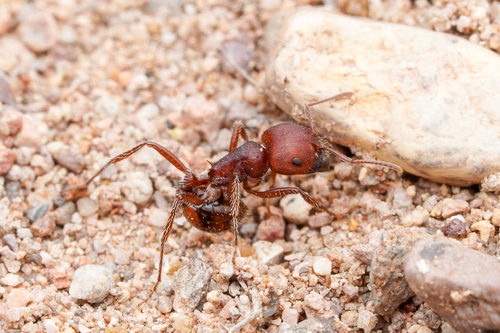
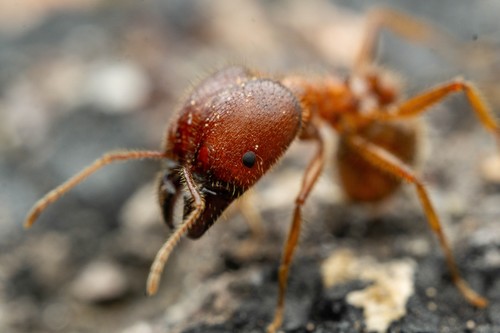
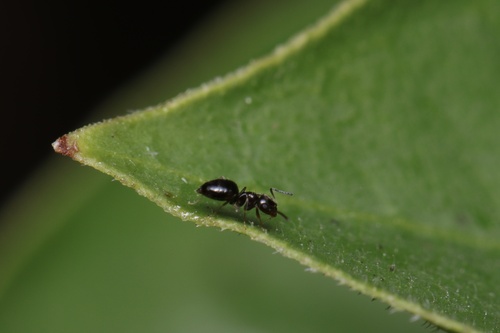
Brachymyrmex patagonicus, also known as the black rover ant, is a species of Formicine ant native to Mexico, Central America, South America, and invasive in the United States and Europe. They were first reported in St. Tammany Parish, Louisiana in 1978 from a single colony collected in 1976. It is believed that the species was introduced through New Orleans, which is a common entry point for many tropical species, but other locations such as Mobile, Alabama, or Pensacola, Florida, are also likely. For many years B. patagonicus, B. musculus, and B. obscurior were misidentified as being separate species but after a comparison of specimens from the Louisiana State University Arthropod Collection (LSUC), it was found that all three were the same species. B. patagonicus is considered a nuisance pest due to their tendency to infest man-made structures but have received a lack of attention because they do not bite, sting, or carry disease.

Dark rover ants are small brown ants that are typically less than 2.5 millimeters in length. Worker ants in this species range from 1.0mm to 2.0mm, whereas queens are around 3.0mm. Males are around 1.0mm in length. The antennae of the... Wikipedia →

Global Distribution

Parks Where Found

# Park Country Daily sighting probability
1 Saguaro National Park 🇺🇸 United States
<5%

More parks will be added in future updates.

Cities Where Found

# City Country Daily sighting probability
1 Mesa 🇺🇸 United States
~10%
2 Las Vegas 🇺🇸 United States
~10%
3 Phoenix 🇺🇸 United States
~10%
4 Austin 🇺🇸 United States
~10%
5 San Antonio 🇺🇸 United States
~10%
6 Dallas 🇺🇸 United States
~10%
7 Houston 🇺🇸 United States
~10%
8 Los Angeles 🇺🇸 United States
<5%
9 San Diego 🇺🇸 United States
<5%
10 Guangzhou 🇨🇳 China
<5%

Before you go

What are the chances of seeing a Dark Rover Ant in Saguaro National Park?

Rare

Under 5% of wildlife watchers report a Dark Rover Ant sighting in Saguaro National Park on a given day, based on 11 verified sightings from GBIF citizen-science data from 2019 to 2026. It is the 211th most-seen of the 354 insects we can rate there. Over three days the chance rises to about 10%, and over a week to about 30%, if each day is a fresh chance.

When is the best time to see a Dark Rover Ant in Saguaro National Park?

April–May, September–October and December

In those months about 10% of wildlife watchers report a Dark Rover Ant in Saguaro National Park on a given day, against under 5% in January–March, June–August and November, the lowest months.

What time of day is best to see a Dark Rover Ant?

Between 7 and 10 am

Across all the parks we cover, that three-hour window holds the most Dark Rover Ant sightings with a recorded time, and about 7 in 10 of them come between 6 am and 6 pm: it is a daytime animal.

Where else can you see a Dark Rover Ant?

Only Saguaro National Park, in our data

Saguaro National Park is the only park on Wallace's Line with enough records to rate Dark Rover Ant sightings: under 5% of wildlife watchers there report one on a given day.

Where does the Dark Rover Ant sighting chance come from?

GBIF citizen-science records

It is estimated from how often the Dark Rover Ant is recorded against all the insects logged in Saguaro National Park (11 verified sightings from 2019 to 2026), calibrated against known sighting rates. Figures are rounded to the nearest 10% because citizen-science data supports honest approximations, not decimals, and months with records from fewer than five people show "—". How it works.

← Back to Saguaro National Park