
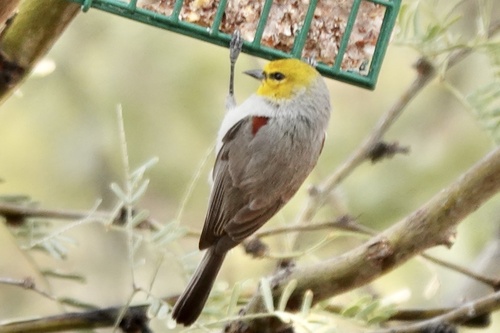
Varied Bunting

Varied Bunting

Passerina versicolor

Silhouette: Jonah Duckles · PhyloPic

LCLeast ConcernNTVUENCR
Daily sighting probability <5% · Rare
at Saguaro National Park

In 3 days ~10%

166 Verified sightings at Saguaro National Park From 2019 to 2026
874 In all 6 parks
July Best month
☀️ Diurnal When it's spotted

About the Varied Bunting

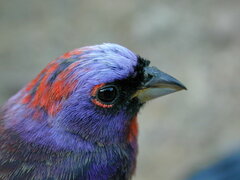
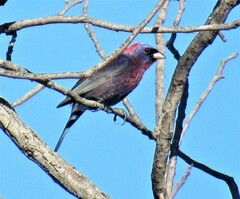
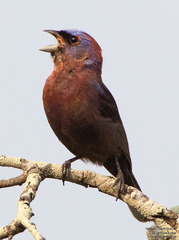
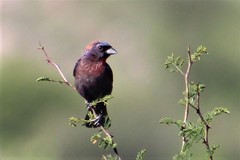
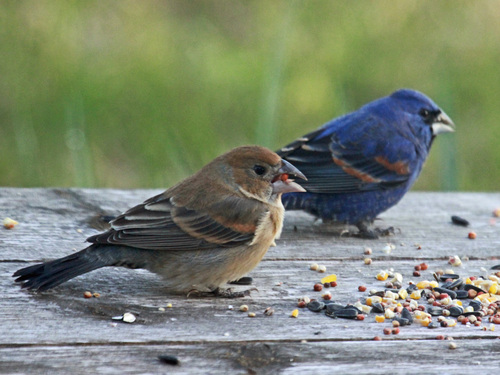
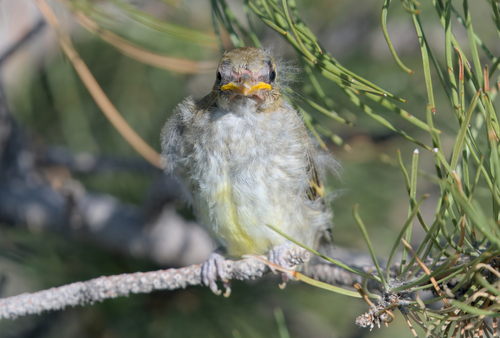
The varied bunting (Passerina versicolor) is a species of songbird in the cardinal family, Cardinalidae. The range of the varied bunting stretches from the southern parts of Arizona, New Mexico, and Texas in the United States south throughout Mexico as far as Oaxaca. Small disjunct populations occur in the state of Chiapas in Mexico and southeastern Guatemala. This stocky bird has a short tail and rounded bill. It is 11–14 centimetres (4.3–5.5 in) long, has a wingspan of 21 centimetres (8.3 in), and weighs 11–13 grams (0.39–0.46 oz). Breeding males are purple-red with a bright red patch on the nape, which becomes browner in the fall. Females are plain light brown, resembling the female indigo bunting but lacking streaking on the breast. Varied buntings inhabit deserts and xeric shrublands, preferring thorny brush thickets, thorn forests, scrubby woodlands, and overgrown clearings. They forage on the ground for insects, fruit, and seeds. Varied buntings weave open-cup nests of grass and spider webs in the outer branches of thorny shrubs, usually near water. Females lay two to five bluish-white to bluish-green eggs, which they incubate for about fourteen days. The young are fully feathered after 10 days, and are ready to leave the nest several days later. Wikipedia →

Sounds

Song0:04

Mexico · 2024

© Leonardo Guzman Hernandez · XC905696 · CC BY-NC-SA 4.0

Call1:10

United States · 2023

© Richard E. Webster · XC821217 · CC BY-NC-SA 4.0

Alarm call0:06

Mexico · 2020

© Isain Contreras Rodríguez · XC569530 · CC BY-NC-SA 4.0

Global Distribution

Parks Where Found

# Park Country Daily sighting probability
1 Cañón del Sumidero National Park 🇲🇽 Mexico
~20%
2 Big Bend National Park 🇺🇸 United States
~10%
3 Cabo Pulmo National Park 🇲🇽 Mexico
~10%
4 Cumbres de Monterrey National Park 🇲🇽 Mexico
<5%
5 Saguaro National Park 🇺🇸 United States
<5%
6 Guadalupe Mountains National Park 🇺🇸 United States
<5%

Cities Where Found

# City Country Daily sighting probability
1 León 🇲🇽 México
~10%
2 Guadalajara 🇲🇽 México
<5%
3 Mexico City 🇲🇽 México
<5%

Before you go

What are the chances of seeing a Varied Bunting in Saguaro National Park?

Rare

Under 5% of wildlife watchers report a Varied Bunting sighting in Saguaro National Park on a given day, based on 166 verified sightings from GBIF citizen-science data from 2019 to 2026. It is the 104th most-seen of the 220 birds we can rate there. Over three days the chance rises to about 10%, if each day is a fresh chance.

When is the best time to see a Varied Bunting in Saguaro National Park?

June and July

In those months about 10% of wildlife watchers report a Varied Bunting in Saguaro National Park on a given day, against under 5% in August to May, the lowest months.

What time of day is best to see a Varied Bunting?

Between 7 and 10 am

Across all the parks we cover, that three-hour window holds the most Varied Bunting sightings with a recorded time, and about 9 in 10 of them come between 6 am and 6 pm: it is a daytime animal.

Where does the Varied Bunting sighting chance come from?

GBIF citizen-science records

It is estimated from how often the Varied Bunting is recorded against all the birds logged in Saguaro National Park (166 verified sightings from 2019 to 2026), calibrated against known sighting rates. Figures are rounded to the nearest 10% because citizen-science data supports honest approximations, not decimals, and months with records from fewer than five people show "—". How it works.

← Back to Saguaro National Park