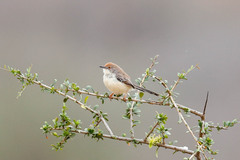
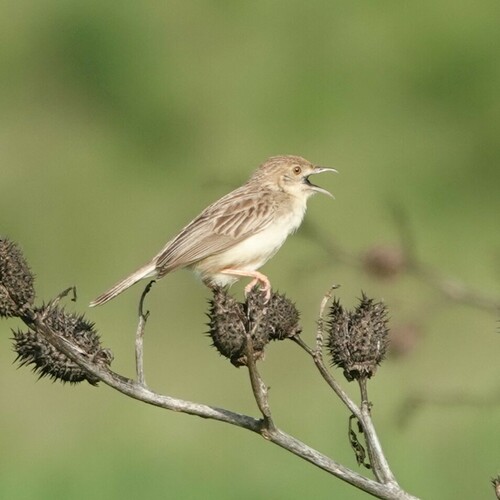
Red-fronted Warbler

Red-fronted Warbler

Urorhipis rufifrons

LCLeast ConcernNTVUENCR
Daily sighting probability ~20% · Possible
at Samburu National Reserve

In 3 days ~40% in a week ~70%

183 Verified sightings at Samburu National Reserve From 2019 to 2026
353 In all 8 parks
June Best month
☀️ Diurnal When it's spotted

About the Red-fronted Warbler

The red-fronted prinia (Prinia rufifrons), also known as the red-fronted warbler and the red-faced apalis, is a species of bird in the family Cisticolidae. It is found in Chad, Djibouti, Eritrea, Ethiopia, Kenya, Somalia, Sudan, Tanzania, and Uganda.

Its natural habitat is dry savanna. The red-fronted prinia was described by the German naturalist Eduard Rüppell in 1840 under the binomial name Prinia rufifrons. The type locality is Eritrea (the coastal region of Abyssinia). The specific epithet rufifrons comes from the Latin rufus for "red" and frons for "forehead" or "front".

There are three subspecies: Many taxonomists place this species in the genus Prinia rather than in its own monotypic genus Urorhipis. Support for this alternative placement is provided by a molecular phylogenetic study of the Cisticolidae published in 2013 that found that the red-fronted warbler was closely related to the prinias.

Ryan, Peter (2006). Family Cisticolidae (Cisticolas and allies... Wikipedia →

Sounds

Song0:59

Kenya · 2024

© Peter Boesman · XC948427 · CC BY-NC-ND 4.0

Call0:33

Ethiopia · 2015

© Andrew Spencer · XC277086 · CC BY-NC-ND 4.0

Song0:36

Ethiopia · 2015

© Hans Matheve · XC306653 · CC BY-NC-ND 4.0

Global Distribution

Parks Where Found

# Park Country Daily sighting probability
1 Samburu National Reserve 🇰🇪 Kenya
~20%
2 Awash National Park 🇪🇹 Ethiopia
~20%
3 Mkomazi National Park 🇹🇿 Tanzania
~20%
4 Tsavo West National Park 🇰🇪 Kenya
~10%
5 Tsavo East National Park 🇰🇪 Kenya
~10%
6 Lake Manyara National Park 🇹🇿 Tanzania
<5%
7 Amboseli National Park 🇰🇪 Kenya
<5%
8 Ngorongoro Conservation Area 🇹🇿 Tanzania
<5%

Before you go

What are the chances of seeing a Red-fronted Warbler in Samburu National Reserve?

Possible

About 20% of wildlife watchers report a Red-fronted Warbler sighting in Samburu National Reserve on a given day, based on 183 verified sightings from GBIF citizen-science data from 2019 to 2026. It is the 107th most-seen of the 341 birds we can rate there. Over three days the chance rises to about 40%, and over a week to about 70%, if each day is a fresh chance.

When is the best time to see a Red-fronted Warbler in Samburu National Reserve?

June–July and November

In those months about 30% of wildlife watchers report a Red-fronted Warbler in Samburu National Reserve on a given day, against under 5% in May, the lowest month.

What time of day is best to see a Red-fronted Warbler?

Between 9 am and noon

Across all the parks we cover, that three-hour window holds the most Red-fronted Warbler sightings with a recorded time, and about 9 in 10 of them come between 6 am and 6 pm: it is a daytime animal.

Is Samburu National Reserve the best place to see a Red-fronted Warbler?

Yes

Of the 8 parks where we can rate Red-fronted Warbler sightings, Samburu National Reserve has the highest daily chance: about 20%. Next come Awash National Park (Ethiopia, about 20%) and Mkomazi National Park (Tanzania, about 20%).

Which relatives of the Red-fronted Warbler live in Samburu National Reserve?

Same family: Cisticolidae

The closest relatives of the Red-fronted Warbler that you can see in Samburu National Reserve (family Cisticolidae, Cisticolas and Allies) are Gray Wren-Warbler (about 40%), Pale Prinia (about 30%) and Ashy Cisticola (about 20%), with each one's daily chance of a sighting.

Where does the Red-fronted Warbler sighting chance come from?

GBIF citizen-science records

It is estimated from how often the Red-fronted Warbler is recorded against all the birds logged in Samburu National Reserve (183 verified sightings from 2019 to 2026), calibrated against known sighting rates. Figures are rounded to the nearest 10% because citizen-science data supports honest approximations, not decimals, and months with records from fewer than five people show "—". How it works.

← Back to Samburu National Reserve