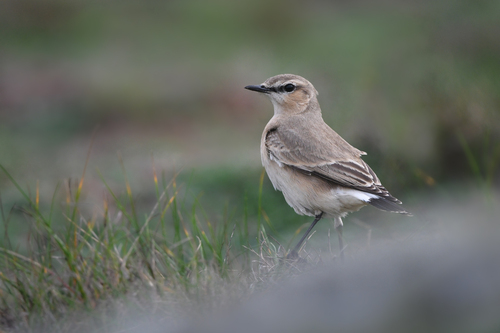
White-throated Robin

White-throated Robin

Irania gutturalis

Silhouette: Martin Bulla, based on François Desbordes' illustration · PhyloPic

LCLeast ConcernNTVUENCR
Daily sighting probability <5% · Rare
at Samburu National Reserve

In 3 days ~10% in a week ~20%

35 Verified sightings at Samburu National Reserve From 2019 to 2026
197 In all 7 parks
November Best month
☀️ Diurnal When it's spotted

About the White-throated Robin

The white-throated robin or irania (Irania gutturalis) is a small, migratory passerine bird in the Old World flycatcher family Muscicapidae, and the only member of the genus Irania. It breeds on high-altitude mountain slopes with dense scrub in western Asia and winters in East Africa. Males have lead-grey upperparts and bright orange underparts with a namesake white throat patch. Females are duller, with greyer underparts, orange sides, and a fainter white throat compared to the males.

The vernacular and generic name Irania alludes to Iran, its type locality, while the specific name gutturalis is Medieval Latin for "of the throat", referring to the male's white throat. The white-throated robin belongs to a group of passerines called chats, which were, as traditionally defined, all formerly thought to be members of the thrush family Turdidae, but are now classified as Old World flycatchers, Muscicapidae. Within the Muscicapidae family, the chats (as traditionally defined) make up the subfamily Saxicolinae, together with other species that were not traditionally labeled as chats/thrushes, such as the Ficedula flycatchers. The white-throated robin is sister to the genus... Wikipedia →

Sounds

Song1:11

Turkey · 2024

© Mehmet ÜNLÜ · XC897818 · CC BY-NC-SA 4.0

Call0:19

Iran · 2019

© Alain Verneau · XC473657 · CC BY-NC-SA 4.0

Song0:52

Uzbekistan · 2023

© Barry Edmonston · XC807594 · CC BY-NC-SA 4.0

Global Distribution

Parks Where Found

# Park Country Daily sighting probability
1 Tsavo West National Park 🇰🇪 Kenya
~10%
2 Mkomazi National Park 🇹🇿 Tanzania
<5%
3 Samburu National Reserve 🇰🇪 Kenya
<5%
4 Lake Manyara National Park 🇹🇿 Tanzania
<5%
5 Ngorongoro Conservation Area 🇹🇿 Tanzania
<5%
6 Tsavo East National Park 🇰🇪 Kenya
<5%
7 Nairobi National Park 🇰🇪 Kenya
<5%

Cities Where Found

# City Country Daily sighting probability
1 Kuwait City 🇰🇼 Kuwait
<5%
2 Abu Dhabi 🇦🇪 United Arab Emirates
<5%
3 Doha 🇶🇦 Qatar
<5%
4 Dubai 🇦🇪 United Arab Emirates
<5%

Before you go

What are the chances of seeing a White-throated Robin in Samburu National Reserve?

Rare

Under 5% of wildlife watchers report a White-throated Robin sighting in Samburu National Reserve on a given day, based on 35 verified sightings from GBIF citizen-science data from 2019 to 2026. It is the 217th most-seen of the 341 birds we can rate there. Over three days the chance rises to about 10%, and over a week to about 20%, if each day is a fresh chance.

When is the best time to see a White-throated Robin in Samburu National Reserve?

January–February and November

In those months about 10% of wildlife watchers report a White-throated Robin in Samburu National Reserve on a given day, against under 5% in March–October and December, the lowest months.

What time of day is best to see a White-throated Robin?

Between 9 am and noon

Across all the parks we cover, that three-hour window holds the most White-throated Robin sightings with a recorded time, and about 9 in 10 of them come between 6 am and 6 pm: it is a daytime animal.

Is Samburu National Reserve the best place to see a White-throated Robin?

3rd of 7

Of the 7 parks where we can rate White-throated Robin sightings, Samburu National Reserve ranks 3rd at under 5%. The best odds are in Tsavo West National Park (Kenya, about 10%) and Mkomazi National Park (Tanzania, under 5%).

Which relatives of the White-throated Robin live in Samburu National Reserve?

Same family: Muscicapidae

The closest relatives of the White-throated Robin that you can see in Samburu National Reserve (family Muscicapidae, Old World Flycatchers, Robins, and Chats) are Spotted Morning-Thrush (about 50%), African Gray Flycatcher (about 40%) and White-browed Scrub Robin (about 20%), with each one's daily chance of a sighting.

Where does the White-throated Robin sighting chance come from?

GBIF citizen-science records

It is estimated from how often the White-throated Robin is recorded against all the birds logged in Samburu National Reserve (35 verified sightings from 2019 to 2026), calibrated against known sighting rates. Figures are rounded to the nearest 10% because citizen-science data supports honest approximations, not decimals, and months with records from fewer than five people show "—". How it works.

← Back to Samburu National Reserve