African Piculet

African Piculet

Sasia africana

Silhouette: Pepe Reigada · PhyloPic

LCLeast ConcernNTVUENCR
Daily sighting probability ~20% · Possible
at Semuliki National Park

In 3 days ~40% in a week ~70%

65 Verified sightings at Semuliki National Park From 2019 to 2026
65 In 1 park
February Best month
☀️ Diurnal When it's spotted

About the African Piculet

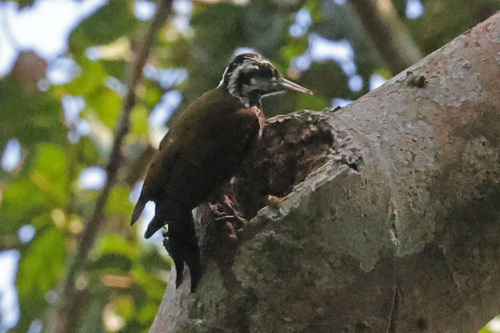
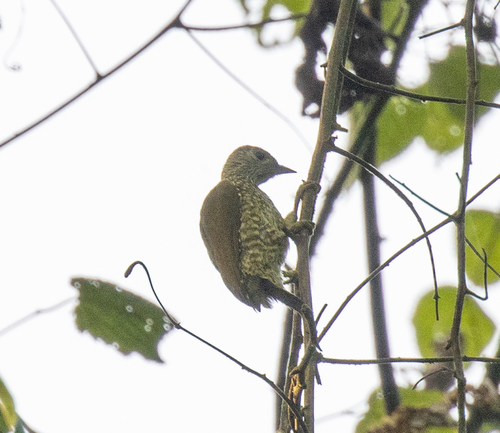
The African piculet (Verreauxia africana), sometimes placed in the genus Sasia, is a species of bird in the family Picidae. It is the only species placed in the genus Verreauxia. It is found in Angola, Cameroon, Central African Republic, Republic of the Congo, Democratic Republic of the Congo, Ivory Coast, Equatorial Guinea, Gabon, Ghana, Liberia, and Uganda. This species is described as locally common and has a very large range, so the International Union for Conservation of Nature has rated its conservation status as being of "least concern".

The African piculet was formally described in 1855 by the French naturalists Jules and Édouard Verreaux from a specimen collected in Gabon, West Africa. They placed it in the genus Sasia and coined the binomial name Sasia africana. The African piculet is now the only species placed in the genus Verreauxia that was introduced in 1856 by the German ornithologist Gustav Hartlaub. The species is monotypic: no subspecies are recognised.

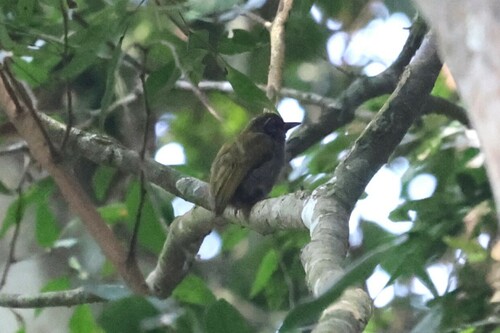
The African piculet is a small bird some 9 to 10 cm (3.5 to 3.9 in) long. The male has a chestnut or reddish forehead and a greyish-green or olive-green crown whereas the forehead in... Wikipedia →

Sounds

Call0:14

Uganda · 2023

© Brendan Sloan · XC832148 · CC BY-NC-ND 4.0

Call0:09

Ghana · 2021

© Daan Drukker · XC771367 · CC BY-NC-SA 4.0

Call0:32

Ghana · 2018

© Phil Gregory · XC609367 · CC BY-NC-SA 4.0

Global Distribution

Parks Where Found

# Park Country Daily sighting probability
1 Semuliki National Park 🇺🇬 Uganda
~20%

More parks will be added in future updates.

Before you go

What are the chances of seeing an African Piculet in Semuliki National Park?

Possible

About 20% of wildlife watchers report an African Piculet sighting in Semuliki National Park on a given day, based on 65 verified sightings from GBIF citizen-science data from 2019 to 2026. It is the 103rd most-seen of the 280 birds we can rate there. Over three days the chance rises to about 40%, and over a week to about 70%, if each day is a fresh chance.

When is the best time to see an African Piculet in Semuliki National Park?

February

In that month about 30% of wildlife watchers report an African Piculet in Semuliki National Park on a given day, against under 5% in June, the lowest month. That is one of Semuliki National Park's driest months, with about 15 mm of rain against 140 mm in May.

What time of day is best to see an African Piculet?

Between 8 and 11 am

Across all the parks we cover, that three-hour window holds the most African Piculet sightings with a recorded time, and about 8 in 10 of them come between 6 am and 6 pm: it is a daytime animal.

Where else can you see an African Piculet?

Only Semuliki National Park, in our data

Semuliki National Park is the only park on Wallace's Line with enough records to rate African Piculet sightings: about 20% of wildlife watchers there report one on a given day.

Which relatives of the African Piculet live in Semuliki National Park?

Same family: Picidae

The closest relatives of the African Piculet that you can see in Semuliki National Park (family Picidae, Woodpeckers) are Golden-crowned Woodpecker (about 40%) and Brown-Eared Woodpecker (about 30%), with each one's daily chance of a sighting.

Where does the African Piculet sighting chance come from?

GBIF citizen-science records

It is estimated from how often the African Piculet is recorded against all the birds logged in Semuliki National Park (65 verified sightings from 2019 to 2026), calibrated against known sighting rates. Figures are rounded to the nearest 10% because citizen-science data supports honest approximations, not decimals, and months with records from fewer than five people show "—". How it works.

← Back to Semuliki National Park