Icterine Greenbul

Icterine Greenbul

Phyllastrephus icterinus

Silhouette: PhyloPic

LCLeast ConcernNTVUENCR
Daily sighting probability ~20% · Possible
at Semuliki National Park

In 3 days ~50% in a week ~80%

75 Verified sightings at Semuliki National Park From 2019 to 2026
88 In all 3 parks
August Best month
☀️ Diurnal When it's spotted

About the Icterine Greenbul

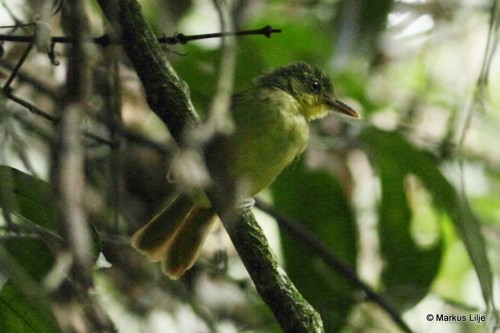
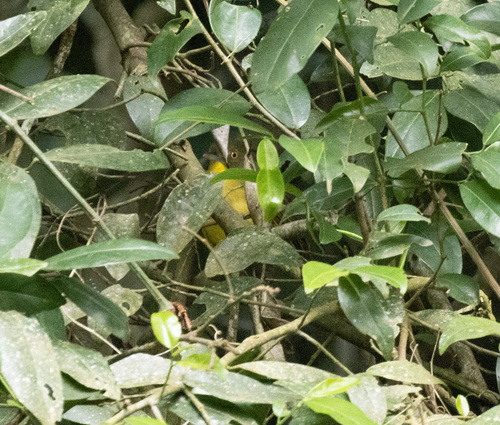
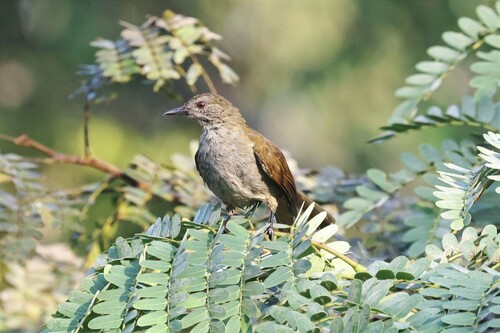
The icterine greenbul (Phyllastrephus icterinus) is a species of songbird in the bulbul family, Pycnonotidae. It is native to the African tropical rainforest. The icterine greenbul was originally described in the genus Trichophorus (a synonym for Criniger). The term icterine refers to its yellowish colouration. Formerly, some authorities have considered Sassi's greenbul to be a subspecies of the icterine greenbul. Alternate names for the icterine greenbul include the lesser icterine bulbul.

Until 2018, a rare colour morph of the icterine greenbul from the Cavalla forest in south-eastern Liberia was believed to be a separate species. The Liberian greenbul (Phyllastrephus leucolepis) was known from only a few sightings between 1981 and 1984, and a specimen collected in 1984. This specimen is now considered to have been a plumage aberration. A 2017 DNA analysis revealed that the bird(s) were common icterine greenbuls, albeit with unusual plumage colouring, which may have been caused by a nutritional deficiency. Alternative names for the Liberian greenbul included the spot-winged bulbul, spot-winged greenbul and white-winged greenbul... Wikipedia →

Sounds

Call0:14

Benin · 2024

© Wim Jacobs · XC877301 · CC BY-NC-SA 4.0

Alarm call0:28

Cameroon · 2012

© Bram Piot · XC114913 · CC BY-NC-SA 3.0

Call0:32

Congo (Democratic Republic) · 2023

© Deville Tanguy · XC824169 · CC BY-NC-SA 4.0

Global Distribution

Parks Where Found

# Park Country Daily sighting probability
1 Semuliki National Park 🇺🇬 Uganda
~20%
2 Taï National Park 🇨🇮 Ivory Coast
~10%
3 Bwindi Impenetrable National Park 🇺🇬 Uganda
<5%

Before you go

What are the chances of seeing an Icterine Greenbul in Semuliki National Park?

Possible

About 20% of wildlife watchers report an Icterine Greenbul sighting in Semuliki National Park on a given day, based on 75 verified sightings from GBIF citizen-science data from 2019 to 2026. It is the 84th most-seen of the 280 birds we can rate there. Over three days the chance rises to about 50%, and over a week to about 80%, if each day is a fresh chance.

When is the best time to see an Icterine Greenbul in Semuliki National Park?

August

In that month about 40% of wildlife watchers report an Icterine Greenbul in Semuliki National Park on a given day, against about 10% in January, March, June–July and October, the lowest months. That is one of Semuliki National Park's wettest months, with about 120 mm of rain against 5 mm in January.

What time of day is best to see an Icterine Greenbul?

Between 7 and 10 am

Across all the parks we cover, that three-hour window holds the most Icterine Greenbul sightings with a recorded time, and about 9 in 10 of them come between 6 am and 6 pm: it is a daytime animal.

Is Semuliki National Park the best place to see an Icterine Greenbul?

Yes

Of the 3 parks where we can rate Icterine Greenbul sightings, Semuliki National Park has the highest daily chance: about 20%. Next come Taï National Park (Ivory Coast, about 10%) and Bwindi Impenetrable National Park (Uganda, under 5%).

Which relatives of the Icterine Greenbul live in Semuliki National Park?

Same genus: Phyllastrephus

The closest relatives of the Icterine Greenbul that you can see in Semuliki National Park (genus Phyllastrephus, Typical Greenbuls and Brownbuls) are Xavier's Greenbul (about 60%), Toro Olive-Greenbul (about 20%) and White-throated Greenbul (about 10%), with each one's daily chance of a sighting.

Where does the Icterine Greenbul sighting chance come from?

GBIF citizen-science records

It is estimated from how often the Icterine Greenbul is recorded against all the birds logged in Semuliki National Park (75 verified sightings from 2019 to 2026), calibrated against known sighting rates. Figures are rounded to the nearest 10% because citizen-science data supports honest approximations, not decimals, and months with records from fewer than five people show "—". How it works.

← Back to Semuliki National Park