Roughneck Monitor

Roughneck Monitor

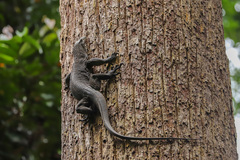
Varanus rudicollis

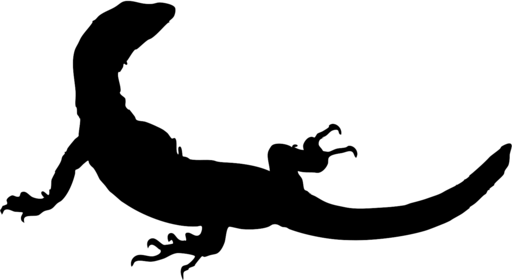
Silhouette: Steven Traver · PhyloPic

Daily sighting probability ~10% · With luck
at Sepilok

In 3 days ~40% in a week ~60%

11 Verified sightings at Sepilok From 2019 to 2026
25 In all 3 parks
January Best month
🌅 Crepuscular When it's spotted

About the Roughneck Monitor

The black rough-necked monitor (Varanus rudicollis) is a species of monitor lizard found in Southeast Asian countries of Thailand, Burma, and Malaysia. It is also found in Indonesia on Sumatra and islands of the Riau Archipelago It is sometimes known simply as the roughneck monitor. In Thailand is called h̄èā cĥāng (Thai: เห่าช้าง; "elephant bark/roar").

The habitat of Varanus rudicollis is limited to primary and secondary rainforest and mangrove swamps. In the wild the black rough-necked monitor is very rarely seen, but whether this is because of its rarity or its very secretive behavior is uncertain. They are often kept successfully in captivity, but have a shy disposition.

This species is most closely related to its sister group, the water monitor species complex (e.g., the Asian water monitor) which are also in the subgenus Soterosaurus, having split from them 14 million years ago in the middle Miocene.

The black roughneck is a medium to large monitor. It usually reaches an average adult size of 3–4 ft. (90–120 cm), with a maximum length of 5 feet (150 cm), reported. The black rough-necked monitor can be easily recognized by large pointed scales adorning the... Wikipedia →

Global Distribution

Parks Where Found

# Park Country Daily sighting probability
1 Bako National Park 🇲🇾 Malaysia
~30%
2 Danum Valley Conservation Area 🇲🇾 Malaysia
~20%
3 Sepilok 🇲🇾 Malaysia
~10%

Zoos & Centres Where Found

# Zoo / Centre Country
1 Detroit Zoo 🇺🇸 United States In captivity
2 Silesian Zoological Garden 🇵🇱 Poland In captivity
3 Zoo Atlanta 🇺🇸 United States In captivity
4 Downtown Aquarium, Houston 🇺🇸 United States In captivity
5 National Reptile Zoo 🇮🇪 Ireland In captivity

Before you go

What are the chances of seeing a Roughneck Monitor in Sepilok?

With luck

About 10% of wildlife watchers report a Roughneck Monitor sighting in Sepilok on a given day, based on 11 verified sightings from GBIF citizen-science data from 2019 to 2026. It is the 21st most-seen of the 34 reptiles we can rate there. Over three days the chance rises to about 40%, and over a week to about 60%, if each day is a fresh chance.

When is the best time to see a Roughneck Monitor in Sepilok?

January and June

In those months about 30% of wildlife watchers report a Roughneck Monitor in Sepilok on a given day, against under 5% in April–May, August–September and November–December, the lowest months.

What time of day is best to see a Roughneck Monitor?

Between 5 and 8 am

Across all the parks we cover, that three-hour window holds the most Roughneck Monitor sightings with a recorded time, and about half of them come between 6 am and 6 pm: it is most active around dawn and dusk.

Is Sepilok the best place to see a Roughneck Monitor?

3rd of 3

Of the 3 parks where we can rate Roughneck Monitor sightings, Sepilok ranks 3rd at about 10%. The best odds are in Bako National Park (Malaysia, about 30%) and Danum Valley Conservation Area (Malaysia, about 20%).

Where does the Roughneck Monitor sighting chance come from?

GBIF citizen-science records

It is estimated from how often the Roughneck Monitor is recorded against all the reptiles logged in Sepilok (11 verified sightings from 2019 to 2026), calibrated against known sighting rates. Figures are rounded to the nearest 10% because citizen-science data supports honest approximations, not decimals, and months with records from fewer than five people show "—". How it works.

← Back to Sepilok